WatchSat › Blog › What is Kessler syndrome? How a space debris cascade works
What is Kessler syndrome? How a space debris cascade works
Kessler syndrome is a runaway chain of collisions in orbit, first described in 1978. ESA's 2026 report projects low-orbit collisions climbing fast.
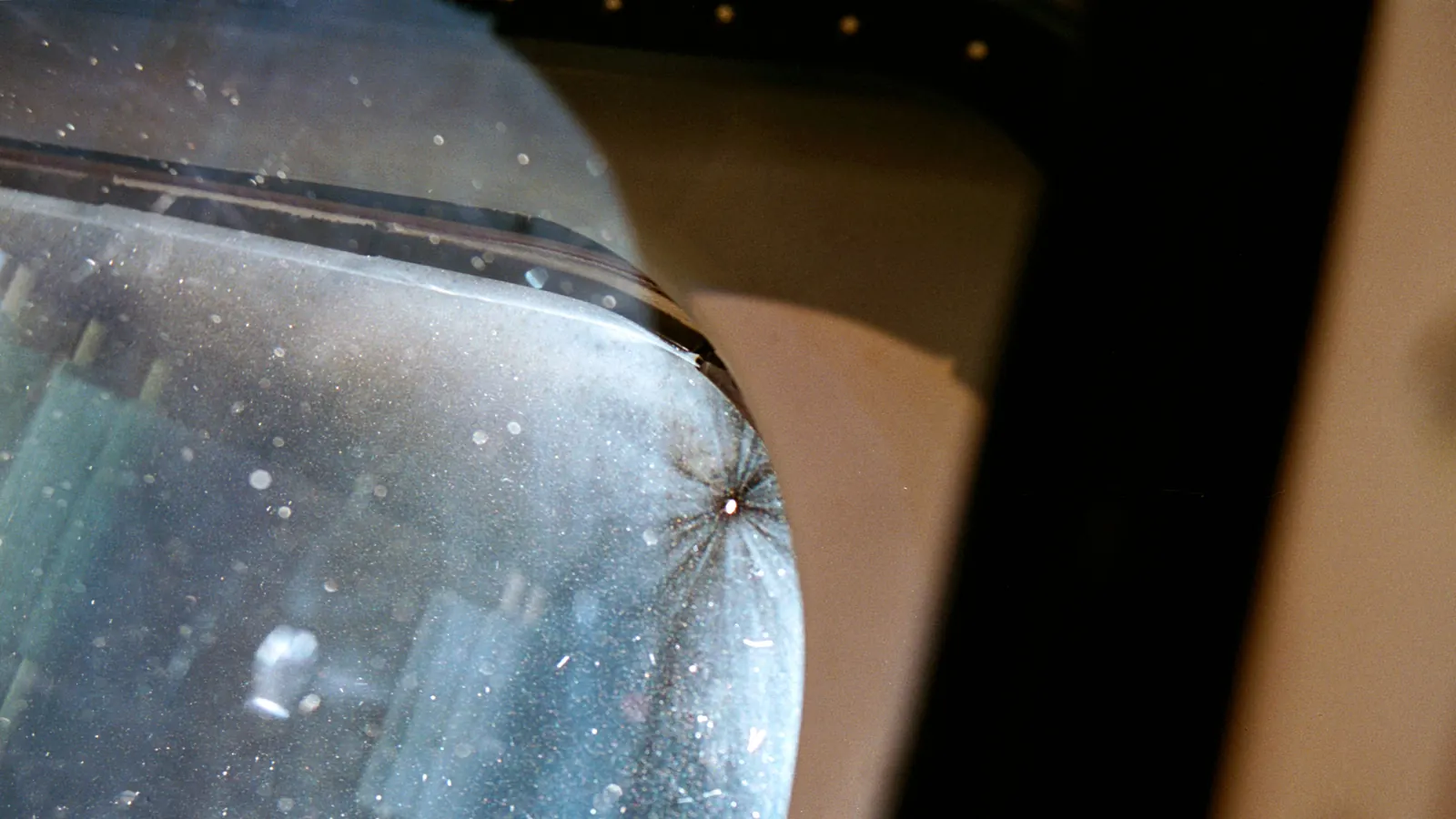
Kessler syndrome is a runaway chain of collisions in orbit. Each crash breaks satellites into fragments, the fragments make the next crash more likely, and the debris can then keep multiplying on its own. Donald Kessler and Burton Cour-Palais described the process in a paper published on June 1, 1978. ESA's web pages on its 2026 Space Environment Report, which uses data to the end of 2025, don't say the cascade has begun. The report's projections for low Earth orbit, though, show the number of objects and collisions rising fast.
The 2026 counts of what's up there are in our census of space debris.
What is Kessler syndrome?
Kessler and Cour-Palais published their study in the Journal of Geophysical Research, and NASA's record of the paper sums up the argument. As more satellites are launched, collisions between them become more likely, and every collision adds fragments that raise the odds of the next one. The authors used the asteroid belt as an analogy and built a mathematical model of how quickly a belt of debris could form around Earth. They concluded that limits on launches and on how satellites are operated, if adopted early, could significantly delay the belt's formation.
The name came from someone else. According to Wikipedia's biography of Kessler, John Gabbard of NORAD first called it the Kessler syndrome while talking to a reporter soon after the study appeared.
The cascade comes down to two rates. Break-ups and collisions add fragments to a band of altitude, and drag from the thin upper atmosphere pulls them down until they reenter. Drag fades with height, so low orbits clear far faster than high ones, as our guide to how long satellites last shows. A band runs away when collisions add fragments faster than drag removes them.
ESA's definition today is close to the 1978 one. Its page for the 2026 report describes the Kessler syndrome as growth in the number of objects caused by collisions that generate new debris, and says active debris removal is needed to stop it.
Has Kessler syndrome already started?
ESA's pages on the 2026 report don't say it has, and we found no NASA statement that it has. Both halves of Kessler's mechanism have been seen in orbit, though. Two satellites have collided and broken apart, and, according to Wikipedia, debris has hit VESPA, the first target of an ESA cleanup mission.
The first known collision between two satellites happened at 16:56 UTC on February 10, 2009, over northern Siberia. Iridium 33, a working US communications satellite, and Cosmos 2251, a retired Russian one, met about 790 km up. Their orbits crossed at nearly a right angle, CelesTrak notes, so they hit at more than 11 km/s (more than 24,600 mph). The pieces have lasted. In 2024, 15 years on, Wikipedia's account of the collision, citing the US catalog, still listed 916 pieces of Cosmos 2251 and 212 of Iridium 33 in orbit, 1,128 in all by our sum.
Two deliberate anti-satellite tests added more. In January 2007 China destroyed Fengyun-1C, a defunct weather satellite of about 880 kg, with a missile at about 865 km, according to the tracking site Orbital Radar. Orbital Radar also says the fragments spread from below 200 km to above 3,850 km, and that most will stay in orbit for decades to centuries.
On November 15, 2021, Russia destroyed its own Cosmos 1408 (also spelled Kosmos) with an anti-satellite missile, creating an estimated 1,500 pieces of trackable debris, Space.com reported. The space station's crew took shelter that day. Before the test, Cosmos 1408 orbited at about 485 km, according to Orbital Radar.
Mitigation has improved, ESA says in a caption for its 2026 report, yet the debris population grew again. The agency's page for the report also says the long-term effect of current activity in space grew by about an order of magnitude in 2025 alone, by its Space Environment Health Index.
The report's projection for low Earth orbit shows objects and collisions climbing steeply, even with the horizon cut from 200 years to 100. In a German-language summary, ESA adds that the debris population would keep growing with no new launches at all, because break-ups create debris faster than it falls back, and that some orbital regions could eventually become unusable.
Where active satellites crowd together in our data
Kessler's argument turns on crowding. To see where today's working satellites are packed, we sorted the 16,701 objects in our October 11 snapshot of CelesTrak's active-satellite list, the element sets behind our live satellite map, by mean altitude. That's the average height over an orbit, worked out from the orbit's period and measured above Earth's equatorial radius of 6,378 km. Our methodology page explains where the list comes from.
Of the 16,701, 15,886 (95.1%) are in low Earth orbit, with apogees, their highest points, below 2,000 km. The table splits them into 100 km bands and marks the heights of the three break-ups described earlier.
| Mean altitude | Active satellites | Starlinks | Break-up at this height |
|---|---|---|---|
| Below 300 km | 60 | 35 | |
| 300 to 400 km | 1,051 | 903 | |
| 400 to 500 km | 10,532 | 9,688 | Cosmos 1408, 2021 (about 485 km) |
| 500 to 600 km | 1,732 | 503 | |
| 600 to 700 km | 754 | 0 | |
| 700 to 800 km | 193 | 0 | Iridium 33 and Cosmos 2251, 2009 (about 790 km) |
| 800 to 900 km | 139 | 0 | Fengyun-1C, 2007 (about 865 km) |
| 900 to 1,000 km | 190 | 0 | |
| 1,000 to 1,100 km | 262 | 0 | |
| 1,100 to 1,200 km | 537 | 0 | |
| 1,200 to 1,300 km | 337 | 0 | |
| 1,300 to 2,000 km | 99 | 0 |
Between 400 and 500 km there are 10,532 active satellites, 66.3% of everything in low orbit, and 92.0% of them (9,688) are Starlink satellites. The International Space Station is there too, at about 420 km. So was Cosmos 1408 when Russia destroyed it, and 6,795 of today's active satellites, 6,160 of them Starlinks, have mean altitudes within 20 km of its old height. Drag pulls fragments down much sooner at this height than at the heights of the 2007 and 2009 break-ups, and our debris census follows how quickly the Cosmos 1408 cloud thinned.
Higher up, the bands are emptier, but their debris lasts longer. Between 750 and 830 km, around the height of the 2009 collision, there are 208 active satellites, 68 of them Iridium's. Farther out, the 648 OneWeb satellites at about 1,200 km fill most of the 1,100 to 1,300 km rows.
Any two satellites in a band could in principle meet, so the number of possible pairs grows with roughly the square of the population. By our arithmetic, the 10,532 satellites between 400 and 500 km make about 55.5 million possible pairs. Double the satellites and the pairs roughly quadruple, to about 221.8 million. Most pairs never come close, and working satellites steer around the ones that do, so treat the figure as a measure of how the odds scale with crowding.
These counts cover working satellites only, the same list our satellite directory shows. Our guide to how many satellites are in orbit compares it with the full catalog, fragments included.
Collision avoidance, deorbit rules and debris removal
Working satellites dodge. SpaceX's semiannual report to the US Federal Communications Commission (FCC) shows 207,152 collision-avoidance maneuvers by Starlink satellites from December 2025 to May 2026, Space.com reported. The six months to November 30, 2025, had 148,696, according to Altagrove. By our arithmetic that's a rise of about 39% in half a year, and 355,848 maneuvers over the 12 months, which Space.com puts at more than 40 per satellite per year. Hugh Lewis of the University of Birmingham told Space.com he thinks things are heading toward a collision involving an operational satellite in the constellation.
Dead satellites and fragments can't dodge. Deorbit rules try to keep working satellites from joining them, and removal missions go after what's already there. The FCC adopted a five-year rule on September 29, 2022, Via Satellite reported. The rule covers US-licensed satellites, and foreign ones seeking access to the US market, that end their missions in or pass through low Earth orbit, below 2,000 km. They have to come down as soon as practicable and within five years of the mission's end. The rule replaced the old 25-year guideline. The rule applies to satellites launched two years or more after adoption, Access Partnership notes. What happens on the way down is in our explainer on satellite reentry.
Removing debris that's already up is harder. Astroscale's ADRAS-J launched on February 18, 2024, Gulf News reported, to inspect a Japanese H-IIA upper stage in orbit since 2009. It came within 15 m (about 49 feet) of the stage, which Astroscale called the closest a commercial operator had come to a piece of space junk, The Register reported. ADRAS-J only looked. A follow-up, ADRAS-J2, is meant to capture the stage and bring it down, according to Xataka On, and we haven't found a launch date for it.
ESA awarded ClearSpace an 86.2 million euro contract in 2020 to remove VESPA, an adapter left in orbit by a 2013 Vega launch. In April 2024 the target changed to PROBA-1, a satellite of about 100 kg, after VESPA was hit by other debris, according to Wikipedia's account of the mission. Renamed ADRIOS ClearSpace-1, it's now being built by a team led by OHB System, an ESA conference listing says. ESA's mission page lists a 2029 launch, while Wikipedia says 2028.
ESA's 2026 report says prevention, such as disposing of satellites when their missions end, is still essential but no longer enough by itself, and that active removal has to become part of the solution soon. SpaceX's next semiannual report, covering June 1 to November 30, 2026, is normally filed around the end of the year and will show whether the dodging is still speeding up.
Sources
- ESA, ESA Space Environment Report 2026, 2026, with the report itself, Space Environment Report, Issue 10.0, 2026
- ESA, Number of objects will skyrocket, 2026 Space environment report, September 2026, and Changing orbital landscape, September 2026
- ESA, Der ESA Space Environment Report 2026 (German), September 2026
- Space.com, Every SpaceX Starlink satellite has to dodge a collision almost weekly, and experts fear the worst, 2026
- ESA Indico, ADRIOS ClearSpace-1 conference contribution, 2026
- Altagrove, SpaceX: 148,696 Starlink collision maneuvers in 6 months ending Nov 30, 2025
- The Register, report on ADRAS-J's 15 m approach, December 13, 2024
- Xataka On, article on Japan's debris-removal missions, 2024
- Gulf News, Japanese space debris inspection probe launched, February 19, 2024
- ESA, ClearSpace-1, undated, and Wikipedia, ClearSpace-1, undated
- Via Satellite, FCC Adopts 5-Year Rule for Deorbiting Satellites, September 30, 2022, and Access Partnership, US FCC to set five-year deadline for deorbiting LEO satellites, 2022
- Space.com, International Space Station dodges orbital debris from Russian anti-satellite test, November 2021
- Wikipedia, 2009 satellite collision, undated, and Donald J. Kessler, undated
- CelesTrak, Iridium 33/Cosmos 2251 Collision, undated (counts to June 2012); active satellite element sets, snapshot of October 11, 2026
- Orbital Radar, Fengyun-1C event page, page on the Fengyun-1C debris legacy and page on the Cosmos 1408 debris field, undated
- Kessler and Cour-Palais, Collision frequency of artificial satellites: the creation of a debris belt, Journal of Geophysical Research, June 1, 1978
Follow by RSS. Share this post: Bluesky · X · Reddit · Email
More from the blog
-
How many times can a Falcon 9 booster fly? The reuse record
Falcon 9 booster B1067 flew a record 37th time on August 25, 2026. SpaceX says its boosters are built for up to 40 flights.
-
How far away is the Moon? Distance, perigee and supermoons
How far away is the Moon? 384,400 km (238,855 miles) on average. In 2026 it ranges from 356,641 to 406,407 km, closest on December 24.
-
What is the Kp index? How to read an aurora forecast
The Kp index rates geomagnetic activity from 0 to 9 every three hours. Kp 5 is a G1 storm, and each step brings the aurora about 2 degrees nearer the equator.
-
Leonid meteor shower 2026: peak time, Moon and next storm
The Leonid meteor shower 2026 peaks around 23:45 UTC on November 17, at a ZHR of about 15, under a half-lit Moon that sets by about midnight.
-
When is Mars closest to Earth? 2027 date and distance
Mars is closest to Earth on February 20, 2027 (UTC), 101.41 million km away, hours after opposition. By our count it's the farthest such approach of 2001-2100.
Home · Live satellite map · Satellite directory · Starlink · OneWeb · Navigation satellites · Space stations · Other active satellites · Track the ISS · ISS visible passes · Starlink train · Rocket launches · Aurora forecast · Humans in space · Solar System · Deep Space · Embed widgets · Blog · Guide: spot the ISS · Guide: what is a TLE? · Guide: how many satellites? · Guide: satellite trackers compared · Discovery: Elias 2-24 b · About · FAQ · Data & methodology · Credits · Editorial policy · Accessibility · Contact · Privacy · Terms
© 2026 WatchSat · Not affiliated with any space agency or satellite operator.