WatchSat › Blog › How long do satellites last? Lifespan by orbit and type
How long do satellites last? Lifespan by orbit and type
How long do satellites last? Most active ones are Starlinks, built for five years. New GPS satellites get 15, and Landsat 5, built for three, lasted 28 years.
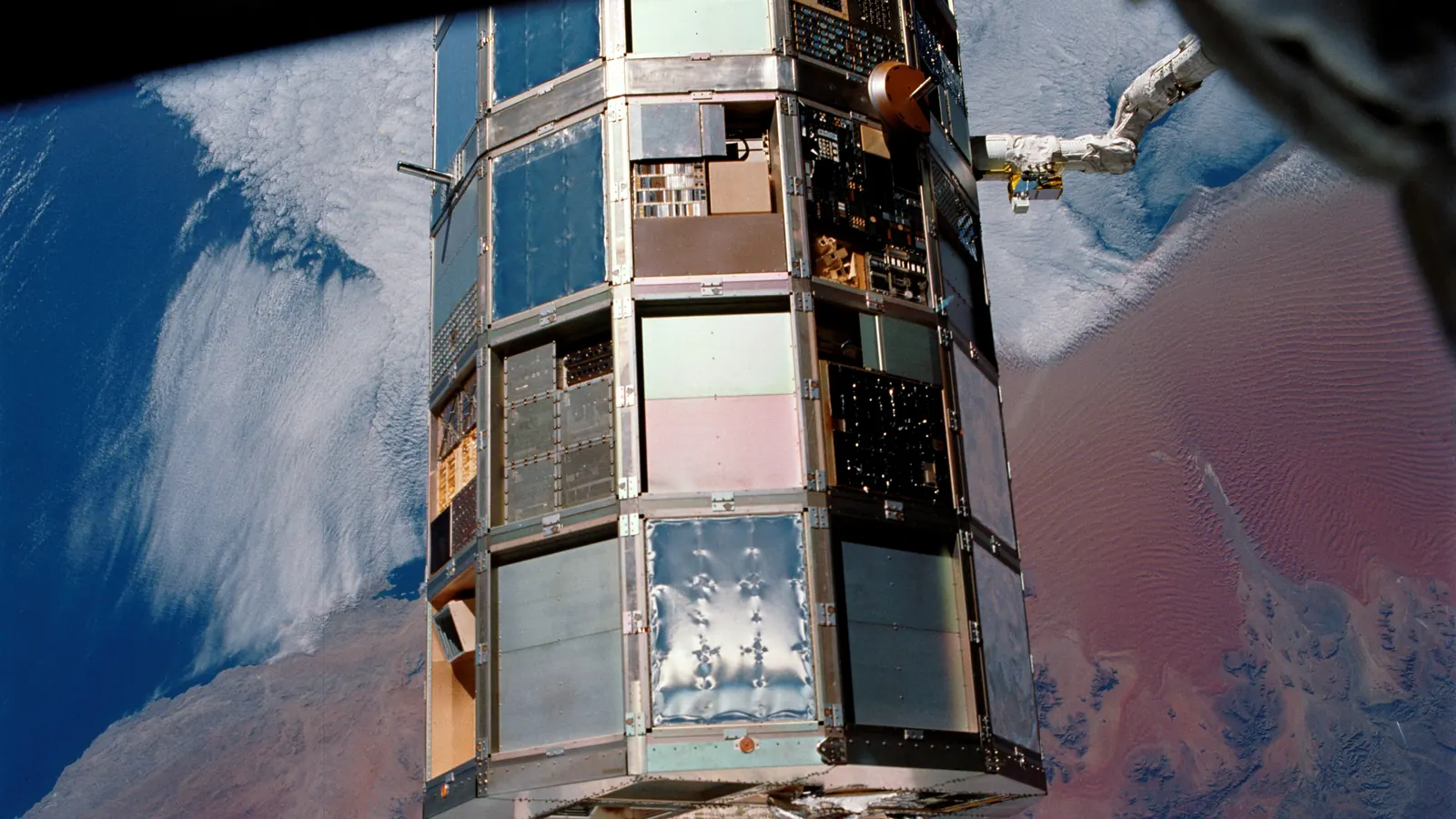
Most active satellites are designed to last about five years, because two of every three are Starlinks, which SpaceX builds for five. Larger satellites in higher orbits are built for longer, 15 years in the case of the newest GPS satellites, and some keep working for decades past that. Design life is the builders' estimate of how long satellites last, and it's often a cautious one. Landsat 5, an American Earth-imaging satellite designed for three years, worked for 28 years and 10 months.
Every satellite also runs on a second clock, the time it stays in orbit, which depends mostly on height. NASA's orbital debris office says debris below 600 km normally falls back to Earth within several years, while at 800 km orbital decay is often measured in centuries. Our explainer on how satellites stay in orbit shows why drag fades so quickly with height. Vanguard 1, launched in 1958, is the oldest satellite still in orbit, but it went silent in 1964.
Fuel, batteries and failing parts
Fuel is the usual limit for the big communications satellites in geostationary orbit, the ring 35,786 km above the equator where a satellite seems to hang still. They fire thrusters to hold their slots, and a 2006 paper for the International Institute of Space Law put the supply on long-lived ones at about 15 years. Before the propellant runs out, the International Telecommunication Union recommends moving the satellite up into a graveyard orbit, a parking orbit above the ring, as our geostationary orbit explainer describes.
A satellite short of fuel can also get help from outside. Northrop Grumman's MEV-1, a Mission Extension Vehicle, docked with the communications satellite Intelsat 901 and kept it in service for five years before undocking in April 2025. Its sister craft MEV-2 docked with Intelsat 10-02, a 2004 launch, in April 2021, and the two still share one orbit in our data. Space shuttle crews used to bring some satellites home instead. Columbia's astronauts retrieved NASA's Long Duration Exposure Facility on January 12, 1990, after more than five years in orbit. NASA says there was about a month to spare before its sinking orbit would have taken it beyond the shuttle's reach.
Batteries wear with use, and a low satellite uses them constantly. A 2010 study of lithium-ion batteries in low-orbit spacecraft, posted on arXiv, counted about 5,500 charge and discharge cycles a year, roughly what our orbit count gives. At the median Starlink's 15.3 orbits a day, a satellite flies about 5,600 laps a year and 28,000 in five years. A GPS satellite, circling twice a day, would need 38 years to fly as many laps. NASA's 2026 guide to small-spacecraft technology says a lithium-ion cell's ageing depends on its temperature, how fast it's charged and how deeply it's drained. Solar arrays wear out too. Radiation and darkening coverglass, the protective glass over the cells, cut their output, the guide adds, so they're sized for the power they'll make at the end of a mission.
Sometimes one failed part ends a mission. In December 2012 the US Geological Survey announced that Landsat 5 would be decommissioned after one of its gyroscopes failed.
How long do Starlink satellites last?
SpaceX gives Starlink satellites a five-year design life. In its 2022 order on SpaceX's second-generation system, the Federal Communications Commission (FCC) noted SpaceX's point that nearly 30,000 satellites with five-year lives would mean a constant cycle of launches and deorbits. The FCC also requires the low-orbit satellites it authorizes to be brought down out of orbit within five years of the end of their missions. That rule, covered in our reentry explainer, replaced the 25-year limit that also appears in the guidelines of the Inter-Agency Space Debris Coordination Committee.
Height decides how quickly a dead Starlink falls. In January 2026 Michael Nicolls, SpaceX's vice-president of Starlink engineering, said about 4,400 satellites would drop from around 550 km to about 480 km during the year, RCR Wireless reported. The aim was to bring dead ones down sooner. In our October 11 snapshot of CelesTrak's active list, half of all Starlink satellites fly below about 465 km. Like CelesTrak, we measure heights above Earth's equatorial radius of 6,378 km.
The five-year clock shows in the oldest Starlinks. A Falcon 9 launched 60 of them on November 11, 2019, Via Satellite reported, and 12 from that launch are still on the list. Nine of those 12 now average less than 400 km up, and one, STARLINK-1036, is down to about 270 km. Of the 172 Starlinks from 2020 still listed, 78, or 45%, average below 400 km, compared with 18 of the 566 from 2021.
Satellite ages in WatchSat's catalog
We read the launch year of each of the 16,701 entries in our October 11 snapshot from its international designator, a launch code that begins with the year. Every two-line element set, the block of orbit numbers a satellite is tracked by, carries one, so each age is good to within a year. By that count, 83.7% of the objects on the list launched in 2022 or later. The median launch year is 2024 in low Earth orbit, 2017 in medium orbit, where the navigation satellites fly, and 2016 in the geostationary band. A typical low satellite on the list is two years old, and a typical geostationary one is ten. Leave out the Starlinks and the list is still young, with 64.5% of the remaining satellites launched in 2022 or later. Our Starlink census charts the list by launch year.
Geostationary satellites are the oldest group on the list. Of the 573 objects in the band, 164, or 28.6%, launched in 2011 or earlier, so they're at least 15 years old. Their age shows in their inclination, the tilt of the orbit against the equator. Once a geostationary satellite stops correcting its orbit, the tilt grows, reaching as much as 15 degrees after about 27 years, according to ESA. Of the 24 in the band launched in 2001 or earlier, 21 are tilted more than 5 degrees, with a median of 11.3 degrees. Those launched since 2012 have a median tilt of 0.05 degrees. The oldest of the 24, NASA's relay satellite TDRS 3, launched in 1988 and sits at 12.5 degrees. The list can't tell us which of the tilted ones still work.
Lockheed Martin built two earlier generations of GPS satellites, IIR and IIR-M, to a 7.5-year design life. All 18 on the list, launched from 1997 to 2009, are now 17 to 29 years old, 2.3 to 3.9 times their design life. Our GPS explainer sets the list's 40 NAVSTARs, as GPS satellites are named in the catalog, against the 32 the Space Force counted as operational in April 2026. All ten of the newest block, GPS III, are still inside their 15-year design life.
The list also records endings. Between our September 15 and October 11 snapshots, 81 objects left it and 767 joined. The leavers' median launch year was 2021, and 44 of the 81 had launched in 2021 or earlier. Fifty-three were Starlinks, on average 4.8 years old, and 24 of them were from 2020. Every one of those 53 had a perigee, the lowest point of its orbit, below 300 km at its last listing, with a median of 202 km, so they were falling.
CelesTrak's active list holds objects not known to be dead, so a place on it doesn't prove a satellite works. Of the 20 oldest entries, 14 are passive spheres or calibration targets, such as Calsphere 1, launched in 1964.
What is the oldest satellite still working?
The oldest working satellite around Earth is AMSAT-OSCAR 7, according to a 2024 history by AMSAT, the amateur radio satellite group behind it. Launched on November 15, 1974, it went quiet in 1981 when its battery failed, and it stayed silent for 21 years until it was heard again on June 21, 2002. It still circles between 1,440 and 1,458 km up, and you can follow AO-7's live position. At its current 12.5 orbits a day, we estimate it has flown roughly 238,000 orbits.
Landsat 5 holds the Guinness World Record for the longest-operating Earth-observation satellite. Launched on March 1, 1984, it ran nearly ten times its design life, and NASA says it orbited Earth more than 150,000 times.
Some of the best-known veterans now have end dates. NASA plans to retire the space station after 2030. Hubble, launched in 1990, is on course to reenter around 2033, by the Space Telescope Science Institute's estimate.
NASA's Terra, Aqua and Aura Earth-science satellites, launched from 1999 to 2004, are closer to the end. Terra, launched on December 18, 1999, was designed for a six-year mission. NASA stopped adjusting its orbit in late 2020, and it has been drifting since. Because of fuel and power limits, the agency projects that science will end in February 2027 for Terra, September 2027 for Aqua and 2028 for Aura. Terra's tracking page shows where it is as the first of those dates approaches.
Sources
- AMSAT, AO-7 History Lesson, October 2024; The Register, report on AO-7's anniversary, November 25, 2024
- The Conversation, 60 years in orbit for 'grapefruit satellite', the oldest human object in space, 2018
- NASA Landsat Science, Landsat 5 Sets Guinness World Record for 'Longest Operating Earth Observation Satellite', February 2013; USGS, February 11, 2013: Landsat 5 Sets Guinness World Record
- NASA Science, Terra: The End of an Era; Ten Things to Know About Terra as the Long-Lived Satellite Surpasses 100,000 Orbits, October 12, 2018; NASA Earthdata, Terra: The Hardest Working Satellite in Earth Orbit
- NASA Orbital Debris Program Office, Frequently asked questions
- FCC, order authorizing SpaceX's second-generation Starlink system (FCC 22-91), 2022; FCC Adopts New '5-Year Rule' for Deorbiting Satellites, September 29, 2022
- SpaceX, Commitment to Space Sustainability
- Inter-Agency Space Debris Coordination Committee, IADC Space Debris Mitigation Guidelines, Revision 2, March 2020
- International Telecommunication Union, Recommendation ITU-R S.1003-2, December 2010; International Institute of Space Law, 2006 proceedings paper on geostationary satellites, 2006
- ESA, Spacecraft in a graveyard orbit can still pose a threat, March 2008
- Intelsat, Form 8-K, first-quarter 2021 results (MEV-2 docking), 2021
- Northrop Grumman, Northrop Grumman Achieves First-Ever Undocking Between Two Commercial Spacecraft in Geosynchronous Orbit (reprinted by I-Connect007), April 2025
- NASA APPEL, This Month in NASA History: Recovering LDEF, January 11, 2022
- NASA, Small Spacecraft Technology State of the Art: Power, 2026 edition; arXiv, Prediction of Retained Capacity and EODV of Li-ion Batteries in LEO Spacecraft Batteries, 2010
- RCR Wireless, Starlink to descend satellites for space safety, January 6, 2026
- Via Satellite, SpaceX Launches 60 More Starlink Satellites With First Recycled Fairing, November 11, 2019
- GPS World, Expert Advice: Block IIR Lifetimes and GPS Sustainment and Lockheed Martin-built GPS satellites reach 200 years of operational life; Lockheed Martin, Lockheed Martin-Built GPS Satellites Reach 150 Years Of Combined On-Orbit Service, January 24, 2012
- U.S. Space Force, Space Systems Command, U.S. Space Force delivers final GPS III to orbit, April 2026
- NASA, NASA Selects International Space Station US Deorbit Vehicle, June 26, 2024; Space Telescope Science Institute, Building a roadmap for Hubble science into the 2030s, April 2026
- CelesTrak, active satellites element sets, snapshots of September 15 to October 11, 2026
Follow by RSS. Share this post: Bluesky · X · Reddit · Email
More from the blog
-
How do satellites stay in orbit? Speed, drag and fuel
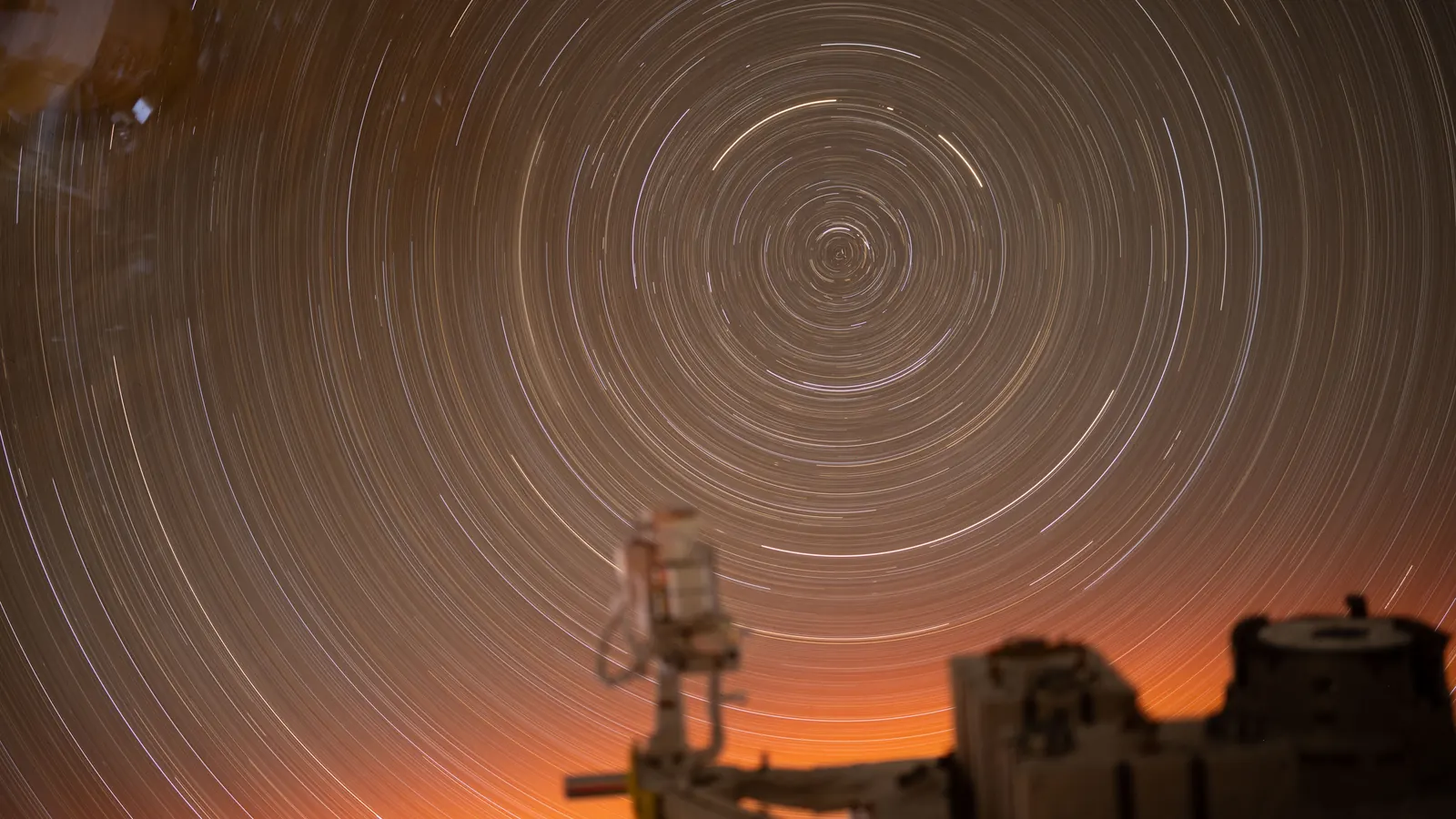
How do satellites stay in orbit? They fall all the time but move sideways fast enough to keep missing Earth: about 7.7 km/s at the ISS's 420 km height.
-
How does Starlink work? Orbits, dishes and laser links
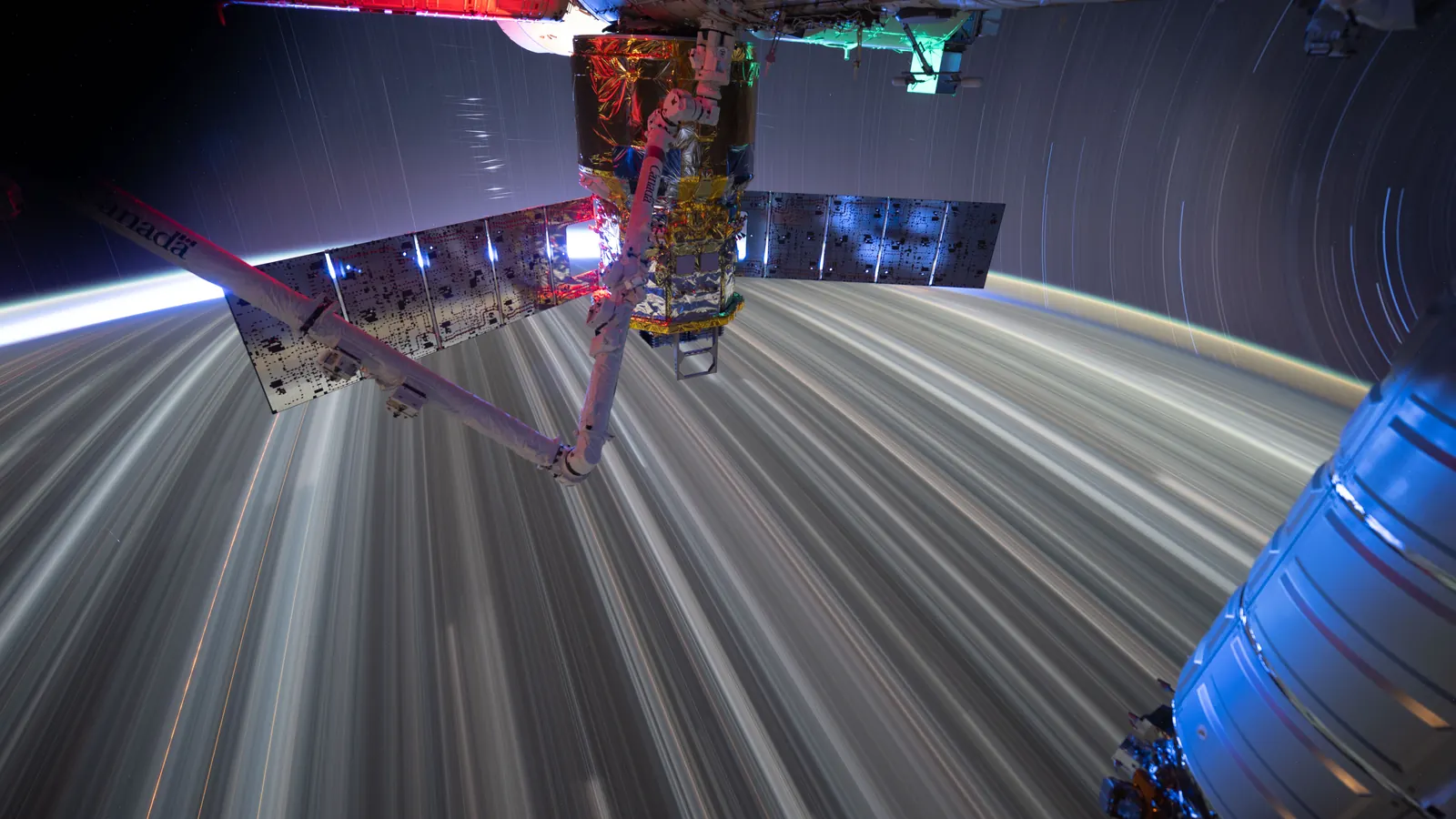
Starlink links a phased-array dish to more than 11,000 satellites, most in shells about 460 to 485 km up, which relay traffic by laser and through gateways.
-
When will the ISS be retired? Deorbit plan and what's next
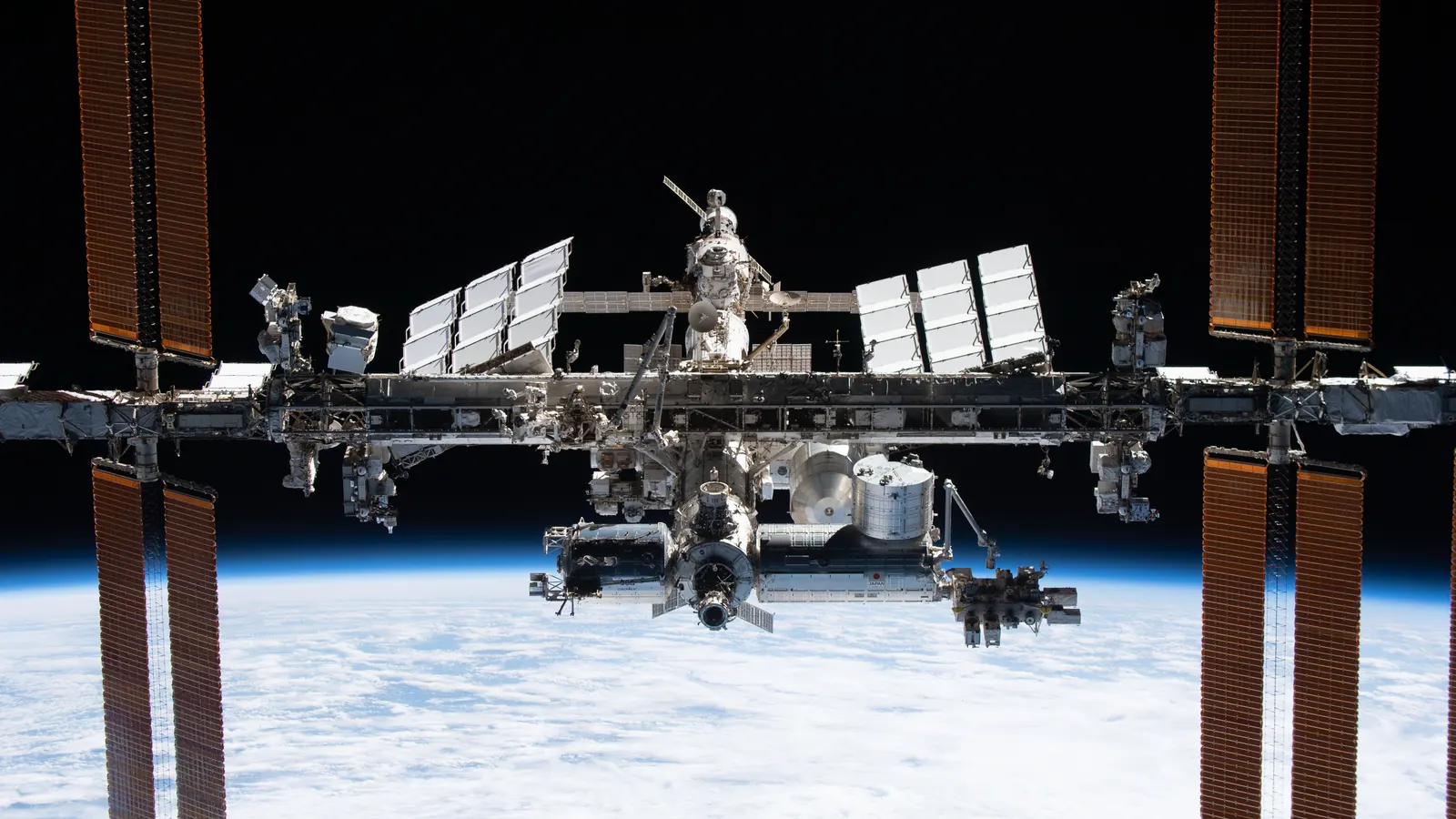
NASA plans to retire the ISS after September 30, 2030, when operations end. A SpaceX-built vehicle then steers it into the South Pacific in about 2031.
-
How many rocket launches in 2026? The count so far
Rocket launches in 2026 reached about 240 orbital attempts by mid-October, one every 28.5 hours. How it compares with 2025's record and what the catalog shows.

-
Where is China's Tiangong space station? Orbit and crew
China's Tiangong space station orbits about 386 km up on a 41.5° tilt, so it stays between 41.5° N and S. Who's aboard, its size, and where you can see it.
Home · Live satellite map · Satellite directory · Starlink · OneWeb · Navigation satellites · Space stations · Other active satellites · Track the ISS · ISS visible passes · Starlink train · Rocket launches · Aurora forecast · Humans in space · Solar System · Deep Space · Embed widgets · Blog · Guide: spot the ISS · Guide: what is a TLE? · Guide: how many satellites? · Guide: satellite trackers compared · Discovery: Elias 2-24 b · About · FAQ · Data & methodology · Credits · Editorial policy · Accessibility · Contact · Privacy · Terms
© 2026 WatchSat · Not affiliated with any space agency or satellite operator.