WatchSat › Blog › How much space debris is in orbit? 2026 counts and risks
How much space debris is in orbit? 2026 counts and risks
How much space debris is in orbit? The US catalog lists about 34,000 objects, ESA counts about 47,000 tracked, and models estimate 1.5 million of 1 to 10 cm.
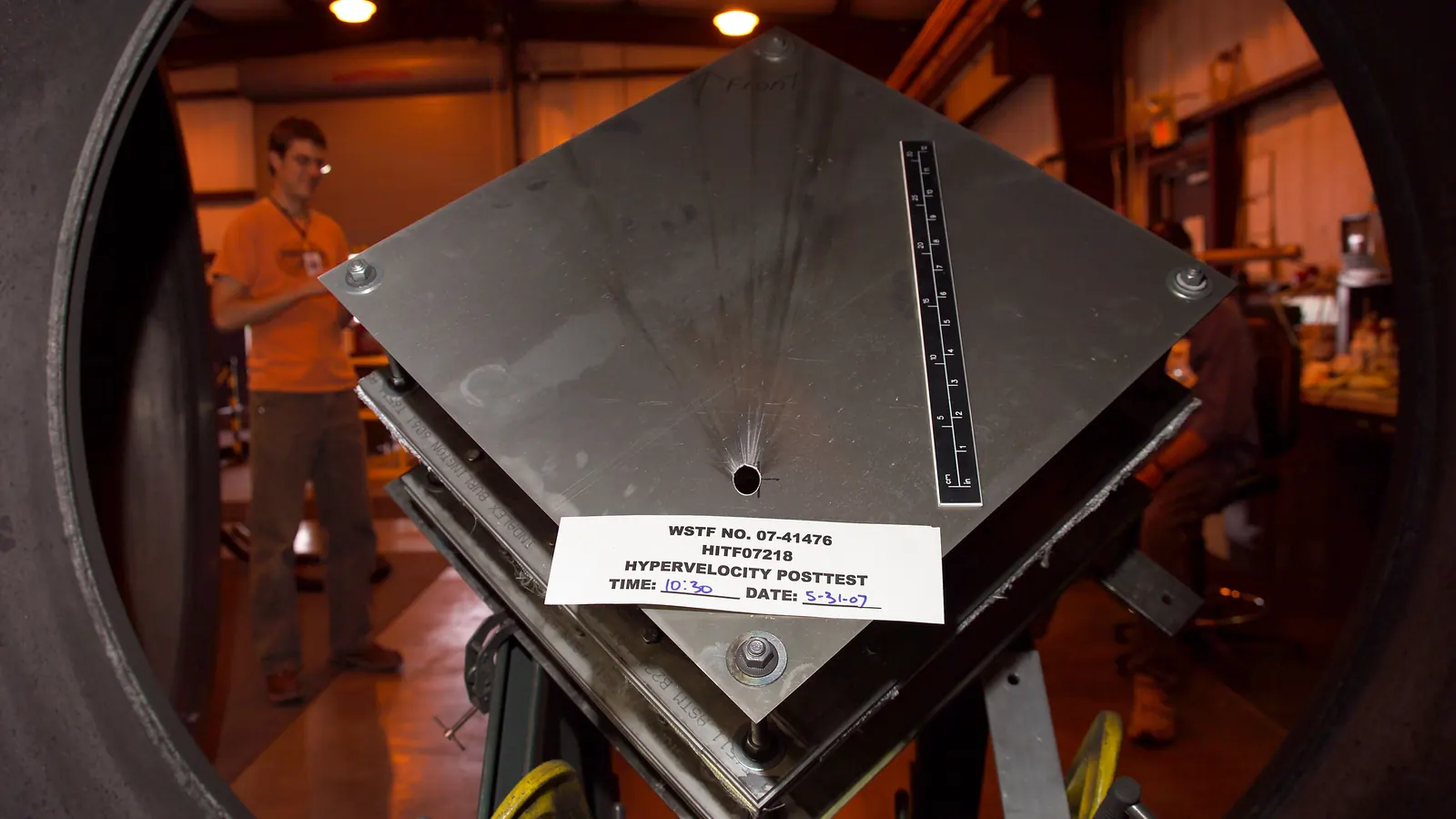
The US public catalog lists about 34,000 objects in Earth orbit, and ESA puts the number that surveillance networks regularly track at about 47,000. Fewer than half the objects on either list are working satellites. For debris too small to follow piece by piece, ESA relies on models, which estimate about 1.5 million fragments between 1 and 10 centimetres and some 230 million between 1 millimetre and 1 centimetre. Those are the usual answers to how much space debris is in orbit, but a catalog count, a tracking tally and a model estimate each measure something different.
Space debris is anything people have put in orbit that no longer does a job, which covers dead satellites, rocket stages left behind after launch, and the fragments from explosions and collisions. Our guide to how many satellites are in orbit gives the wider census, and the population counts below are from 2026.
How many pieces of space junk are orbiting Earth?
Each issue of NASA's Orbital Debris Quarterly News carries a box score, a tally of the US public catalog by type. The newest, in the September 2026 issue, lists 34,054 catalogued objects in Earth orbit. Of those, 19,154 are spacecraft, working or dead, and 14,900 are rocket bodies (spent rocket stages) and other catalogued debris. The total was 956 higher than in the July 2026 issue's box score. Spacecraft went up by 965 while rocket bodies and debris slipped by nine, so the spacecraft account for all of the net growth between the two issues.
ESA's statistics count something else, about 47,000 objects that space surveillance networks regularly track and keep in their catalogues. The two totals come from different lists on different dates, so the gap of roughly 13,000 between them isn't growth. For the traffic itself, ESA's 2026 Space Environment Report counts more than 300 launches in 2025, carrying over 4,000 new payloads to orbit. The same report says more than three intact satellites or rocket bodies came down on an average day.
Either way, tracking has a size limit. The US Space Surveillance Network, run by the Department of Defense, follows objects down to about 10 cm in low orbit, mostly with radar, according to a 2025 issue of NASA's debris newsletter. Each catalogued object gets a number and a regularly updated orbit, and CelesTrak's lists of them feed WatchSat's live satellite globe. Smaller debris is sampled rather than listed piece by piece. NASA's HUSIR radar, for one, detects pieces down to about 5 mm at altitudes below 1,000 km.
A model estimate is a third kind of number. ESA's MASTER-8 model, set to the population as it stood in February 2026, estimates about 68,450 objects larger than 10 cm. About 11,300 of those are active payloads, meaning working satellites. The 1.5 million and 230 million smaller pieces come from the same model. Our Starlink census set those figures against the working fleet.
Is space junk dangerous?
Yes, mainly because of its speed. In low Earth orbit, the band closest to the planet, debris travels at about 7 to 8 km per second, NASA's debris office says. When two objects collide, the average impact speed is about 10 km/s, or 36,000 km/h (22,400 mph), and some impacts reach 15 km/s.
By our own arithmetic, a solid aluminium sphere 1 cm across weighs 1.4 grams and strikes at 10 km/s with about 71 kilojoules. A 1,500 kg car moving at about 35 km/h (22 mph) carries the same energy. Scale the sphere up to 10 cm and 1.4 kg, and the energy climbs to about 71 megajoules, roughly what 17 kg of TNT releases. Even a 1 mm grain hits with about 71 joules, as much as a baseball pitched at 70 mph.
Spacecraft can survive the smallest hits. NASA says the space station's crew compartments and high-pressure tanks should normally withstand debris up to about 1 cm across, and objects of 10 cm and up are tracked and can be dodged. The pieces in between are the hard part. A 2021 NASA briefing found that small debris dominates the risk of losing a mission, and that maneuvers around tracked objects address less than 1% of the impact risk.
The space station does dodge the big ones. Its flight rules call for a maneuver when the predicted chance of a hit tops 1 in 10,000. NASA's debris newsletter described the rule in 2014, when the station had made 16 such moves in its first 15 years. The latest burn we found on NASA's station blog was on April 30, 2025, using the thrusters of Progress 91, a cargo ship docked at the station. They fired at 6:10 p.m. EDT for 3 minutes 33 seconds to avoid a piece of a Chinese Long March rocket launched in 2005. Without the burn, NASA estimated, the fragment could have passed within about 0.4 miles (0.64 km). Space.com counted it as the station's 41st debris-avoidance maneuver since 1999. Our ISS pass predictions show when the station next crosses your sky.
Where the debris came from, and Kessler syndrome
Fragments come from break-ups, and ESA's 2026 report puts the average at about 9.8 accidental ones a year over the past two decades. Three single events stand out, two of them deliberate. China destroyed its own Fengyun-1C weather satellite with a missile on January 11, 2007, about 865 km up, and 3,312 pieces from it had been catalogued by 2012, according to CelesTrak. On February 10, 2009, the working Iridium 33 and the retired Russian Cosmos 2251 collided about 790 km up at 11.6 km/s, leaving 2,201 catalogued pieces by mid-2012.
The third came on November 15, 2021, when Russia tested an anti-satellite weapon on Kosmos 1408, a defunct Soviet signals-intelligence satellite launched in 1982. US Space Command counted more than 1,500 pieces of trackable debris, and NASA's administrator called the test an "irresponsible and destabilizing action." The station's crew closed hatches and sheltered in their docked spacecraft for two passes near the cloud. SpaceNews reported in 2022 that 1,783 objects from the test had been tracked by August that year, and 1,122 of them had already re-entered.
Kessler syndrome is the runaway process that Donald Kessler and his co-author, Cour-Palais, described in a 1978 paper. Fragments from one collision raise the odds of the next, until a belt of debris grows by itself.
ESA's 2026 Space Environment Report calls self-sustaining collisions the greatest long-term threat in orbit. Its projections, now run 100 years ahead instead of 200, show objects and collisions in low Earth orbit climbing steeply. ESA also says the debris population would keep rising even with no new launches, because break-ups add fragments faster than re-entry removes them. To stop the growth, it says, active debris removal is needed, meaning missions that take junk out of orbit. The report treats all this as a long-term threat and doesn't say a cascade has begun.
Where today's satellites fly relative to the old debris
Altitude decides how long junk lasts. NASA's debris office says debris below 600 km normally falls back within several years. Higher up, orbital decay, the slow drop caused by drag from the thin upper atmosphere, takes much longer. At 800 km it's often measured in centuries, and above 1,000 km debris keeps circling for a thousand years or more. To see where the active fleet sits on that scale, we sorted the 16,683 objects in our October 8 snapshot of CelesTrak's active list by mean altitude, their average height over an orbit. We worked it out from each orbit's period and measured it above Earth's equatorial radius of 6,378 km. The list holds satellites, not fragments, so it's only 49% of NASA's catalogued total.
In that snapshot, 13,365 objects, or 80.1%, have a mean altitude below 600 km, the zone where NASA says debris falls back within years. All 11,132 of the Starlink satellites are among them, at a median of 465.6 km, and so is the International Space Station near 420 km. The share below 600 km stayed between 80.0% and 80.1% in all eight snapshots we checked from September 15 to October 8.
Another 946 objects (5.7%) sit between 600 and 800 km, led by Amazon's Kuiper satellites (376) and Iridium (80). The remaining 2,372, or 14.2%, are at 800 km or higher, where NASA's decay times run to centuries or longer. That group includes 648 OneWeb satellites around a median of 1,201.8 km, 252 from China's Qianfan network and 223 from Guowang. It also takes in the navigation satellites in medium orbit and those in the geostationary belt high over the equator.
The 80 Iridium NEXT satellites, such as Iridium 106, orbit at a median of 777.7 km, about 12 km below the altitude where Iridium 33 was destroyed. In all, 56 active orbits in our snapshot pass through 790 km and 41 through 865 km, the height of the Fengyun-1C test. They're a small part of the fleet, but they fly through the heights of the 2007 and 2009 debris clouds.
The Kosmos 1408 cloud, which had lost most of its tracked pieces to re-entry by 2022, is thinning on its own. A speaker at a conference that year expected it to be gone by about 2033, SpaceNews reported. For the population as a whole, ESA's projections point upward even without new launches, and its next annual report will show whether 2026's launches have pushed the curve higher.
Sources
- US Space Command, Russian direct-ascent anti-satellite missile test creates significant, long-lasting space debris, November 15, 2021
- NASA Orbital Debris Program Office, Orbital Debris Quarterly News, September 2026 (vol. 30, issue 3) and July 2026 (vol. 30, issues 1 and 2), satellite box scores; 2014 issue (vol. 18, issue 1, ISS avoidance rules); 2025 issue (vol. 29, issue 1, Space Surveillance Network limits)
- NASA Orbital Debris Program Office, Frequently asked questions and Measurements, undated
- ESA, ESA Space Environment Report 2026, 2026, and ESA Space Debris User Portal, Space Environment Statistics, 2026
- NASA, Station maneuvers to avoid orbital debris, April 30, 2025
- NASA, NASA Administrator statement on Russian ASAT test, November 15, 2021, and Crew operations aboard space station return to normal, November 17, 2021
- NASA, Orbital debris mitigation (Liou briefing), 2021
- Jonathan McDowell, Active satellites, snapshot of June 15, 2026
- Kessler and Cour-Palais, Collision frequency of artificial satellites: the creation of a debris belt, Journal of Geophysical Research, June 1, 1978
- CelesTrak, Chinese ASAT test and Iridium 33/Cosmos 2251 collision, both last updated 2012; active satellite element sets, snapshots of September 15 to October 8, 2026
- SpaceNews, report on the Kosmos 1408 debris cloud, 2022
- Space.com, International Space Station fires thrusters to avoid Chinese rocket debris, 2025
Follow by RSS. Share this post: Bluesky · X · Reddit · Email
More from the blog
-
Do satellites affect astronomy? Streaks, Starlink and Rubin
Do satellites affect astronomy? Streaks crossed 2.7% of Hubble exposures from 2002 to 2021, and Rubin simulates trails in about 10% of its survey images.
-
How do solar storms affect satellites? Drag, GPS, Starlink
Solar storms affect satellites by heating the upper air, which adds drag in low orbit, and by skewing GPS. A mild 2022 storm downed 38 of 49 new Starlinks.
-
What is a sun-synchronous orbit? Polar orbits and dawn-dusk
A sun-synchronous orbit turns 0.9856° a day with the Sun, so Landsat 9 crosses the equator southbound near 10:12 a.m. One in five active satellites flies one.
-
Where is the Hubble Space Telescope now? Orbit and reentry
The Hubble Space Telescope orbits about 470 km up and is sinking roughly 10 km a year. STScI puts its most likely reentry in 2033 unless it gets a boost.
-
Where is the James Webb Space Telescope? Distance and orbit
The James Webb Space Telescope was 1.36 million km from Earth on October 8, 2026, looping around L2. Its distance swings from 1.2 to 1.75 million km.
Home · Live satellite map · Satellite directory · Starlink · OneWeb · Navigation satellites · Space stations · Other active satellites · Track the ISS · ISS visible passes · Starlink train · Rocket launches · Aurora forecast · Humans in space · Solar System · Deep Space · Embed widgets · Blog · Guide: spot the ISS · Guide: what is a TLE? · Guide: how many satellites? · Guide: satellite trackers compared · Discovery: Elias 2-24 b · About · FAQ · Data & methodology · Credits · Editorial policy · Accessibility · Contact · Privacy · Terms
© 2026 WatchSat · Not affiliated with any space agency or satellite operator.