WatchSat › Blog › How far away is the Moon? Distance, perigee and supermoons
How far away is the Moon? Distance, perigee and supermoons
How far away is the Moon? 384,400 km (238,855 miles) on average. In 2026 it ranges from 356,641 to 406,407 km, closest on December 24.
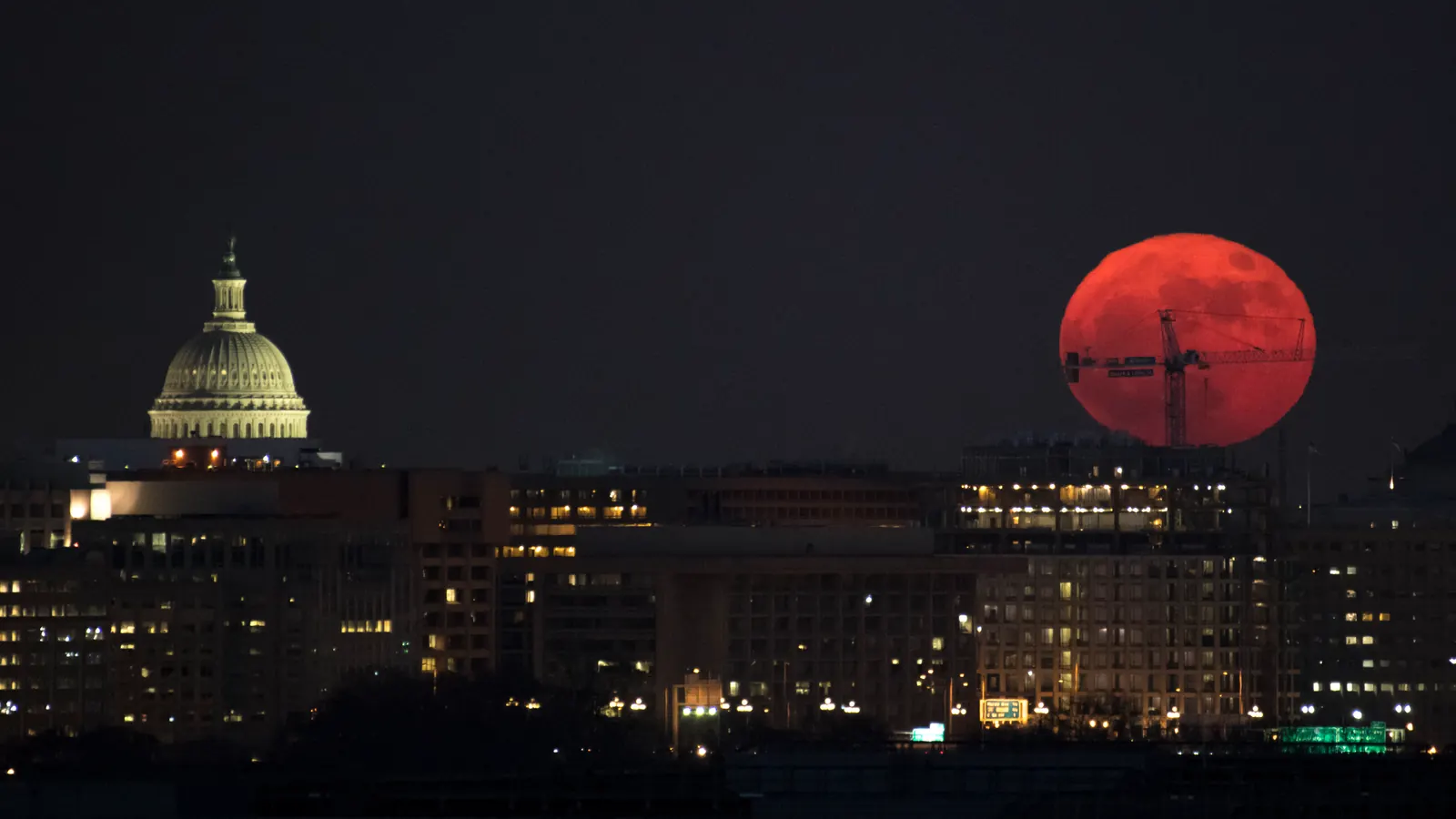
The Moon is about 384,400 km (238,855 miles) from Earth on average, measured centre to centre, according to NASA's Moon fact sheet. The real distance changes by the hour, because the orbit is an ellipse. On October 12, 2026, at 00:00 UTC, it was 392,785 km (244,065 miles) away by our calculation, and its light took 1.31 seconds to reach Earth. Across 2026 the distance swings by about 50,000 km, from 356,641 km to 406,407 km.
BBC Sky at Night Magazine puts the average gap at about 30 Earths laid side by side. Geostationary satellites circle far inside that gap, and the Earth-Moon pair has Lagrange points of its own. You'll find the Moon under Earth in our 3D solar system map, though its panel there quotes NASA's average rather than the distance on the day you look.
Why does the Moon's distance from Earth change?
The orbit is slightly stretched. NASA's fact sheet gives it an eccentricity of 0.0549, where zero would be a perfect circle. It lists a mean perigee, the closest point of an average orbit, of 363,300 km and a mean apogee, the farthest point, of 405,500 km. NASA's eclipse website gives almost the same pair, 363,396 km and 405,504 km. The headline 384,400 km is the orbit's semimajor axis, half its longest diameter. Other sources average differently, and EarthSky gives 238,900 miles (384,472 km).
Individual orbits stray past those means. The fact sheet's notes put the distance between roughly 357,000 and 407,000 km over a year. Science Notes gives the outer limits as about 356,400 km at the closest perigees and about 406,700 km at the farthest apogees.
A full Moon near perigee gets called a supermoon. NASA points out that the word isn't an official astronomical term. It was coined in 1979, and it usually means a full Moon within at least 90 percent of perigee. NASA says such a Moon can look up to 14 percent bigger and about 30 percent brighter than a full Moon at apogee, though most people probably won't notice, and tides run higher. An older NASA supermoon FAQ says 17 percent bigger and 30 percent brighter, measured against the year's faintest Moon. The two pages disagree on size, and our own numbers below come out at 14 percent.
How do scientists measure the distance to the Moon?
They time laser pulses. Reflector arrays that Apollo astronauts left on the surface have been used since 1969 to study the Earth-Moon system and test physics, according to SPIE, the optics society. A telescope fires a pulse at a reflector and times the faint echo. At the average distance the round trip takes about 2.56 seconds, by our arithmetic, and half that time multiplied by the speed of light gives the distance.
The Soviet Lunokhod rovers carried reflectors too, and the one on Lunokhod 1 had long been lost. In April 2010 a UC San Diego team used the 3.5 m telescope at Apache Point Observatory to find it again, ScienceDaily reported. Images from NASA's Lunar Reconnaissance Orbiter had identified the rover and fixed its position to about 100 m, the team's paper says. The first returns pinned the reflector's distance from Earth to within 1 cm (0.4 inches), and a second session fixed its position on the Moon to within 10 m.
It proved unusually bright. The paper puts its signal at about four times that of its twin on Lunokhod 2. Statements to the press went further, putting it at least five times brighter, Laser Focus World reported.
Half a century of these measurements shows the Moon drifting away by 3.8 cm (1.5 inches) a year, NASA's Jet Propulsion Laboratory says. Tides cause it. The pull between the Moon and the bulges it raises on Earth slows our planet's spin and tugs the Moon forward along its orbit, which moves it outward. NASA puts that push at roughly 3 mm a month. EarthSky likewise blames tidal friction with Earth's oceans. A century of drift adds 3.8 m, tiny next to the roughly 50,000 km the distance swings within a year.
The Moon's distance in our astronomy-engine data
Our live satellite map places satellites from two-line element sets, compact orbit descriptions explained in our guide to TLEs. The Moon isn't in that data or in our directory of active satellites, so we use astronomy-engine for it, the ephemeris library behind the site's sky and solar system pages. Our methodology page explains how the site uses it, and it's listed on our credits page. Every figure here is centre to centre.
Averaged hour by hour across 2026 and 2027, our distances come to 384,970 km, 570 km more than NASA's 384,400. NASA's figure is the semimajor axis, and the Moon moves slowest near apogee, so it lingers at the far end of its orbit and pulls the time average up. The textbook time average for an orbit of this shape, a(1 + e²/2), comes to 384,979 km. In 2026 the closest perigee comes on December 24 at 08:32 UTC, at 356,641 km, and the farthest apogee on December 11 at 06:44 UTC, at 406,407 km. Both extremes fall in the same month, and the December perigee dips just below the fact sheet's rough range. For 2027 we get 357,273 km at perigee on January 21 and 406,597 km at apogee on January 7, both inside it.
The next three months bring the last two of 2026's three supermoons, which BBC Sky at Night Magazine and EarthSky date to January 3, November 24 and December 24.
| Date (2026) | Time (UTC) | Event | Distance |
|---|---|---|---|
| October 16 | 22:54 | Apogee | 404,632 km (251,427 miles) |
| October 26 | 04:12 | Full Moon | 368,859 km (229,198 miles) |
| October 28 | 18:04 | Perigee | 364,397 km (226,426 miles) |
| November 13 | 17:50 | Apogee | 405,608 km (252,033 miles) |
| November 24 | 14:54 | Full Moon (supermoon) | 360,754 km (224,162 miles) |
| November 25 | 21:02 | Perigee | 359,335 km (223,280 miles) |
| December 11 | 06:44 | Apogee, farthest of 2026 | 406,407 km (252,530 miles) |
| December 24 | 01:28 | Full Moon (supermoon) | 356,729 km (221,661 miles) |
| December 24 | 08:32 | Perigee, closest of 2026 | 356,641 km (221,606 miles) |
The December 24 full Moon is the closest of the year, and it falls on the evening of December 23 in US time zones. We put it at 356,729 km (221,661 miles), seven hours before perigee. EarthSky, citing Fred Espenak's tables, gives 221,667 miles and a perigee at 08:30 UTC, two minutes before ours. Both EarthSky and BBC Sky at Night Magazine call it the closest full Moon since 2019.
Our figures run 8 to 13 km short of EarthSky's for all four 2026 full Moons we could compare, on January 3, May 31, November 24 and December 24. For November 24 EarthSky has 224,170 miles (360,767 km), and we have 360,754 km. We haven't traced the cause. We also couldn't confirm that Espenak's distances are for the moment of full Moon, though the steady gap, at near and far full Moons alike, suggests they are. At 13 km, the largest gap is under 0.004 percent of the distance.
The smallest full Moon of 2026 was the Blue Moon of May 31, which EarthSky put at 252,360 miles (406,134 km) and we put at 406,126 km. ScienceAlert also called it the year's smallest. Our numbers make the December 24 Moon 13.8 percent wider than the farthest full Moon from now through 2027, on July 18, 2027, and 29.5 percent larger in area, in line with NASA's 14 percent bigger and 30 percent brighter. Even "micromoon" is a loose label. EarthSky notes that Espenak's AstroPixels counted the May 1 full Moon as one and Timeanddate.com didn't.
Travel time to the Moon, from light to Artemis II
Light crosses the gap in 1.19 to 1.36 seconds, depending on where the Moon is in its orbit, by our numbers for 2026 and 2027. Our deep-space tracker gives the same kind of signal time for probes that are light-hours away, including Voyager 1, which we've followed toward one light-day from Earth.
Spacecraft take days. Apollo 11 launched on July 16, 1969. According to NASA's mission overview, it entered lunar orbit on July 19, about 75 hours 50 minutes after liftoff. The mission report rounds it to about 76 hours. The lunar module touched down at 20:17:40 UTC on July 20.
NASA's uncrewed Artemis I flew much farther. On November 28, 2022, flight day 13, its Orion capsule reached 268,563 miles (432,210 km) from Earth, 43,471 miles beyond the far side of the Moon, in a distant retrograde orbit, NASA's mission blog reported. Two days earlier it had passed Apollo 13's distance record of 248,655 miles, Space.com reported.
Artemis II launched with a crew from Kennedy Space Center on April 1, 2026, Fox 35 Orlando reported. On flight day 6, April 6, the crew flew past the Moon about 4,067 miles (6,545 km) above its surface. They reached 252,756 miles (406,771 km) from Earth, beating Apollo 13's 248,655 miles (400,171 km) as the farthest humans have travelled, NASA said. NASA's Reid Wiseman, Victor Glover and Christina Koch and the Canadian Space Agency's Jeremy Hansen splashed down off San Diego on April 10, NASA said.
By our reading, timing helped. Our astronomy-engine run puts the Moon about 404,000 km from Earth on April 6, a day before its apogee of 404,960 km at 08:31 UTC on April 7. Had the flyby come at the April 19 perigee instead, the Moon itself would have been about 43,000 km closer. The flyby came five days after launch, against about three days for Apollo 11 to reach lunar orbit. Artemis II flew a different path and passed the Moon without braking into orbit, so the gap says little about speed.
Our launch schedule lists upcoming launches, and our humans in space page shows who is off the planet right now.
Sources
- NASA, NASA Welcomes Record-Setting Artemis II Moonfarers Back to Earth, April 10, 2026
- NASA, NASA's Artemis II Crew Eclipses Record for Farthest Human Spaceflight, April 6, 2026
- NASA, Artemis II Flight Day 6: Crew Wraps Historic Lunar Flyby, April 6, 2026
- Fox 35 Orlando, Artemis II breaks Apollo 13 record, now farthest distance in space from Earth in history, April 2026
- EarthSky, What's a supermoon? Here are the supermoons in 2026, 2026
- EarthSky, Micromoon definition: full moon at apogee, 2026
- BBC Sky at Night Magazine, We'll get three supermoons in 2026. Here's how to see them all, 2026
- BBC Sky at Night Magazine, news report on the Christmas Eve supermoon, 2026
- ScienceAlert, report on the May 2026 blue micromoon, 2026
- NASA, Artemis I Flight Day 13: Orion Goes the (Max) Distance, November 28, 2022
- Space.com, report on Orion passing Apollo 13's distance record, November 2022
- NASA/JPL, The Apollo experiment that keeps on giving, 2019
- NASA, Apollo 11 Mission Overview, undated
- NASA, Apollo 11 Mission Report, 1969, reissued 2019
- ScienceDaily, UC San Diego release on finding the Lunokhod 1 reflector, April 26, 2010
- Murphy et al., Laser Ranging to the Lost Lunokhod 1 Reflector, arXiv, September 2010
- Laser Focus World, UCSD physicists find that last, long-lost lunar retroreflector, 2010
- SPIE Newsroom, Lunar laser ranging: 40 years of high-level science, 2009
- NASA NSSDCA, Moon Fact Sheet, undated
- NASA Goddard, Eclipses and the Moon's Orbit, undated
- NASA Science, Supermoons, undated
- NASA, Supermoon Frequently Asked Questions, undated
- EarthSky, Wayward Moon is receding from Earth, undated
- BBC Sky at Night Magazine, You could fit every planet in the Solar System between Earth and the Moon, undated
- Science Notes, Perigee and Apogee Definition, Moon Distance and Effects, undated
- Astronomy Engine, astronomy-engine library, used for WatchSat's Moon distances, run October 12, 2026
Follow by RSS. Share this post: Bluesky · X · Reddit · Email
More from the blog
-
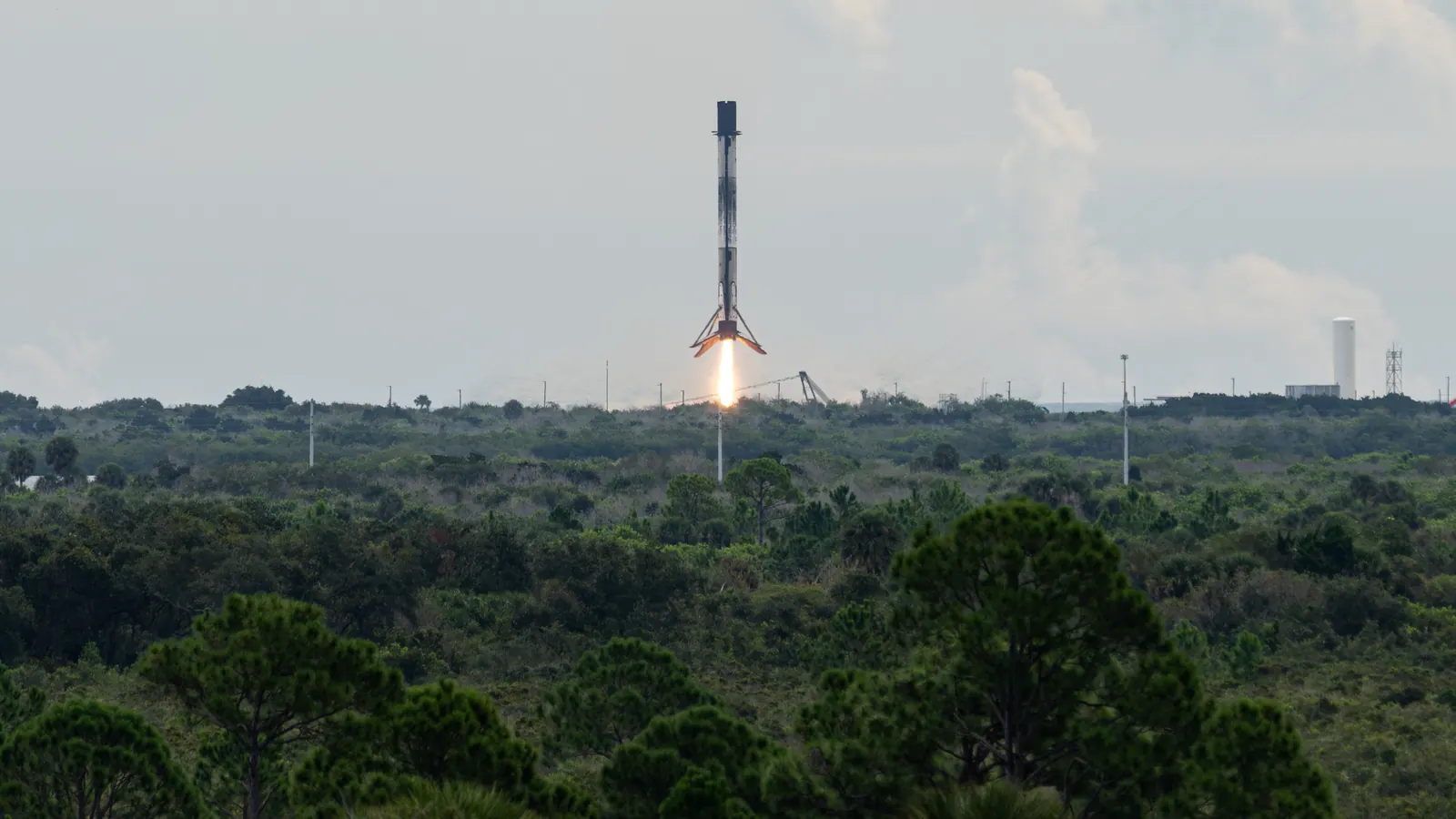
How many times can a Falcon 9 booster fly? The reuse record
Falcon 9 booster B1067 flew a record 37th time on August 25, 2026. SpaceX says its boosters are built for up to 40 flights.
-
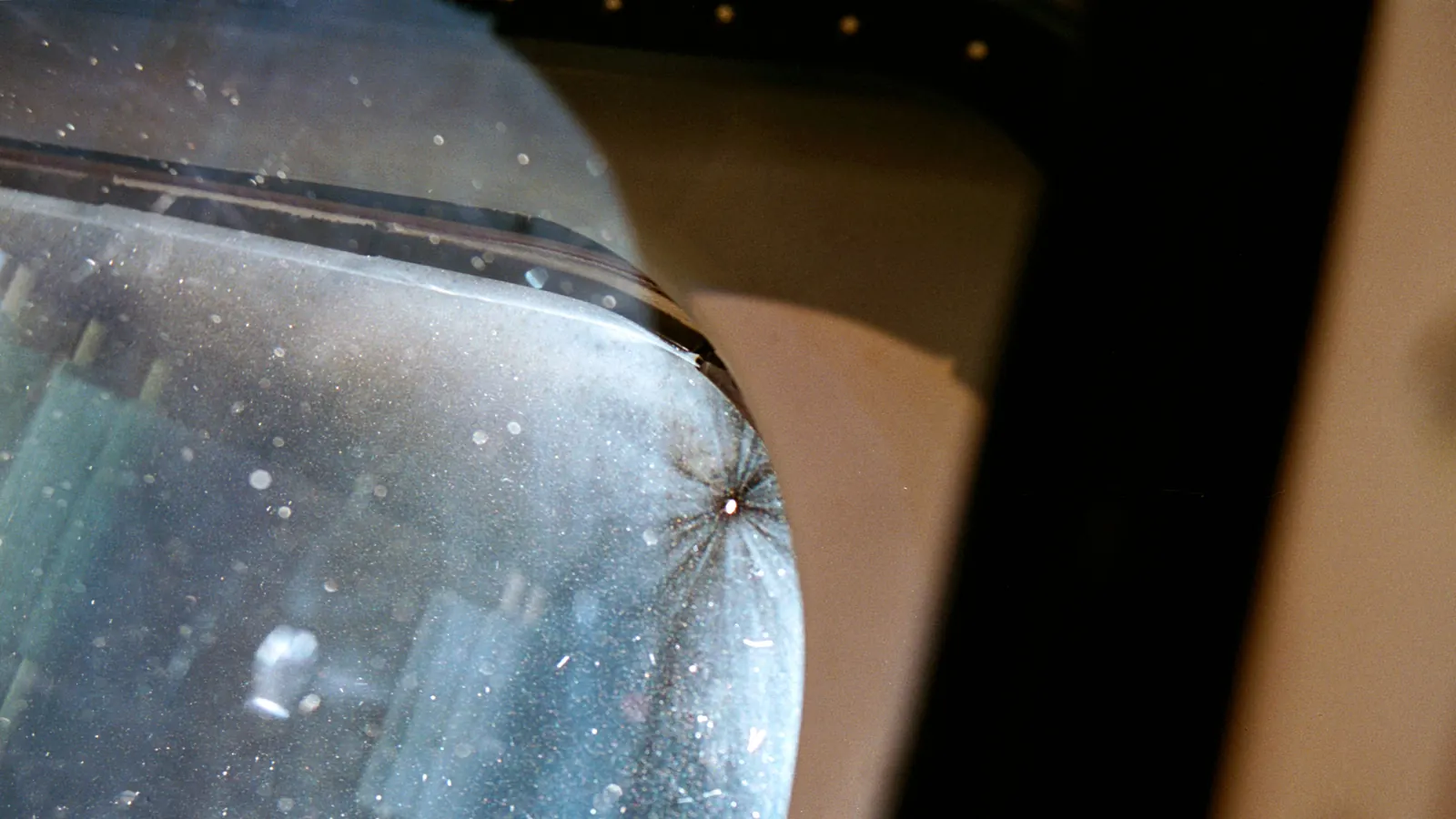
What is Kessler syndrome? How a space debris cascade works
Kessler syndrome is a runaway chain of collisions in orbit, first described in 1978. ESA's 2026 report projects low-orbit collisions climbing fast.
-
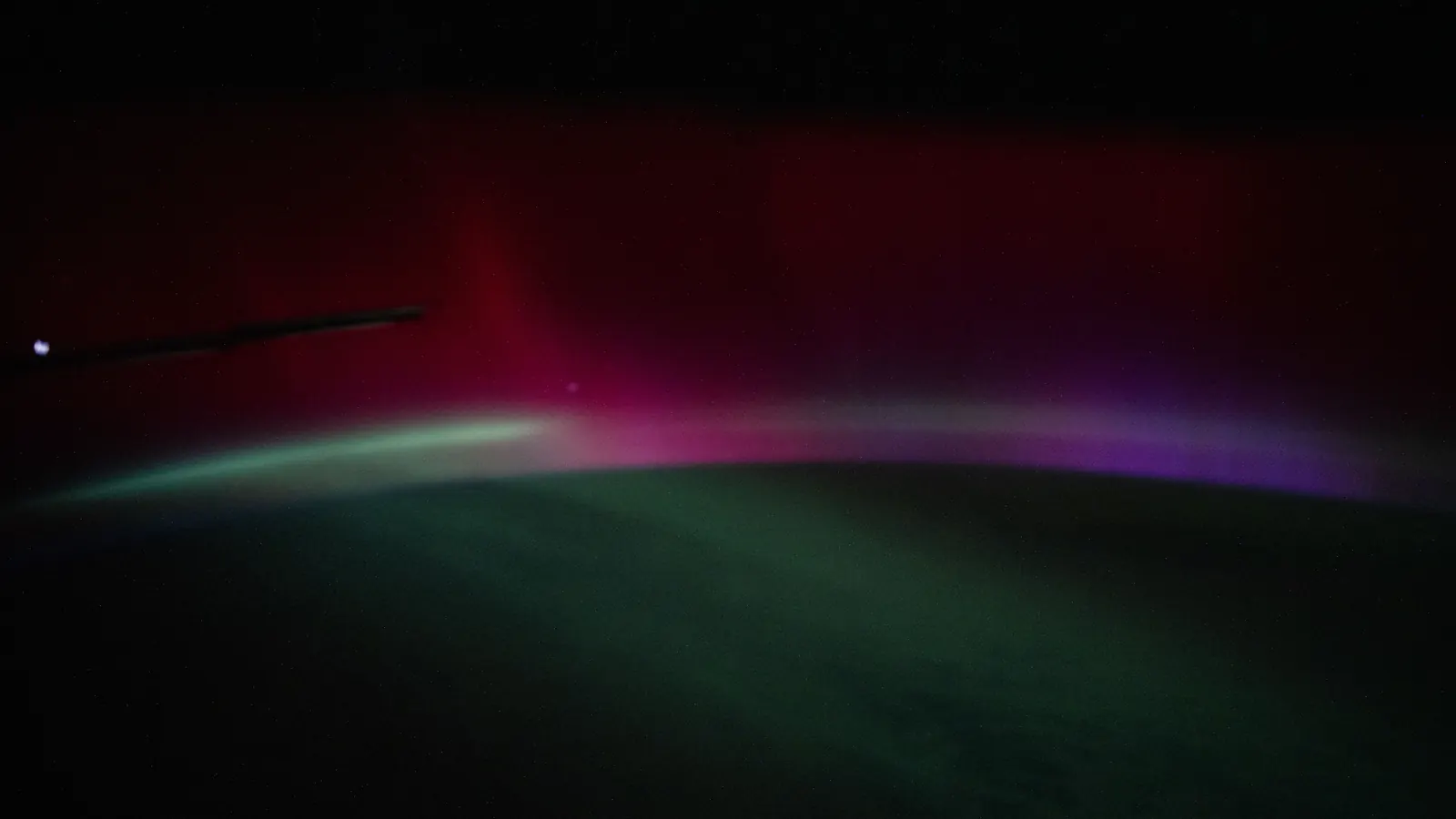
What is the Kp index? How to read an aurora forecast
The Kp index rates geomagnetic activity from 0 to 9 every three hours. Kp 5 is a G1 storm, and each step brings the aurora about 2 degrees nearer the equator.
-
Leonid meteor shower 2026: peak time, Moon and next storm
The Leonid meteor shower 2026 peaks around 23:45 UTC on November 17, at a ZHR of about 15, under a half-lit Moon that sets by about midnight.
-
When is Mars closest to Earth? 2027 date and distance
Mars is closest to Earth on February 20, 2027 (UTC), 101.41 million km away, hours after opposition. By our count it's the farthest such approach of 2001-2100.
Home · Live satellite map · Satellite directory · Starlink · OneWeb · Navigation satellites · Space stations · Other active satellites · Track the ISS · ISS visible passes · Starlink train · Rocket launches · Aurora forecast · Humans in space · Solar System · Deep Space · Embed widgets · Blog · Guide: spot the ISS · Guide: what is a TLE? · Guide: how many satellites? · Guide: satellite trackers compared · Discovery: Elias 2-24 b · About · FAQ · Data & methodology · Credits · Editorial policy · Accessibility · Contact · Privacy · Terms
© 2026 WatchSat · Not affiliated with any space agency or satellite operator.