WatchSat › Blog › What are China's Qianfan and Guowang constellations?
What are China's Qianfan and Guowang constellations?
China's Qianfan and Guowang satellite constellations had 477 satellites on CelesTrak's active list on October 11, 2026, toward plans of about 15,000 and 13,000.
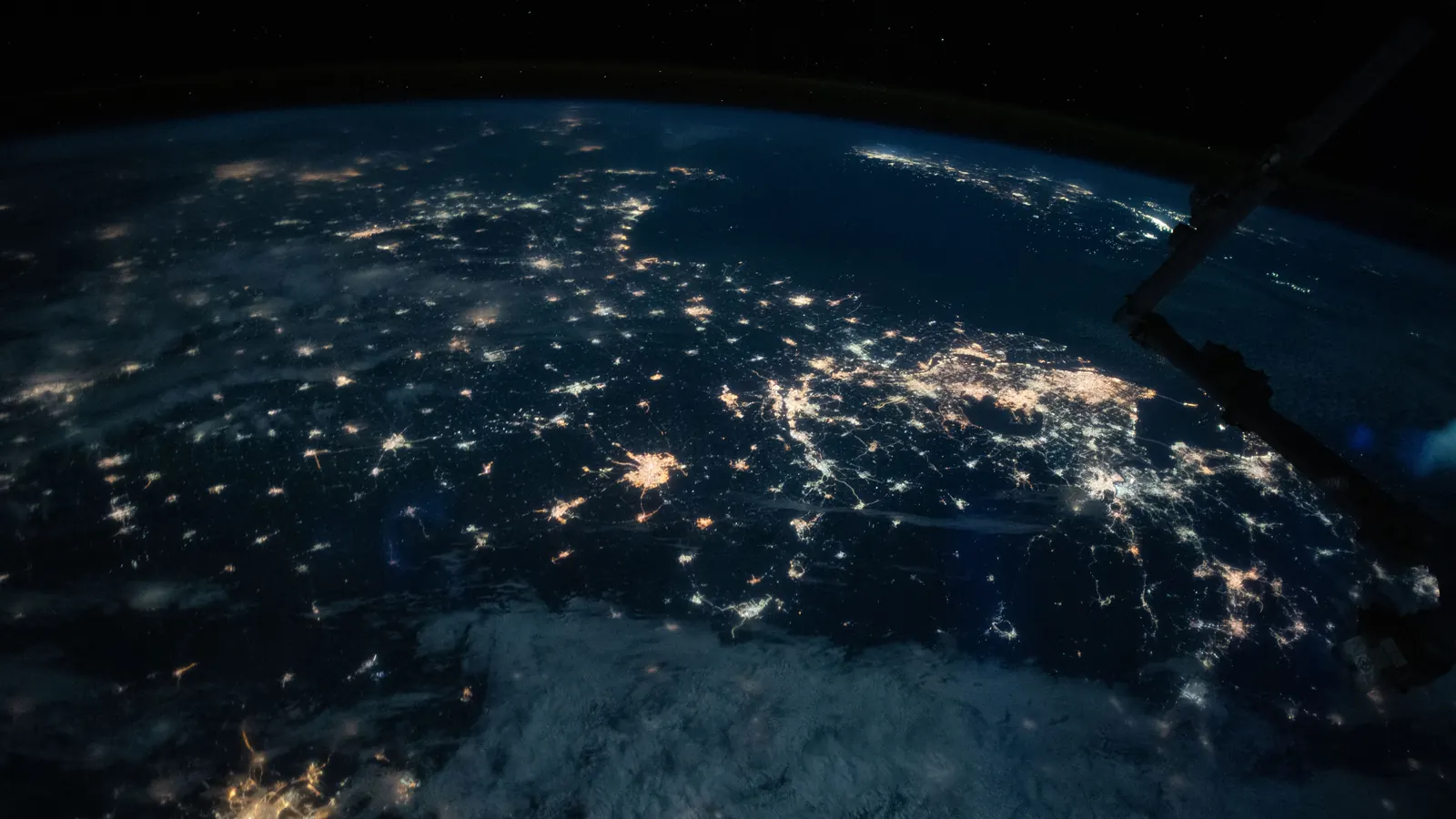
China's Qianfan and Guowang satellite constellations are two broadband networks in low Earth orbit, built as China's answer to SpaceX's Starlink. In our October 11, 2026 snapshot of CelesTrak's list of active satellites, they had 477 satellites between them, 257 for Qianfan and 220 for Guowang. Starlink had 11,129 on the same list, about 23 times as many.
Both networks began launching in 2024. By October 11, our count of this year's rocket launches had found 23 launches in 2026 that left Qianfan or Guowang satellites, or their test satellites, still on the list.
Who runs Qianfan and Guowang, and how big will they get?
Qianfan means "Thousand Sails". SpaceNews names its operator as Shanghai Spacecom Satellite Technology, or SSST, which uses the name SpaceSail outside China. Brazil's telecom regulator, Anatel, authorised SpaceSail in February 2026 to operate up to 324 satellites there, Tecnoblog reported.
SpaceNews has reported that Qianfan plans about 15,000 satellites in all, with 1,296 in orbit by the end of 2027 for global coverage. It has missed a target before. In 2024 the same outlet reported a goal of 648 satellites by the end of 2025, and by December 2025 only 108 had been launched, about a sixth of that.
Guowang, a name that translates roughly as "national network", belongs to the state-owned China Satellite Network Group, or China SatNet. Its filings with the International Telecommunication Union (ITU), the UN body that coordinates satellite frequencies and orbits, cover about 13,000 satellites, China Daily reported in January 2026.
Qianfan's first 18 satellites went up on a Long March 6A rocket from Taiyuan on August 6, 2024. Later Qianfan batches have also flown from China's commercial spaceport on Hainan, and Guowang's tenth group went up on a Long March 8A, SpaceNews reported.
The first launch left debris behind. Its upper stage broke apart in orbit near 810 km, where air drag is so weak that the fragments can stay up for decades or longer. U.S. Space Command said it was tracking more than 300 pieces, and the tracking firm LeoLabs counted at least 700, Air & Space Forces Magazine reported.
How many Qianfan and Guowang satellites are in orbit?
Counting them takes some decoding, because CelesTrak doesn't list Guowang under that name. We used the October 11 snapshot of 16,701 active objects that drives our live satellite map. Qianfan is the simpler of the two. It has 248 satellites named QIANFAN-1 to QIANFAN-248, plus nine from its 16th launch still under placeholder names, the temporary labels new objects carry until they're identified.
Guowang's satellites are listed as HULIANWANG DIGUI, a romanized Chinese name meaning roughly "internet, low orbit", from HULIANWANG DIGUI-01 to number 213. Only seven objects carry the word GUOWANG. They're placeholders from the 27th launch, such as GUOWANG 27 OBJECT A, so a catalog search for "Guowang" turns up seven of the 220 satellites. We left two related groups out of that total, 21 test satellites and three in geostationary orbit, the high ring over the equator. Both networks sit among the other satellites in our directory.
Each orbit record also carries an international designator naming its launch, such as 2026-230 for the 230th launch of 2026. Sorting by it gives 16 Qianfan launches and 27 Guowang groups with survivors on the list, and the running totals agree with SpaceNews. Satellites launched through 2025 add up to 108 for Qianfan and 136 for Guowang, the two figures SpaceNews gave for December 2025. Through the seventh Qianfan launch and the 21st Guowang group, they reach 126 and 168, as SpaceNews reported after those two launches in April 2026.
The satellites fly in three shells, each a set of orbits at one height and tilt. Qianfan's shell is at 1,068 km (664 miles), measured above Earth's equatorial radius of 6,378 km as CelesTrak's catalog does. Its inclination, the tilt of the orbits against the equator, is 89 degrees, so the satellites pass close to both poles. Guowang has 160 satellites at 1,149 km (714 miles) and 50 degrees, and 60 at 1,168 km (726 miles) and 86.5 degrees. A Qianfan launch usually carries 18 satellites, and a Guowang launch carries nine to the 50-degree shell or five or ten to the steeper one.
Parked Qianfan satellites and climbing Guowang ones
The orbit data also show which satellites are still on their way up. Across five snapshots from September 27 to October 11, we worked out each satellite's height from its mean motion, the number of orbits it completes in a day, which falls as the orbit gets higher. All 29 Guowang satellites more than 20 km short of their shell were climbing. The 24th group rose from 1,033 to 1,099 km over the period, about 4.4 km a day. The 27th, whose first orbit data are dated October 10, appeared at about 920 km.
Qianfan's new batches climb in steps, with pauses of a week or two. The two launched most recently, 19 satellites in all, have held at about 937 and 816 km since October 1. One object from the 16th launch, QIANFAN 16 OBJECT H, has stayed at 783 km since September 27, while its eight batchmates rose to between 805 and 824 km. It's still unnamed, so it could be a satellite waiting its turn or a piece of the rocket.
Some older Qianfan satellites aren't climbing. Of the 108 launched in 2024 and 2025, 21 sit 16 to 271 km below the 1,068 km shell. None moved more than 1 km in the 14 days we checked, and the same heights appear in our September 15 snapshot. Fifteen of the 21 came from the second launch, on October 15, 2024, and only three of that launch's 18 satellites reached the working height. QIANFAN-28, at 797 km, is one of the 15.
Jonathan McDowell, an astronomer who keeps an independent satellite catalog, reaches nearly the same count. His Qianfan statistics page, updated August 18, 2026, labels 22 of the 238 satellites in the main series "failed, decaying", 16 of them from the second launch. He works from his own catalog and we used altitude alone, so the closeness of 21 and 22 is a fair check on both. The trouble showed early. A preprint posted to arXiv in May 2025 already called the second launch less successful, citing nine failures on McDowell's site.
Orbit data can't tell a dead or tumbling satellite from one parked low on purpose. CelesTrak's active list keeps all 248 numbered Qianfan satellites, including the ones McDowell counts as failed, so a place on the list doesn't prove a satellite works. The newer batches look better. None of the 92 satellites from Qianfan's first six launches of 2026 sits below 1,060 km, and no Guowang satellite in our data is parked below its shell.
Height, coverage and the next deadlines
The median Starlink in our snapshot flies at 466 km, so Qianfan and Guowang fly 2.3 to 2.5 times as high. They're close to OneWeb at 1,202 km and well above Amazon's Kuiper satellites at 630 km, the subject of our post on Amazon's network. A higher satellite sees more ground. If users in every network connect only to satellites at least 25 degrees above the horizon, a Qianfan satellite covers 3.6 times the area a Starlink does, and a Guowang satellite 4.0 times. The cost is distance. A signal to a Qianfan satellite overhead takes 3.56 milliseconds one way, against 1.55 ms for a Starlink.
The parked Qianfans aren't coming down soon. Their median height is 844 km, and NASA's debris office says decay at 800 km is often measured in centuries, as our space debris explainer sets out. They'll stay up for a long time, and our post on satellite streaks covers how bright satellites like these look from the ground and in telescope images.
Qianfan's 2027 goal needs a much faster pace. Starting from the 257 Qianfan objects on the October 11 list, reaching 1,296 by the end of 2027 means about 1,039 more satellites in 446 days. That works out to about four launches of 18 a month, and Qianfan has averaged about one launch a month in 2026.
Guowang's deadlines come from the ITU. A system outside the geostationary belt must be brought into use within seven years of its filing. The ITU's Resolution 35 then requires 10% of the satellites to be deployed within two more years, half within five and all within seven, according to ITU workshop slides. We've assumed these milestones apply to Guowang's 2020 filings for about 13,000 satellites taken as a whole. If they do, Guowang would need about 1,300 satellites in orbit by 2029 and about 6,500 by 2032, against 220 on our October 11 list.
Nearer term, the 27th Guowang group has about 229 km to climb. At the 2.4 to 4.4 km a day that the 24th and 26th groups managed, it would reach 1,149 km in roughly two to three months. We'll also watch whether QIANFAN 16 OBJECT H and the two paused Qianfan batches start rising again. New flights for both networks show up on our launch schedule.
Sources
- CelesTrak, active satellite element sets, WatchSat snapshots of September 15 and September 27 to October 11, 2026
- Jonathan McDowell, Jonathan's Space Pages, Qianfan Launch Statistics, updated August 18, 2026
- China Daily, report on China SatNet's ITU filings for 12,992 satellites, January 13, 2026
- SpaceNews, Landspace secures launch contracts for China's megaconstellation projects, with figures as of December 2025
- SpaceNews, China conducts pair of Long March launches for Thousand Sails and Guowang megaconstellations, April 2026
- SpaceNews, China launches first satellites for Thousand Sails megaconstellation, August 2024, and China launches second batch of 18 satellites for Thousand Sails megaconstellation, October 15, 2024
- SpaceNews, Long March 8 launches Thousand Sails satellites from commercial spaceport, undated in our search, and China sends 10th group of Guowang broadband satellites into orbit with Long March 8A launch, 2025
- SpaceNews, China's Guowang launch raises questions about satellite purpose and transparency, undated in our search
- Air & Space Forces Magazine, Chinese Rocket Breaks Up in Orbit, Scattering Debris, August 2024
- arXiv, preprint 2505.07194 on the brightness of Qianfan satellites, May 2025
- ITU, Resolutions 8 and 35, space workshop slides, 2024, and Resolution 35 (Rev. WRC-23)
- Tecnoblog, Anatel autoriza SpaceSail, rival chinesa da Starlink, a operar no Brasil, February 2026
- NASA Orbital Debris Program Office, Frequently asked questions, undated
Follow by RSS. Share this post: Bluesky · X · Reddit · Email
More from the blog
-
When is the next total solar eclipse? August 2, 2027
The next total solar eclipse is on August 2, 2027. Totality crosses Spain, North Africa and Arabia, lasting up to 6 min 23 s in Egypt's desert near Luxor.
-
How fast is the Parker Solar Probe? Top speed and orbit
At closest approach the Parker Solar Probe reaches about 430,000 mph (692,000 km/h) relative to the Sun. On Oct. 11, 2026, it was doing just 13.9 km/s.
-
What are the different types of satellites? Uses and counts
The types of satellites, by job. Communications are 80.2% of the 16,701 on CelesTrak's active list, Starlink alone 66.6%, while about 10% can't be identified.
-
Where does space begin? The Kármán line, 100 km or 80 km
Where does space begin? FAI's Kármán line is 100 km (62 miles), the US uses 50 miles (80 km), and no law sets it. Nothing in our Oct 11 data was below 164.7 km.
-
Where is Europa Clipper now? Distance and the Earth flyby
Europa Clipper was 59.0 million km from Earth on October 11, 2026, and closer to the Sun than Earth is. It swings past Earth on December 3, bound for Jupiter.
Home · Live satellite map · Satellite directory · Starlink · OneWeb · Navigation satellites · Space stations · Other active satellites · Track the ISS · ISS visible passes · Starlink train · Rocket launches · Aurora forecast · Humans in space · Solar System · Deep Space · Embed widgets · Blog · Guide: spot the ISS · Guide: what is a TLE? · Guide: how many satellites? · Guide: satellite trackers compared · Discovery: Elias 2-24 b · About · FAQ · Data & methodology · Credits · Editorial policy · Accessibility · Contact · Privacy · Terms
© 2026 WatchSat · Not affiliated with any space agency or satellite operator.