WatchSat › Blog › What is SpaceX Starship? Size, engines and flight record
What is SpaceX Starship? Size, engines and flight record
SpaceX Starship is a two-stage rocket, 124.4 m tall, built to be fully reused. Its 14th flight reached orbit on September 28, 2026.
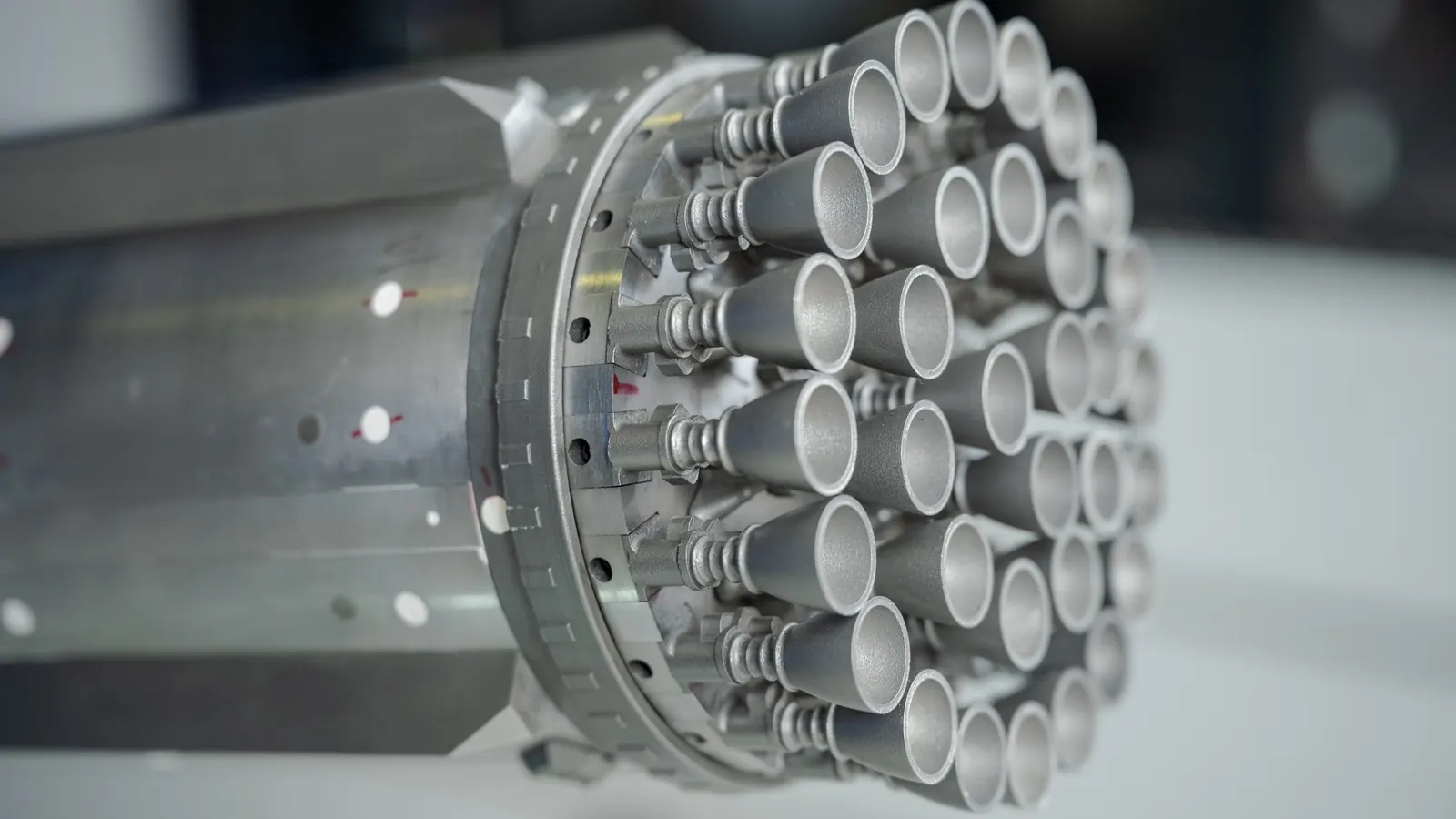
SpaceX Starship is a two-stage rocket built so that both stages can come back and fly again. In its current V3 form the full stack is 124.4 m (408 ft) tall, according to Next Spaceflight's listing for Flight 12. Its 14th test flight, on September 28, 2026, was the first to reach orbit, and it released 26 Starlink V3 satellites that are now in our catalog. It hasn't yet carried people, had its upper stage caught by the launch tower or passed propellant from one ship to another in orbit, and NASA needs that last step before a Starship can land astronauts on the Moon.
All 14 flights have launched from Starbase, SpaceX's site in Texas, starting in April 2023. SpaceX plans to use Starship for its next generation of Starlink satellites, and NASA has picked a version of it, Starship HLS, as one of the two landers for its Artemis missions. Our Flight 14 report covers that flight in detail and follows its satellites as they climb.
How big is Starship, and how does it work?
The bottom stage is the Super Heavy booster. On V3 it carries 33 Raptor 3 engines, according to New Space Economy's review of Starship V3, which rates each one at about 280 tonnes-force of thrust. The upper stage is also called Starship, or simply the ship. It has six Raptors, three for use at sea level and three optimized for the vacuum of space.
The V3 stack is 9 m (29.5 ft) across, according to OrbitCodex's overview of V3. New Space Economy puts the fully fueled stack at about 5,300 tonnes (11.7 million lb). The V2 version, retired after Flight 11 in October 2025, stood "nearly 400 feet" tall, TechCrunch reported. We've left out total thrust at liftoff, because New Space Economy's per-engine rating times 33 doesn't match the total in Next Spaceflight's listing, and we couldn't check either against a SpaceX page.
The booster does the first part of the climb, then separates and turns back. SpaceX has caught boosters out of the air with two mechanical arms on the launch tower, nicknamed chopsticks, and on other flights has let them come down in the Gulf of Mexico. The ship carries on under its own engines and later returns through the atmosphere behind a heat shield. On recent flights it has splashed down at sea, in the Indian Ocean or the Pacific. SpaceX has also started reusing boosters. The Super Heavy on Flight 11, in October 2025, had already flown in March, according to NASASpaceflight.
SpaceX's payload target for V3 is more than 100 tonnes to low Earth orbit with both stages recovered, according to New Space Economy and OrbitCodex. Their estimates for a rocket thrown away after one flight run to 180 to 200 tonnes, and V2's figure was about 35 tonnes. None of these figures has been demonstrated, and Flight 14's 26 satellites are the only payload Starship has put in orbit.
How many times has Starship flown?
Fourteen times, as of October 12, 2026. The first 13 flights were suborbital, meaning the ship came back down before completing an orbit, and Flight 14 was the first to reach orbit, as Astronomy.com reported. The table picks out the milestones. We couldn't confirm dates for Flights 6, 7, 9 and 10.
| Flight | Date | What happened |
|---|---|---|
| 1 | April 2023 | The stages didn't separate, and SpaceX destroyed the rocket after about four minutes |
| 4 | June 2024 | First fully successful flight, with both stages reaching their landing zones |
| 5 | October 13, 2024 | The tower caught a booster for the first time |
| 8 | March 6, 2025 | The most recent booster catch |
| 11 | October 13, 2025 | Last V2 flight, with eight Starlink simulators released |
| 12 | May 22, 2026 | First V3 flight and first launch from Pad 2, booster hit the Gulf hard |
| 13 | July 24, 2026 | 20 Starlink V3 satellites released on a suborbital path |
| 14 | September 28, 2026 | First orbit, 26 Starlink V3 satellites, flight cut to about three hours |
On Flight 5 the tower's arms closed around a falling Super Heavy for the first time, Space.com reported, and Scientific American called it a first in spaceflight history. By SpaceNexus's tally, the tower has caught a booster three times in four attempts, the last on Flight 8. On Flight 6, SpaceX called the catch off during the flight and the booster came down in the Gulf, according to Wikipedia's list of Starship launches. No flight since Flight 8 has tried a catch, and no ship has ever been caught.
V3 first flew on Flight 12, a day late after ground-equipment problems, from Starbase's second pad (Space.com's live coverage). The ship lost a vacuum Raptor but still came down on target in the Indian Ocean, then tipped over and exploded as SpaceX had said it would, CislunarSpace reported. The booster lost an engine, its boostback burn ended early and it hit the water hard, according to Pulse 2.0.
Flight 13 slipped from July 16 after four of the booster's 33 engines started abnormally, Starlust reported. Its 20 satellites flew a suborbital path and didn't stay up (Guru3D). The ship made what SpaceX called its softest splashdown yet, off Western Australia, and became the first Starship not to explode after hitting the water, according to Interesting Engineering.
On Flight 14 a ship engine shut down early during the climb, so SpaceX dropped the planned flight of about 10 hours and brought the ship down in the Pacific after about three, Satellite Today reported. The booster made a planned soft landing in the Gulf, with no catch attempt (SpacePolicyOnline).
Starship's first satellites in our catalog
WatchSat's catalog comes from CelesTrak's list of active satellites, as our methodology page explains. Our October 11 snapshot holds 16,701 objects, and our guide to how many satellites are in orbit breaks that number down. Of them, 11,129 are Starlinks, about two-thirds, a share we looked at in our post on Starlink's growth.
The Flight 14 satellites are listed under the international designator 2026-225, a launch label our guide to TLEs explains. Nothing in their names marks them as V3. Each is just STARLINK and a number, with a six-digit NORAD ID from 100855 up, because the catalog ran out of five-digit numbers earlier this year.
Twenty-six would be a middling Falcon 9 batch. In our snapshot, Starlinks from 82 different 2026 launches are still active. All but one of the Falcon 9 batches among them still have 24 to 29 working satellites each (2026-126 has 21), with a median of 25, and 30 of them have 29.
The case SpaceX makes for V3 is about capacity. Its own figures, as reported by Converge Digest, rate each V3 satellite at about 1 Tbps of downlink and 160 Gbps of uplink, more than 10 times the downlink of the V2 Mini satellites that Falcon 9 launches. SpaceX also says one Starship launch of V3s should add about 60 Tbps to the network, 20 times a Falcon 9 launch of V2 Minis. Taking those numbers at face value, Flight 14's 26 satellites would add about 26 Tbps once working, roughly what nine Falcon 9 Starlink launches add. They're design ratings, not measured traffic, and a 60 Tbps launch works out to about 60 satellites per ship, more than twice Flight 14's load.
The newest orbital elements for the 26 in our snapshot date from about 22:00 UTC on October 10, eight hours after the set charted in our Flight 14 report. Working from each satellite's mean motion, the number of orbits it makes in a day, we put their average heights between 309 and 320 km, with a median of 316 km, about 150 km below the 466 km median for the whole Starlink fleet. We haven't found a SpaceX statement on the height the V3s will work from. They orbit at 30.5 degrees to the equator, so their ground tracks stay between 30.5 degrees north and south. You can see the whole fleet in our Starlink constellation view and every tracked satellite on the live satellite map or in our satellite directory.
Refueling in orbit, the Moon and Flight 15
A Starship lander has to be refilled in orbit by a series of tanker launches before it heads for the Moon, as Wikipedia's Starship HLS article describes. We've left out a tanker count, because the estimates we found vary and none came directly from SpaceX or NASA. The ship-to-ship demonstration hasn't flown. Wikipedia's entry for it lists it for no earlier than late 2026, and Outrocket's launch catalog, last updated June 3, 2026, says the fourth quarter. A 2024 test moved propellant between tanks inside one ship rather than between two. SpaceNews quoted a NASA adviser who said SpaceX needed to understand how propellant sloshes as the ship maneuvers, and how much thrust it takes to settle it once two vehicles dock.
NASA has already reshaped Artemis III. On February 27, 2026, Administrator Jared Isaacman confirmed it would no longer try to land on the Moon, Aerospace America reported. It's now a crewed test in low Earth orbit, with Orion practicing rendezvous and docking with one or both commercial landers, Starship HLS and Blue Origin's Blue Moon. The Register gives a target of late 2027, though earlier reports said mid-2027. A first landing attempt now waits for Artemis IV, in 2028.
SpaceX also has two Florida pads in the works. The FAA's Record of Decision in late January 2026 covers up to 44 Starship launches and 88 landings a year from Launch Complex 39A at Kennedy, NASASpaceflight and Gulf News reported, though SpaceX still needed a separate operator license at the time. The Air Force has approved rebuilding Space Launch Complex 37 at Cape Canaveral for up to 76 launches and 152 landings a year once the FAA finishes its own analysis, according to Drive Tesla Canada.
Flight 15 hadn't flown as of October 12. Basenor reported a target of no earlier than October 19 from Pad 2, with the first attempt to catch a ship. Treat that date as soft. We haven't seen SpaceX confirm it, and Flight 14's FAA license came through on September 26, only two days before it flew, Aviation Week reported. You can follow its date on our launch schedule.
Sources
- Basenor, Starship Flight 14 captured on film, Flight 15 is next, September or October 2026
- Satellite Today, SpaceX's Starship Reaches Orbit, Cuts 10-Hour Mission Short After Engine Issue, September 28, 2026
- SpacePolicyOnline, Starship Achieves Orbit for the First Time, September 2026
- Astronomy.com, Starship reaches orbit on 14th test flight, September 2026
- SpaceNexus, Starship catches, September 2026
- Aviation Week, FAA Clears SpaceX For Starship 14 Flight, September 26, 2026
- Starlust, 'Lucky Flight 13': SpaceX finally executes second launch of Starship V3, July 2026
- Guru3D, SpaceX Deploys Starlink V3 Satellites for the First Time During Starship Flight 13, July 2026
- Interesting Engineering, SpaceX Starship Flight 13, July 2026
- Outrocket, HLS Prop Transfer Demo, last updated June 3, 2026
- CislunarSpace, Starship V3 completes successful first flight, May 23, 2026
- Space.com, SpaceX Starship Flight 12 launch updates, May 2026
- Pulse 2.0, SpaceX Starship Flight 12 marks first successful V3 test flight, May 2026
- The Register, Artemis III aims for late 2027, May 1, 2026
- New Space Economy, Detailed review of Starship V3, April 16, 2026
- Aerospace America (AIAA), Isaacman gaining confidence both landers will participate in Artemis III, 2026
- NASASpaceflight, FAA advances approval for up to 44 Starship launches from 39A, January 2026
- Gulf News, Fully reusable rockets: Starship gets green light for 44 launches, 88 landings per year, January 2026
- Drive Tesla Canada, SpaceX Cleared to Transform Cape Canaveral Launch Pad For up to 76 Starship Launches a Year, December 2025
- TechCrunch, SpaceX wraps action-packed Starship V2 era as program moves to V3, October 14, 2025
- NASASpaceflight, Starship Flight 11: the end, the beginning, the new, October 2025
- Space.com, SpaceX catches giant Starship booster with 'Chopsticks' on Flight 5, October 13, 2024
- Scientific American, SpaceX Catches a Falling Starship, a First in Spaceflight History, October 2024
- Next Spaceflight, Starship Flight 12 listing, undated
- OrbitCodex, Starship V3 launch vehicle overview, undated
- Converge Digest, Starlink Unveils V3 Satellite Plans for Rapid Expansion, undated
- Wikipedia, List of Starship launches, Starship HLS and Starship Propellant Transfer Demonstration, as of October 2026
- SpaceNews, report on Starship propellant transfer, undated
- CelesTrak, active satellites element sets, WatchSat snapshot of October 11, 2026
Follow by RSS. Share this post: Bluesky · X · Reddit · Email
More from the blog
-
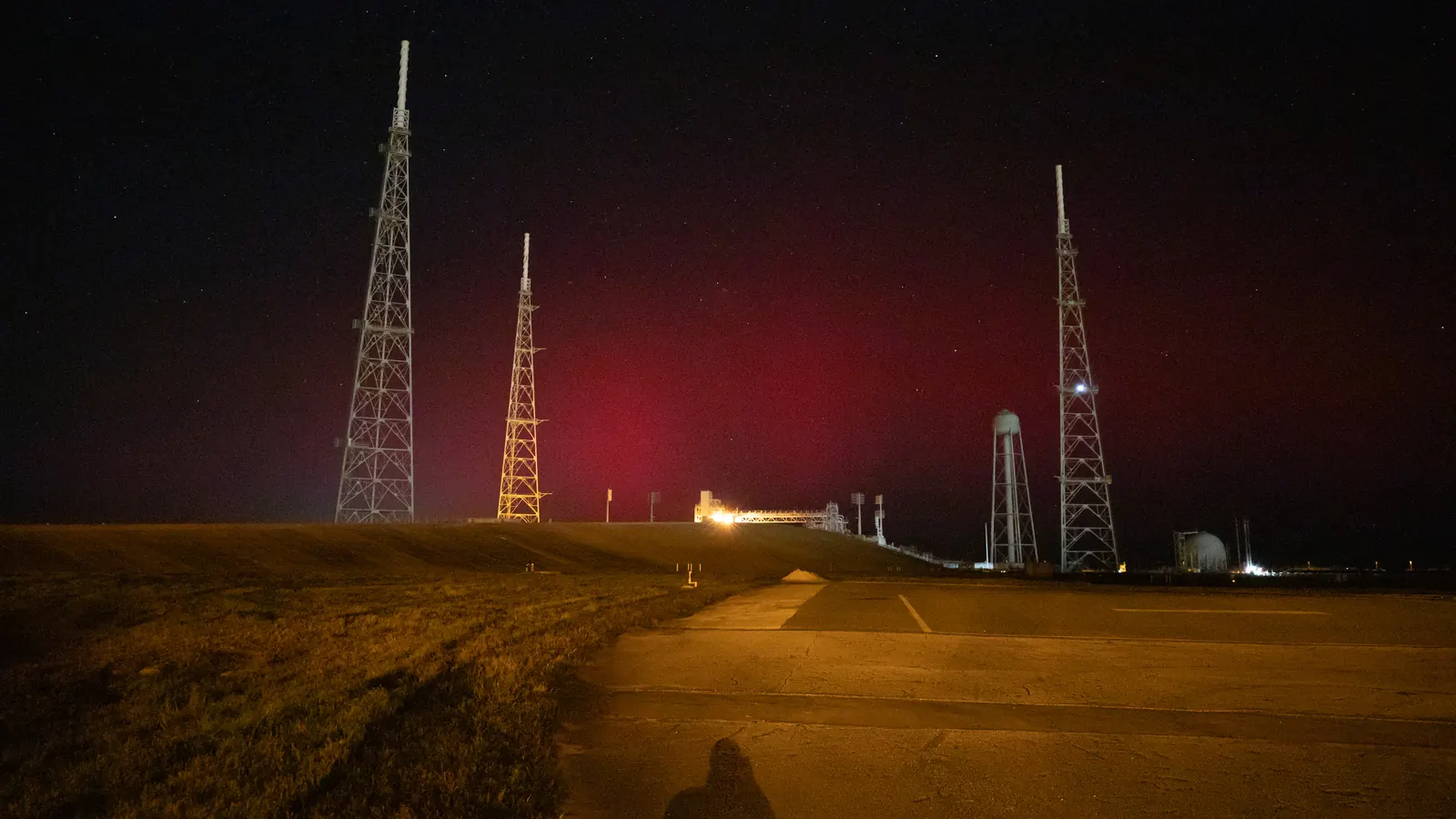
What causes the northern lights? Solar wind and colors
Particles from the Sun, steered to the poles by Earth's magnetic field, make oxygen and nitrogen glow mostly 100 to 200 km up. The Sun peaked in October 2024.
-
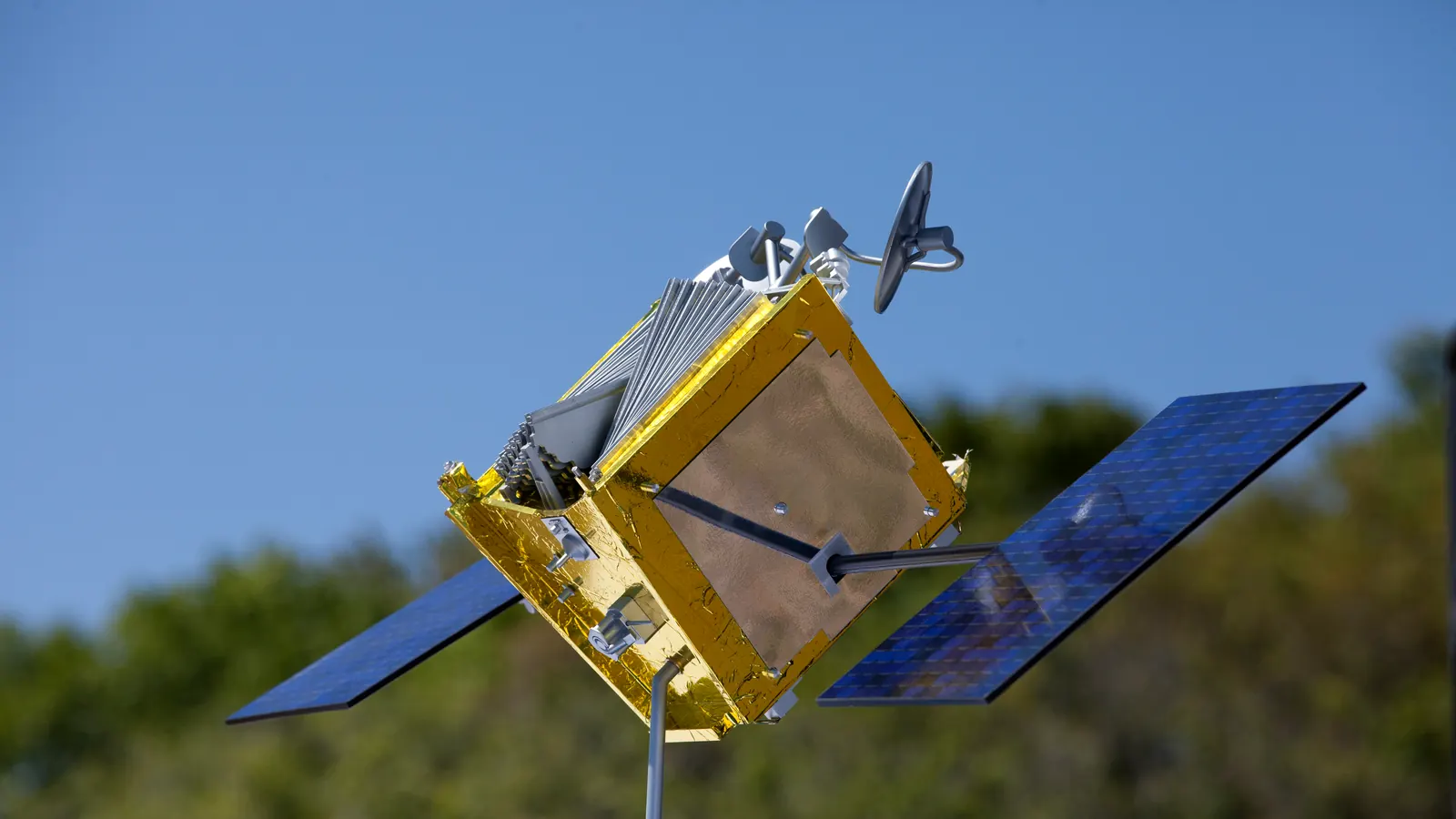
What is OneWeb? Owner, satellite count and orbits
OneWeb is Eutelsat's broadband network in low Earth orbit. On October 11, 2026, our catalog held 651 OneWeb satellites, about 1,200 km up in 12 planes.
-
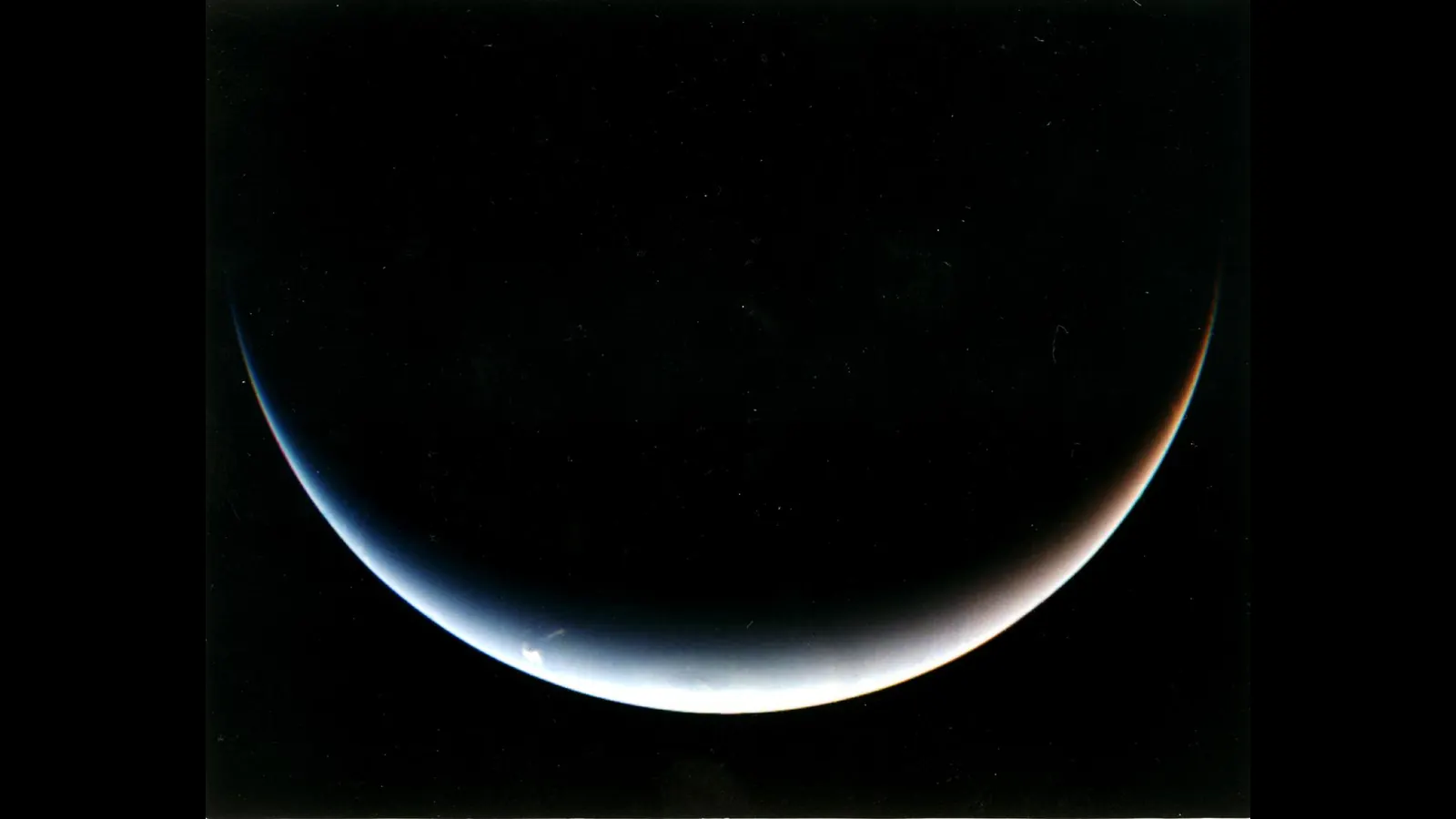
Where is Voyager 2 now? Distance, signal time and power
Where is Voyager 2 now? On October 12, 2026, it's 21.56 billion km (13.40 billion miles) from Earth, and its signals take almost 20 hours to arrive.
-
How many Amazon Kuiper satellites are in orbit? Leo's fleet
Amazon reported 396 Kuiper satellites launched by July 2026. On October 11, CelesTrak's active list held 391 Amazon Leo satellites, 375 near 630 km up.

-
When is the Geminid meteor shower 2026? Peak times and Moon
The Geminid meteor shower peaks the night of December 13-14, 2026: NASA says 40 to 50 meteors an hour under dark skies, and the crescent Moon sets early.
Home · Live satellite map · Satellite directory · Starlink · OneWeb · Navigation satellites · Space stations · Other active satellites · Track the ISS · ISS visible passes · Starlink train · Rocket launches · Aurora forecast · Humans in space · Solar System · Deep Space · Embed widgets · Blog · Guide: spot the ISS · Guide: what is a TLE? · Guide: how many satellites? · Guide: satellite trackers compared · Discovery: Elias 2-24 b · About · FAQ · Data & methodology · Credits · Editorial policy · Accessibility · Contact · Privacy · Terms
© 2026 WatchSat · Not affiliated with any space agency or satellite operator.