WatchSat › Blog › Where is Voyager 2 now? Distance, signal time and power
Where is Voyager 2 now? Distance, signal time and power
Where is Voyager 2 now? On October 12, 2026, it's 21.56 billion km (13.40 billion miles) from Earth, and its signals take almost 20 hours to arrive.
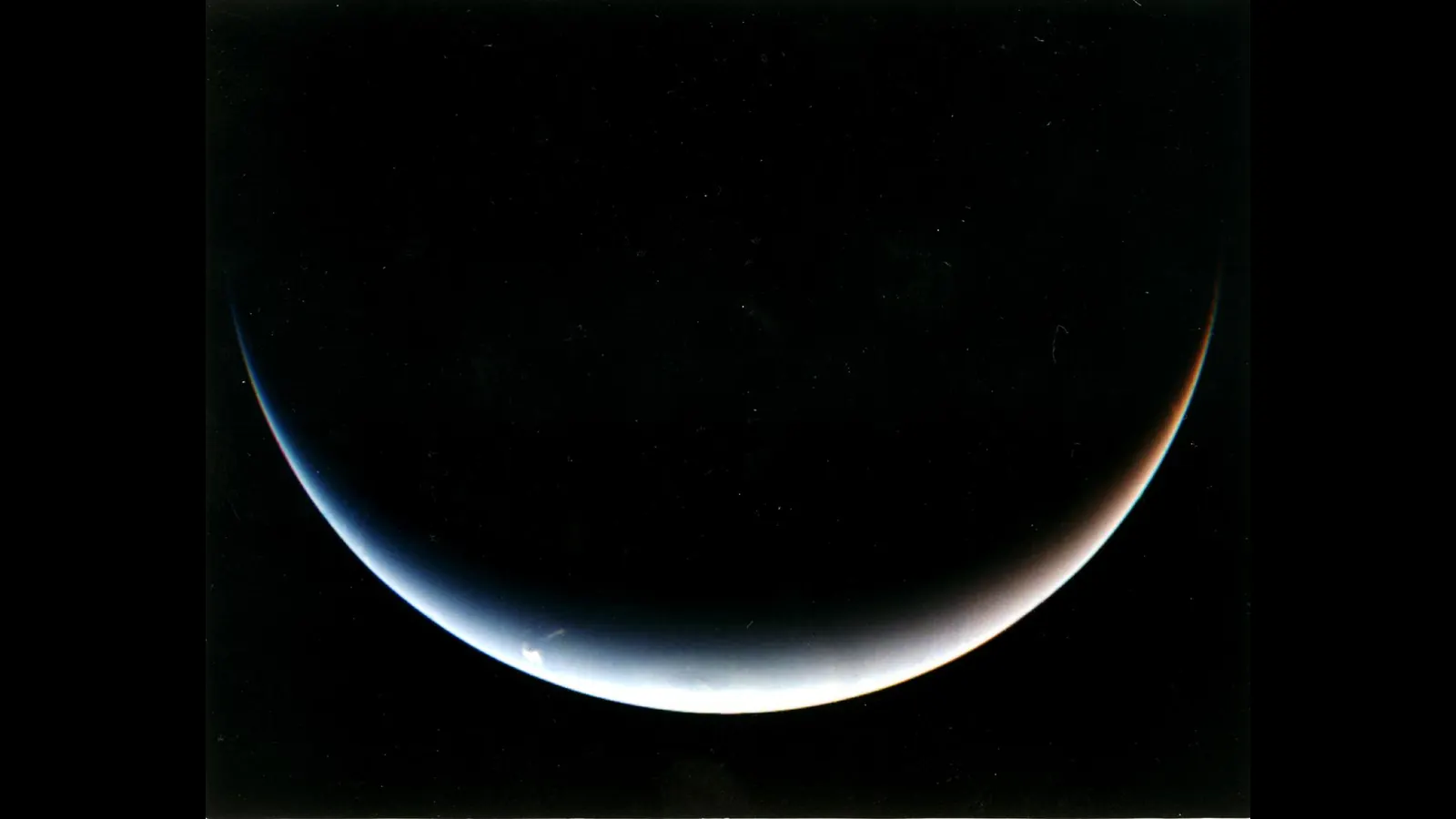
Voyager 2 is about 21.56 billion km (13.40 billion miles) from Earth on October 12, 2026, or 144.15 astronomical units (AU). One AU is the average distance between Earth and the Sun. A radio signal takes 19 hours 59 minutes to reach the probe. In the sky it lies toward the southern constellation Pavo, far below the plane the planets orbit in. It's been in interstellar space since November 5, 2018.
NASA launched Voyager 2 on August 20, 1977, 16 days before Voyager 1. It went the long way, past all four giant planets, and CNN notes it's still the only spacecraft to have visited Uranus and Neptune. A risky reconfiguration in July 2026 bought its last three science instruments at least another year. Our deep-space tracker follows it live.
Voyager 2 in our JPL Horizons data
WatchSat places Voyager 2 with a state vector from JPL Horizons, which gives the probe's position and velocity at 00:00 UTC on October 8, 2026. Our credits page lists Horizons as the source for every probe on our deep-space and solar-system pages. On October 8 the probe was 144.15 AU from the Sun and 144.06 AU from Earth, a one-way light time of 19.97 hours. The October 12 figures above carry that vector four days further.
It was moving at 15.26 km/s (34,144 mph) relative to the Sun. The outward part of that, 15.05 km/s, adds 1.30 million km to its distance from the Sun every day, or about 3.17 AU a year. At 144 AU the Sun's escape speed is only 3.51 km/s, so the probe isn't coming back.
Earth's orbit makes the delay wobble. Through October, Earth is moving away from the probe, which speeds the climb. By our propagation, Voyager 2 passes 20 light-hours from Earth at about 02:40 UTC on October 18, 2026, and won't come back inside that distance. When Earth swings back toward the probe next year, the delay dips only to about 20.18 hours.
On October 8 Voyager 2 sat at right ascension 20.16 hours and declination minus 59.7 degrees, the sky's versions of longitude and latitude. The astronomy-engine library behind our sky pages puts that in Pavo, as does TheSkyLive's tracker. Voyager 2 never rises for anyone north of about 30 degrees north latitude, which covers all of Europe and most of the United States, and never sets for anyone south of about 30 degrees south.
NRAO, quoting NASA's Voyager FAQ, says Voyager 2 is heading about 48 degrees south of the ecliptic, the plane of Earth's orbit. Our tables give 47.9 degrees for its heading but only 38.5 degrees for its position, because it spent its first 30 AU among the planets. Neptune bent its path south in August 1989, swinging the heading from 2.0 degrees above the plane to 45.2 degrees below, and the position has been sinking toward that heading ever since.
The table compares the twins on October 8.
| Voyager 2 | Voyager 1 | |
|---|---|---|
| Distance from the Sun | 144.15 AU | 171.99 AU |
| Distance from Earth | 144.06 AU | 172.37 AU |
| One-way light time | 19.97 h | 23.89 h |
| Speed vs. the Sun | 15.26 km/s | 16.92 km/s |
| Distance gained per year | 3.17 AU | 3.56 AU |
| Position vs. the ecliptic | 38.5° south | 35.2° north |
| Constellation | Pavo | Ophiuchus |
| Crossed the heliopause | 2018, at about 119 AU | 2012, at about 121.6 AU |
| One light-day from Earth | around November 1, 2035 (our estimate) | November 18, 2026 |
Voyager 2 trails its twin by 27.8 AU, and the gap widens by about 0.39 AU a year. For the light-day dates we moved each vector forward under the Sun's gravity alone, a method that gives Voyager 1's one-light-day crossing the same November 18 date NASA uses. Our guide to where New Horizons is adds the other outbound probes.
Neither Voyager appears on our live satellite map or in the satellite directory. Those pages draw on CelesTrak's two-line element sets, a format built for orbits around Earth, and our October 11 snapshot of that list holds 16,701 objects, none of them a Voyager.
As a rough check on our tables, we used a copy of NASA's "Where Are Voyager 1 and 2 Now" page saved on October 14, 2025. A funding lapse had stopped NASA updating the page, which shows Voyager 2 at 140.81264388 AU from Earth and a light time of 19:31:06. Our tables reach that distance at about 05:14 UTC on October 4, 2025, ten days before the copy was saved. We don't know exactly when NASA's counter stopped, so it's a rough check, not a precise one.
How did Voyager 2 get to interstellar space?
Voyager 2 lifted off from Cape Canaveral at 14:29 UTC on August 20, 1977, on a Titan IIIE-Centaur rocket, according to NASA's mission page. The outer planets were lined up so that one spacecraft could visit all four giants. Without gravity assists from the planets, NASA says, the trip to Neptune would have taken 30 years.
It passed Jupiter on July 9, 1979, and made its closest approach to Saturn at 01:21 UTC on August 26, 1981. Uranus followed on January 24, 1986, and Neptune on August 25, 1989.
Past Neptune, Voyager 2 coasted toward the heliopause, the edge of the bubble the solar wind blows around the Sun. On November 5, 2018, its plasma science instrument recorded a steep drop in the speed of solar-wind particles. JPL announced on December 10, 2018, that Voyager 2 had become the second human-made object in interstellar space. JPL put it about 18 billion km (slightly more than 11 billion miles) from Earth, with signals taking about 16.5 hours. Our tables give 17.85 billion km (11.09 billion miles) and 16.54 hours on the day of the crossing.
Papers in Nature Astronomy in November 2019 placed the crossing about 119 AU from the Sun, and our tables give 119.02 AU. MIT Technology Review's summary of the papers lists a boundary layer about 1.5 AU wide before the heliopause, a crossing that took less than a day, and plasma about 20 times denser beyond it. Voyager 1 had crossed in 2012, at about 121.6 AU, but its plasma instrument had failed in 1980, so Voyager 2 made the first direct plasma measurement of the boundary.
Why is NASA switching off Voyager 2's instruments?
Both Voyagers run on radioisotope thermoelectric generators, which turn heat from decaying plutonium into electricity. Each probe's generators produced about 470 watts at launch, CNN reported, and JPL says each now loses about 4 watts a year.
JPL announced on October 1, 2024, that Voyager 2's plasma science instrument had been turned off, after years of returning little data. In March 2025 JPL said each probe would lose one more. Voyager 1's cosmic ray subsystem went off on February 25, and Voyager 2's low-energy charged particle instrument was due to follow on March 24. Project manager Suzanne Dodd said that without those cuts, the mission would probably have had only a few more months of power.
That left Voyager 2 with three working instruments, Universe Today reported. JPL planned, as Scientific American and The Register reported, to switch off Voyager 2's cosmic ray subsystem in 2026 and keep at least one instrument running on each probe into the 2030s.
A reconfiguration in July 2026 put that off. On July 9, according to ScienceBlog, engineers turned off Voyager 2's old digital tape recorder, which had been left on mainly for its heat, along with two heaters. In the same sequence they switched on two lower-power heaters and another device that gives off leftover heat. Scientific American's headline called it a daring "big bang" maneuver, and JPL titled its release "NASA Engineers Help Prolong Voyager 2's Science Mission."
The swap had to happen all at once, because the heaters keep the fuel lines of the attitude-control thrusters from freezing, Starlust explained. A power test and a thermal test came first and were cleared in May and June 2026, Futura Sciences reported. Engineers also changed the safe-mode software so the lower-power setup stays in place if the probe detects a fault.
Science Times reported that the change keeps all three, the cosmic ray subsystem, the plasma wave subsystem and the magnetometer, running for at least another year, where otherwise one would have gone before the end of 2026. Universe Magazine said one to two years. CNN reported in December 2025 that the cuts are meant to carry both probes to their 50th launch anniversaries, Voyager 2's on August 20, 2027.
How NASA talks to Voyager 2 through one dish in Canberra
Only one antenna on Earth can send Voyager 2 a command. JPL says it's DSS-43, the Deep Space Network's 70-metre dish at Canberra, and links that to how far south the probe sits. Canberra is far enough south that Voyager 2 never sets there.
That dependence was tested in 2020, when NASA took DSS-43 offline for about 11 months from March for upgrades. Voyager 2 kept sending data but couldn't receive commands, Space.com reported. On October 23, 2020, operators sent test commands through the upgraded dish and the probe carried them out, Astronomy Now reported. By our tables, they took about 17.4 hours to arrive. The work added two new radio transmitters, and NASA said the one used to talk to Voyager 2 hadn't been replaced in more than 47 years.
In 2023 the problem was on the spacecraft itself. On July 21, a set of planned commands turned Voyager 2's high-gain antenna about 2 degrees away from Earth by mistake, cutting off commands and data, NBC News reported. The probe was programmed to reset itself in October, but engineers didn't want to wait. In NPR's account, the Deep Space Network in Australia sent "the equivalent of an interstellar shout" ordering the antenna back toward Earth, and the reply came about 37 hours later.
Our tables put that round trip at 36.96 hours in early August 2023, with the probe 19.94 billion km (12.39 billion miles) away, close to the "more than 12.3 billion miles" in the Associated Press story. On our 3D solar system map, Voyager 2 sits far below the planets' orbits, on the course Neptune set for it in 1989.
Sources
- NASA JPL, NASA Engineers Help Prolong Voyager 2's Science Mission, August 2026
- Science Times, NASA updates Voyager 2 software to extend its mission, August 13, 2026
- ScienceBlog, Voyager 2 "big bang": nearly 10 watts, three instruments, 2026
- Scientific American, NASA's Voyager 2 survives daring "big bang" maneuver, 2026
- Starlust, Voyager 2 gets a lifeline after "Big Bang" fix, 2026
- Futura Sciences, Voyager 2 is running out of power, NASA has a new trick to keep it alive, 2026
- Universe Magazine, Voyager 2 has enough power to keep its instruments running for another 1-2 years, 2026
- JPL Solar System Dynamics, Horizons, state vectors and tables behind WatchSat's calculations, refreshed October 8, 2026
- CNN via CP24, Voyager 1 will reach one light-day from Earth in 2026: here's what that means, December 9, 2025
- NASA Science, Where Are Voyager 1 and 2 Now, copy saved October 14, 2025
- The Register, More Voyager instruments shut down to eke out power supplies, March 6, 2025
- NASA JPL, NASA Turns Off 2 Voyager Science Instruments to Extend Mission, March 5, 2025
- CNN via ABC17, The Voyager probes are shutting off instruments so they have enough power to explore interstellar space, March 5, 2025
- Scientific American, NASA's Voyager Probes Lose One Instrument Each as Power Wanes, March 2025
- Universe Today, And Then There Were Three: NASA Shuts Down More Voyager 2 Science Instruments, March 2025
- NASA JPL, NASA Turns Off Science Instrument to Save Voyager 2 Power, October 1, 2024
- Associated Press via WUFT, After a 12.3 billion-mile "shout," NASA regains full contact with Voyager 2, August 2, 2023
- NPR, After a 12.3 billion-mile "shout," NASA regains full contact with Voyager 2, August 2, 2023
- NBC News, NASA restores contact with Voyager 2 spacecraft after mistake led to weeks of silence, August 2023
- NASA JPL, NASA Contacts Voyager 2 Using Upgraded Deep Space Network Dish, November 2020
- Astronomy Now, Voyager 2 hears from Earth after months-long antenna overhaul, November 4, 2020
- Universe Today, The only radio antenna capable of communicating with Voyager 2 came back online, November 2020
- NASA JPL, NASA's Deep Space Antenna Upgrades to Affect Voyager Communications, March 2020
- Space.com, NASA's Voyager 2 probe is on its own in interstellar space until 2021, March 2020
- arXiv, Voyager 2 enters interstellar space, December 2019
- MIT Technology Review, Five things we've learned since Voyager 2 left the solar system, November 4, 2019
- Nature Astronomy, Voyager 2 heliopause papers, November 2019
- NASA JPL, NASA's Voyager 2 Probe Enters Interstellar Space, December 10, 2018
- NASA Science, Voyager 2 mission page (launch, planetary flybys, gravity assists), undated
- NRAO, Where is Voyager 1 Headed and When Will It Get There?, undated
- TheSkyLive, Voyager 2 info, live tracker
Follow by RSS. Share this post: Bluesky · X · Reddit · Email
More from the blog
-
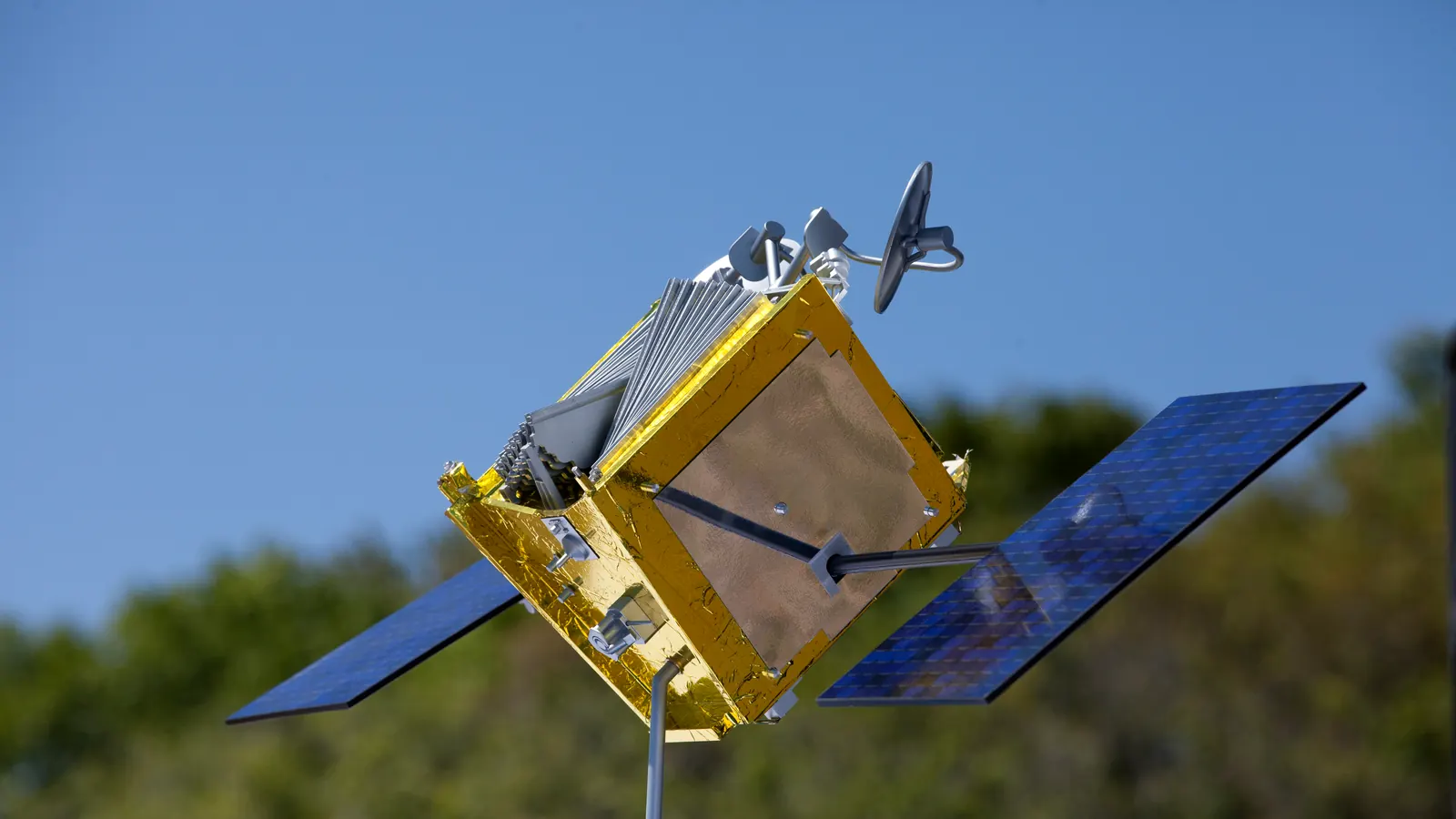
What is OneWeb? Owner, satellite count and orbits
OneWeb is Eutelsat's broadband network in low Earth orbit. On October 11, 2026, our catalog held 651 OneWeb satellites, about 1,200 km up in 12 planes.
-
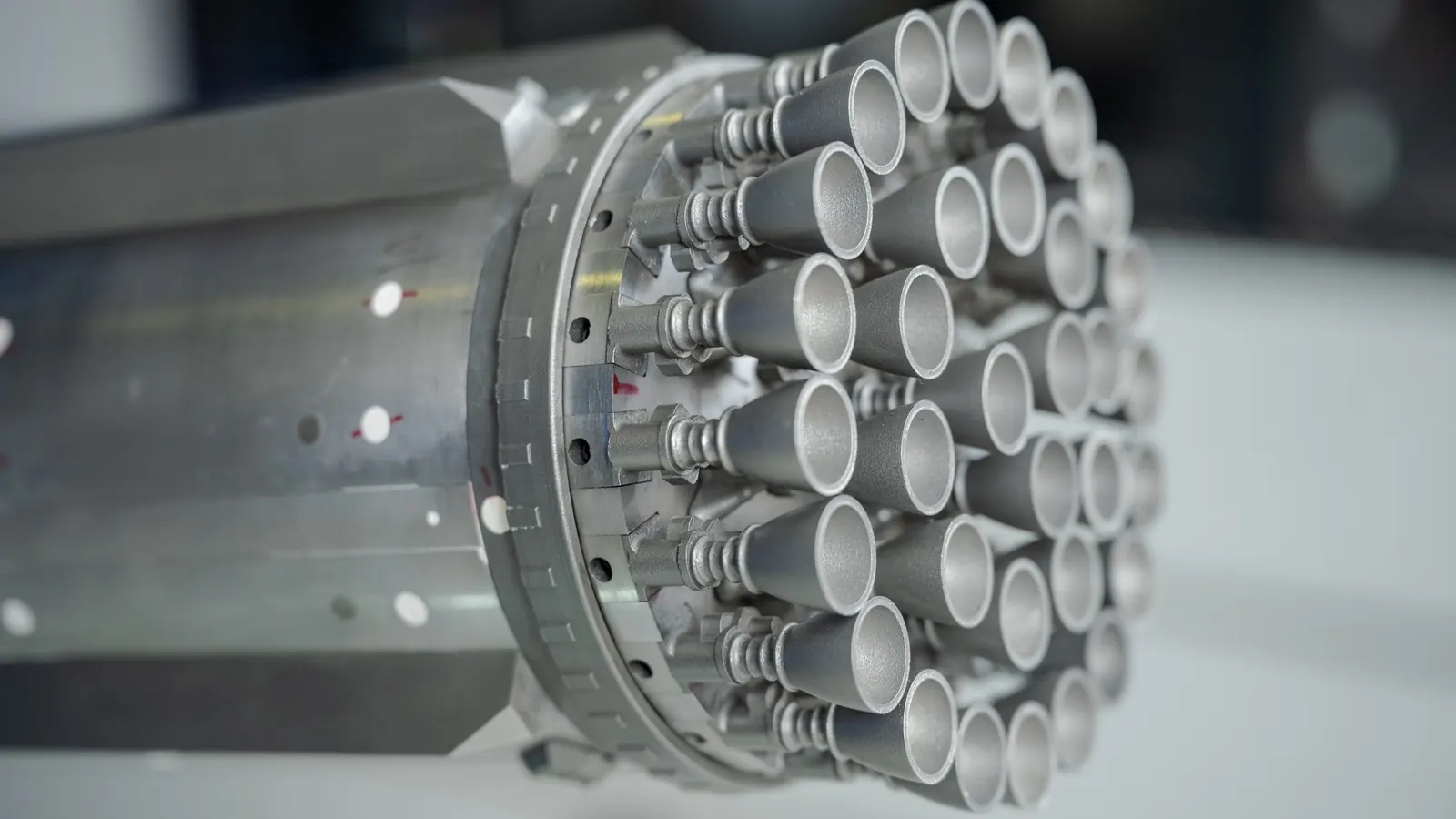
What is SpaceX Starship? Size, engines and flight record
SpaceX Starship is a two-stage rocket, 124.4 m tall, built to be fully reused. Its 14th flight reached orbit on September 28, 2026.
-
How many Amazon Kuiper satellites are in orbit? Leo's fleet
Amazon reported 396 Kuiper satellites launched by July 2026. On October 11, CelesTrak's active list held 391 Amazon Leo satellites, 375 near 630 km up.
-
When is the Geminid meteor shower 2026? Peak times and Moon
The Geminid meteor shower peaks the night of December 13-14, 2026: NASA says 40 to 50 meteors an hour under dark skies, and the crescent Moon sets early.
-
What are Lagrange points? L1 to L5 and what orbits there
Lagrange points are five places where a small object can keep pace with two large ones. For the Sun and Earth, L1 and L2 lie about 1.5 million km from Earth.
Home · Live satellite map · Satellite directory · Starlink · OneWeb · Navigation satellites · Space stations · Other active satellites · Track the ISS · ISS visible passes · Starlink train · Rocket launches · Aurora forecast · Humans in space · Solar System · Deep Space · Embed widgets · Blog · Guide: spot the ISS · Guide: what is a TLE? · Guide: how many satellites? · Guide: satellite trackers compared · Discovery: Elias 2-24 b · About · FAQ · Data & methodology · Credits · Editorial policy · Accessibility · Contact · Privacy · Terms
© 2026 WatchSat · Not affiliated with any space agency or satellite operator.