WatchSat › Blog › The satellite catalog ran out of five-digit NORAD IDs
The satellite catalog ran out of five-digit NORAD IDs
On July 11, 2026 the satellite catalog issued its first six-digit NORAD ID, 100000. Why it stopped at 69,999, how Alpha-5 TLEs work and what broke.
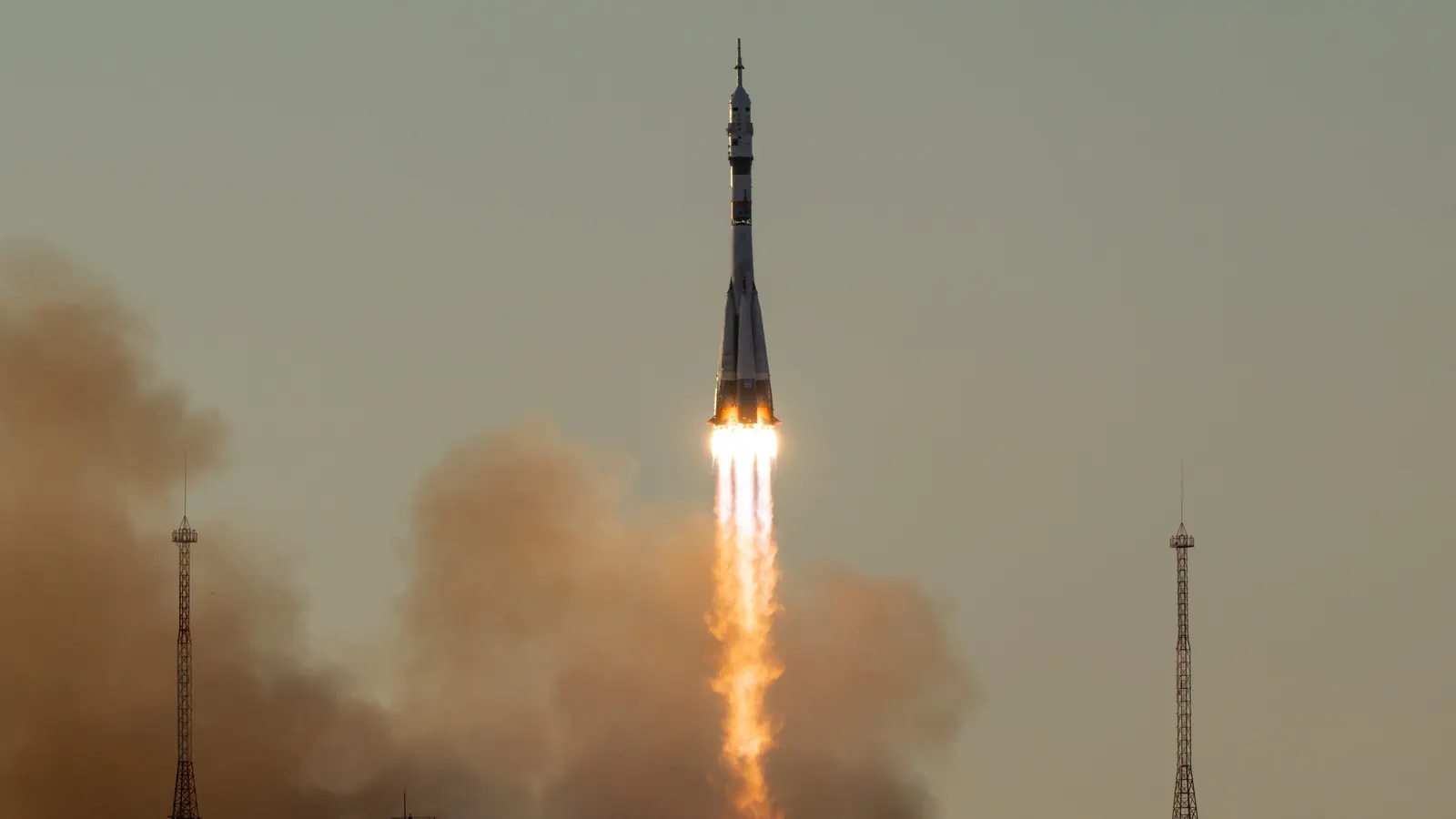
Every object the US Space Force tracks in orbit gets a catalog number, known to most satellite trackers as its NORAD ID, and keeps it for life. The International Space Station is 25544. Hubble is 20580. On July 11, 2026, the catalog issued its first permanent six-digit number, 100000, to SARAMAGO, a small satellite built in Portugal. Every object cataloged since has had six digits.
One extra digit causes real trouble. The format most of the world still uses to share satellite orbits has room for exactly five characters in that field, and no way to fit a sixth.
Why NORAD IDs stopped at 69,999
Numbers are assigned in order as new objects are identified, whether that's a satellite, the rocket stage that carried it up or a piece of debris it sheds. Trackers pass orbits around as two-line element sets, or TLEs, a fixed-width text format from the punch-card era. The catalog number sits in columns 3 to 7 of each line, so the format tops out at 99,999.
In practice the ceiling came sooner. The Space Force keeps 70,000 to 99,999 as a sandbox for temporary tracks, such as the orbit a new launch is expected to reach, "analyst objects" it follows but hasn't identified, and detections it can't match to anything yet. Permanently cataloged objects ran out at 69,999, and the next number after that is 100,000.
The deadline was public for years. In May 2020 T.S. Kelso, who runs CelesTrak, the free orbit service many satellite apps (WatchSat included) get their data from, warned that the catalog was close to outgrowing five digits and urged users to switch formats. By late 2025 he was counting down in public. Fewer than 3,000 numbers were left once the catalog passed 66,999. It reached 67,999 on February 26, 2026, with a Starlink launch, and 68,999 on May 3, with the finish projected for around July 12. The catalog got there a day early.
What changed on July 11
CelesTrak's data page now opens with a notice: "We ran out of 5-digit catalog numbers on 2026-07-11." Every newly cataloged object has a number of 100000 or higher, and CelesTrak doesn't publish those objects as TLEs at all.
The switch is easy to spot in WatchSat's own catalog. In our September 27 snapshot, the last working satellite with a five-digit number is Starlink-38086, number 69998, from the 159th orbital launch of 2026. The next Starlink batch starts at 100001. SARAMAGO itself, number 100000, flew on a rideshare in March but wasn't formally cataloged until July, which is how it ended up with the first new number.
Some well-known spacecraft already have six-digit NORAD IDs:
- Soyuz MS-29 (100057), launched to the International Space Station on July 14.
- Progress MS-35 (100712), the cargo ship that followed in September.
- Sentinel-3C (100690), the European Earth-observation satellite.
- Guowang 25 (100714), part of China's national broadband constellation.
Of the 16,621 working satellites in our snapshot, 644 have six-digit numbers, about 4 percent, and each launch adds more. By late September the highest number issued had passed 100,830.
Alpha-5, the stopgap
TLEs have lasted more than half a century because they're compact and every tracking program can read them. Their fields are fixed-width, though, so there's no clean way to add a digit.
The Space Force's workaround, announced through Space-Track.org in November 2020, is Alpha-5. The field stays five characters wide, but the first character can be a letter. A stands for 10, B for 11 and so on, with I and O skipped so nobody mistakes them for 1 and 0. A0000 is 100,000 and Z9999 is 339,999. Space-Track itself calls Alpha-5 a stopgap, and in the same announcement it and CelesTrak urged everyone to move to a different format.
OMM, the format meant to replace TLEs
That format is the Orbit Mean-Elements Message, or OMM, a standard from the Consultative Committee for Space Data Systems (CCSDS 502.0). It carries the same orbital elements as a TLE, but as named fields in XML, JSON, CSV or plain key-value text, so there's no column to overflow. Space-Track notes that its non-TLE formats handle catalog numbers up to 999,999,999. CelesTrak has gone further than most. For the new objects it publishes OMM and nothing else, and it declined to adopt Alpha-5 because "all standards show these as integers."
Here's an Alpha-5 element set from the catalog WatchSat loads today:
SOYUZ-MS 29
1 A0057U 26162A   26270.17419514  .00009528  00000+0  18291-3 0  9995
2 A0057 51.6315 155.3455 0007168 193.0560 167.0244 15.48664528587316What broke
Software written around five digits has been breaking since the first Alpha-5 records appeared, sometimes with an error message and sometimes without one.
- In December 2020, users of python-sgp4, the Python version of the standard orbit model, found that it read an Alpha-5 line as all zeros instead of raising an error. "Crashing would be better," one bug report said. A fix landed about a week later.
- In March 2026, a bug report against the Basilisk spacecraft simulator found that it assumed five-digit IDs "everywhere" and would silently misread newer data. It was fixed the next day.
- At the end of July, a user of Gpredict, a popular desktop tracker, reported that a new object imported with a catalog number of zero, and worked around it by editing the element set by hand.
- satellite.js, the JavaScript library WatchSat uses to turn orbital elements into positions, added
json2satrec, which loads OMM records directly, ahead of the switch.
Bugs like these get reported and fixed once someone notices. The harder case is a tracker that keeps running on a catalog that has stopped growing, so new launches never appear and nothing looks wrong.
How WatchSat handles six-digit IDs
It happened to us, too. For eleven weeks after July 11, WatchSat's catalog quietly stopped growing, because our build read CelesTrak's TLE files and the new objects weren't in them. The fix, shipped on September 27, reads CelesTrak's OMM data in CSV form and converts each record to the layout our propagator expects, writing six-digit numbers in Alpha-5. The first refresh with the fix took the catalog from 15,985 to 16,621 working satellites, Soyuz MS-29 and Progress MS-35 among them.
You can open any of them on the live globe or browse the full catalog in the satellite directory, where the six-digit numbers appear exactly as the catalog issued them.
What comes next
Six-digit numbers are now the norm. Alpha-5 runs out at 339,999, and at this summer's pace of roughly 830 new numbers in eleven weeks, that ceiling is decades away. The nearer deadline is for software: any program that still expects five digits in a fixed column will stop seeing new satellites, one launch at a time.
Sources
- CelesTrak, Current GP Element Sets (the July 11 notice and current catalog count)
- CelesTrak, A New Way to Obtain GP Data (aka TLEs), May 27, 2020, updated June 23, 2026
- Space-Track.org, Documentation: Alpha-5
- T.S. Kelso, countdown to 69,999, Bluesky, 2024–2026
- Jonathan McDowell, GCAT catalog number ranges
- KeepTrack, Satellite 100000: SARAMAGO, July 16, 2026
- python-sgp4 issue #77; Basilisk issue #1315; satellite.js issue #135
Follow by RSS. Share this post: Bluesky · X · Reddit · Email
More from the blog
-
Orionid meteor shower 2026: peak, Moon and satellites
The Orionids peak on the night of October 21-22, 2026 under a bright gibbous Moon. When the Moon sets, and why satellites crowd the hour before dawn.
-
Starship Flight 14 reached orbit: tracking its 26 Starlinks
Starship reached orbit for the first time on September 28, 2026 and left 26 Starlink V3 satellites behind. Their NORAD IDs, and how high they've climbed.

-
MMX, Japan's Phobos sample-return mission, launches Oct. 20
JAXA's MMX is set to launch at 4:41:03 a.m. Japan time on October 20, 2026 (19:41:03 UTC on October 19) for Phobos, with a sample due back in 2031.
-
Two-thirds of active satellites are now Starlinks
Of 16,621 active satellites in the public catalog, 11,132 are Starlinks. How many satellites are in orbit in 2026, who runs them and where they fly.
-
Voyager 1 will reach one light-day from Earth on Nov. 18
At 10:16 UTC on November 18, 2026, Voyager 1 will be one light-day from Earth. How far that is, how long its signals take, and why it stays past the line.
Home · Live satellite map · Satellite directory · Starlink · OneWeb · Navigation satellites · Space stations · Other active satellites · Track the ISS · ISS visible passes · Starlink train · Rocket launches · Aurora forecast · Humans in space · Solar System · Deep Space · Embed widgets · Blog · Guide: spot the ISS · Guide: what is a TLE? · Guide: how many satellites? · Guide: satellite trackers compared · Discovery: Elias 2-24 b · About · FAQ · Data & methodology · Credits · Editorial policy · Accessibility · Contact · Privacy · Terms
© 2026 WatchSat · Not affiliated with any space agency or satellite operator.