WatchSat › Blog › Two-thirds of active satellites are now Starlinks
Two-thirds of active satellites are now Starlinks
Of 16,621 active satellites in the public catalog, 11,132 are Starlinks. How many satellites are in orbit in 2026, who runs them and where they fly.
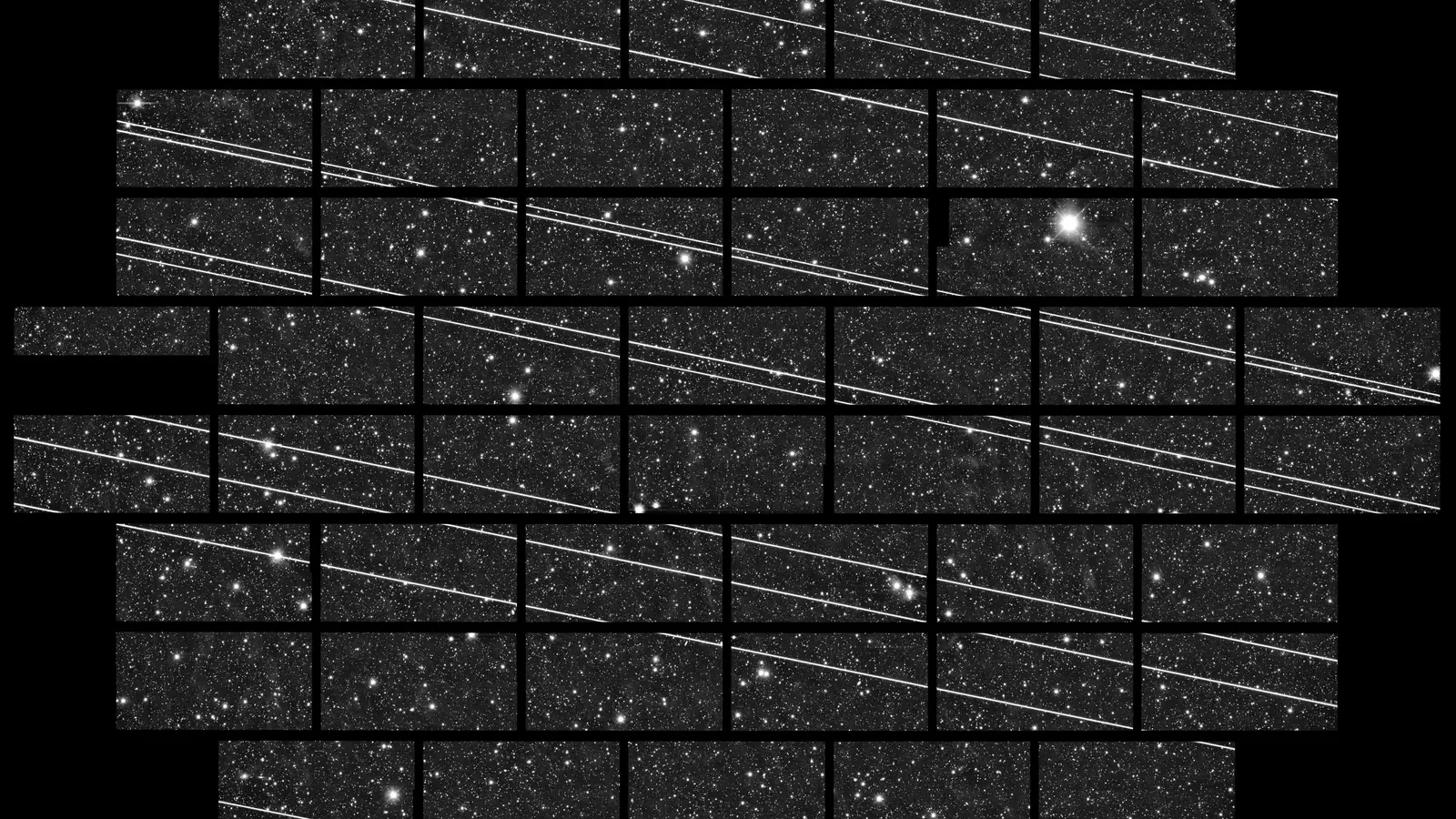
When WatchSat refreshed its satellite catalog on September 27, 2026, it counted 16,621 active satellites. SpaceX's Starlink network accounts for 11,132 of them, or 67 percent, so two of every three working satellites in Earth orbit are now Starlinks.
Our guide to how many satellites are in orbit explains where these counts come from and why they never sit still. This post is a dated snapshot of the catalog in late September 2026, and of what changed to get it there.
How many Starlink satellites are there?
The count comes from CelesTrak's list of active satellites, which is built from US Space Force tracking data. WatchSat uses the same list to draw its live satellite map, and every satellite on it has current orbital elements and is believed to be working.
Chart data: satellites by constellation
| Constellation | Working satellites | Share |
|---|---|---|
| Starlink (SpaceX) | 11,132 | 67.0% |
| OneWeb (Eutelsat) | 651 | 3.9% |
| Amazon Leo (Kuiper) | 391 | 2.4% |
| Qianfan | 257 | 1.5% |
| Guowang | 222 | 1.3% |
| Everyone else | 3,968 | 23.9% |
Starlink's 11,132 satellites outnumber those of every other operator combined, by slightly more than two to one. The next-largest broadband network, Eutelsat's OneWeb, has 651. Amazon's network, which began as Project Kuiper and now flies as Amazon Leo, has 391 on the list, and Amazon itself reported 396 launched by early July. China's two big broadband constellations are growing fast from a small base, with 257 Qianfan satellites and 222 for Guowang.
The other 3,968 satellites belong to everyone else, including weather and spy satellites, science missions and the space stations. The navigation satellites the world relies on every day are a small group by comparison: 40 GPS satellites, 29 GLONASS, 32 Galileo and 56 BeiDou on the list. Planet has 93 Dove imaging satellites, Spire has 92 for weather and ship tracking, and Iridium's phone network has 80.
Other counts come out close. Jonathan McDowell, the astronomer whose catalog many journalists rely on, counted 16,810 active payloads on September 17, 11,114 of them Starlinks, or 66 percent. CelesTrak's own catalog statistics put active payloads at just over 17,000 on September 26. Totals differ by a few hundred depending on each counter's definitions and cut-off date, and none of the differences changes the overall picture.
Nine in ten launched in 2021 or later
Sort the working satellites by launch year and it's clear how new nearly all of them are.
Chart data: working satellites by launch year
| Launch year | Working satellites |
|---|---|
| 2010 | 59 |
| 2011 | 62 |
| 2012 | 63 |
| 2013 | 96 |
| 2014 | 111 |
| 2015 | 96 |
| 2016 | 84 |
| 2017 | 136 |
| 2018 | 195 |
| 2019 | 146 |
| 2020 | 376 |
| 2021 | 997 |
| 2022 | 1,730 |
| 2023 | 2,268 |
| 2024 | 2,437 |
| 2025 | 4,291 |
| 2026 (to Sep 27) | 3,148 |
| Before 2010 | 326 |
Nine in ten working satellites, 89.5 percent, launched in 2021 or later. The ones launched in 2025 alone that are still working, 4,291 of them, make up a quarter of the active fleet, and 73 percent of those are Starlinks. Launch records show the same surge. By McDowell's tally, 2025 set new highs with 321 launches reaching orbit and 4,526 payloads launched, and 2026 had already reached 220 successful launches by late September.
Starlink's constant turnover is part of the reason. Its satellites fly low, where thin air drags retired spacecraft down within a few years, and SpaceX keeps launching replacements. In our snapshot half of all Starlinks orbit below 473 kilometres, and nine in ten below 490.
95 percent fly in low Earth orbit
The fleet is also overwhelmingly low. Of the 16,621 active satellites, 15,807, or 95 percent, are in low Earth orbit, under 2,000 kilometres up. Only 565 occupy the geostationary belt 35,786 kilometres up, where television and weather satellites hover over one spot, and 181 fly in the medium orbits used by navigation systems. The remaining 68 follow highly elliptical, inclined geosynchronous or even higher orbits.
You can see the difference on WatchSat. On the live globe, low Earth orbit looks like a glowing skin wrapped around the planet, while the geostationary ring sits far out on its own. Freshly launched Starlinks, still climbing in a line before they spread out, show up on our Starlink train page along with the times you can see them from your location.
Active satellites vs. space debris
Working satellites make up less than half of the tracked objects in orbit. CelesTrak's catalog counts 35,189 of them: about 20,200 satellites, working or dead, and about 15,000 spent rocket stages and pieces of debris large enough to track. ESA's statistical models go further, estimating about 68,450 objects larger than 10 centimetres, 1.5 million between 1 and 10 centimetres, and some 230 million between 1 millimetre and 1 centimetre, any of which can damage a spacecraft at orbital speeds.
Keeping more than eleven thousand Starlinks in a narrow band of altitudes out of each other's way, and out of the way of everything else, takes constant tracking and collision avoidance. The public catalog WatchSat draws from is where the results of that tracking are open to anyone.
Explore the catalog
- Browse every active satellite in the satellite directory, or just the Starlink satellites.
- Open any satellite on the live globe to see where it is right now and when it passes over you.
- Read how satellite counts work, and why no single number stays right for long.
Sources
- CelesTrak, Current GP Element Sets (the active-satellite list WatchSat loads) and SATCAT boxscore, September 26, 2026
- Jonathan McDowell, active satellites (September 17, 2026), Starlink statistics (September 24, 2026), launch and payload records
- ESA, Space debris by the numbers, updated July 31, 2026, and the ESA Space Environment Report 2026
- Amazon, Project Kuiper mission updates, July 2, 2026
Follow by RSS. Share this post: Bluesky · X · Reddit · Email
More from the blog
-
Orionid meteor shower 2026: peak, Moon and satellites
The Orionids peak on the night of October 21-22, 2026 under a bright gibbous Moon. When the Moon sets, and why satellites crowd the hour before dawn.
-
Starship Flight 14 reached orbit: tracking its 26 Starlinks
Starship reached orbit for the first time on September 28, 2026 and left 26 Starlink V3 satellites behind. Their NORAD IDs, and how high they've climbed.

-
MMX, Japan's Phobos sample-return mission, launches Oct. 20
JAXA's MMX is set to launch at 4:41:03 a.m. Japan time on October 20, 2026 (19:41:03 UTC on October 19) for Phobos, with a sample due back in 2031.
-
The satellite catalog ran out of five-digit NORAD IDs
On July 11, 2026 the satellite catalog issued its first six-digit NORAD ID, 100000. Why it stopped at 69,999, how Alpha-5 TLEs work and what broke.
-
Voyager 1 will reach one light-day from Earth on Nov. 18
At 10:16 UTC on November 18, 2026, Voyager 1 will be one light-day from Earth. How far that is, how long its signals take, and why it stays past the line.
Home · Live satellite map · Satellite directory · Starlink · OneWeb · Navigation satellites · Space stations · Other active satellites · Track the ISS · ISS visible passes · Starlink train · Rocket launches · Aurora forecast · Humans in space · Solar System · Deep Space · Embed widgets · Blog · Guide: spot the ISS · Guide: what is a TLE? · Guide: how many satellites? · Guide: satellite trackers compared · Discovery: Elias 2-24 b · About · FAQ · Data & methodology · Credits · Editorial policy · Accessibility · Contact · Privacy · Terms
© 2026 WatchSat · Not affiliated with any space agency or satellite operator.