WatchSat › Blog › When is the Geminid meteor shower 2026? Peak times and Moon
When is the Geminid meteor shower 2026? Peak times and Moon
The Geminid meteor shower peaks the night of December 13-14, 2026: NASA says 40 to 50 meteors an hour under dark skies, and the crescent Moon sets early.
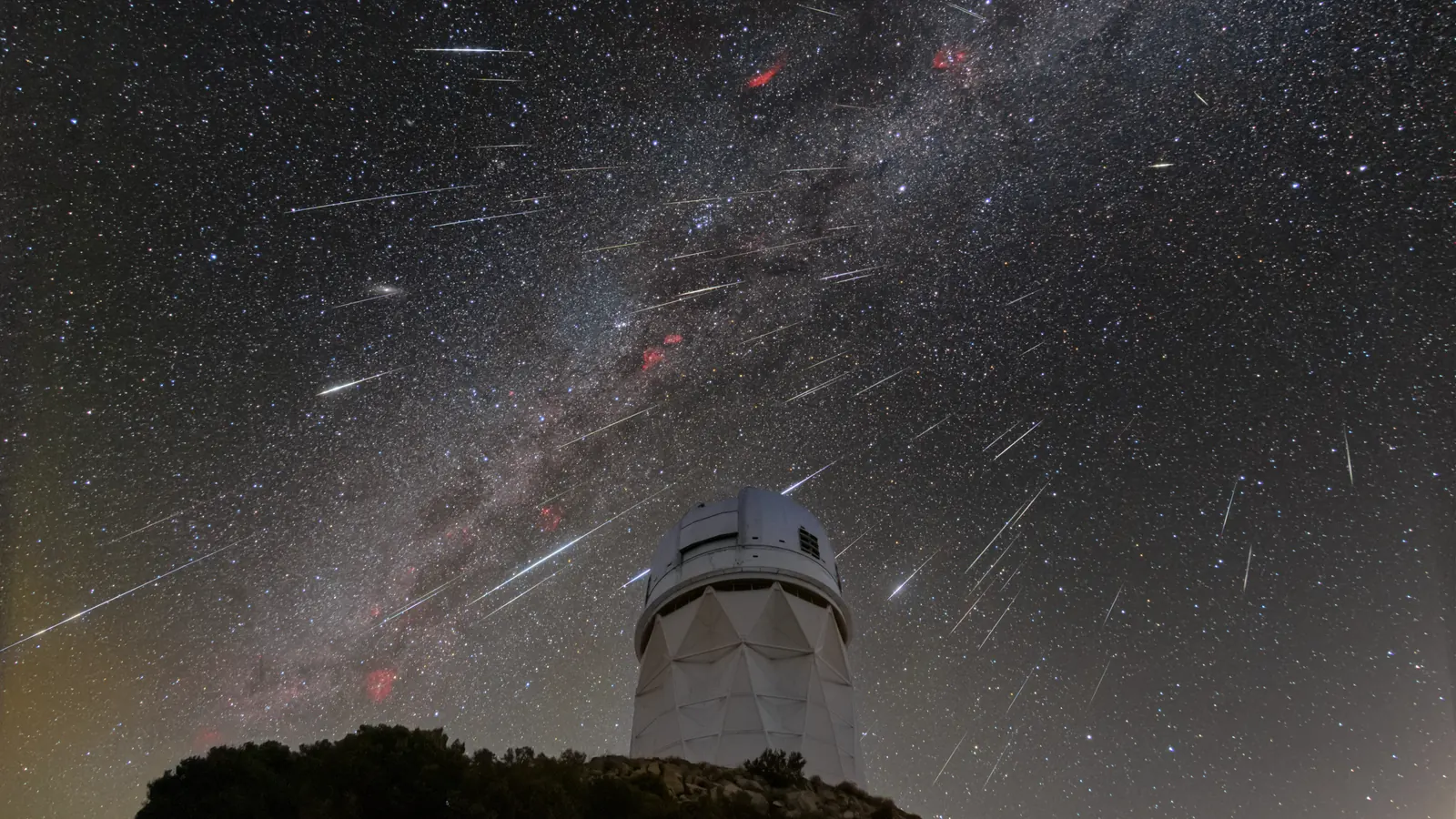
The Geminid meteor shower peaks on the night of December 13–14, 2026, in the Americas and Europe, and on the night of December 14–15 in East Asia and Australia. NASA says to expect 40 to 50 meteors an hour under dark skies, and this year a thin crescent Moon sets early in the evening. Forecasts of the exact moment of maximum, quoted in UTC, differ by about eight hours.
The meteors, named for the constellation Gemini, are debris from 3200 Phaethon, which NASA calls an asteroid that behaves a little like a comet.
Peak times and meteor rates
The International Meteor Organization's 2026 meteor shower calendar puts the Geminid maximum at 14:00 UTC on December 14. In New York that's 9 a.m. EST and in London 2 p.m. GMT, both in daylight, so across the Americas and Europe the night to watch is the one before, December 13–14. In East Asia and Australia the same instant comes after dark, making December 14–15 the night there. It falls at 11 p.m. JST on December 14 in Tokyo and 1 a.m. AEDT on December 15 in Sydney. The radiant, the point the meteors appear to fly out of, is then 58 degrees up over Tokyo by our calculation.
EarthSky gives an earlier time, 05:44 UTC on December 14, which is 12:44 a.m. EST in New York, during the night of December 13–14.
Each figure rests on a slightly different estimate of where the maximum sits. The IMO times each maximum by solar longitude, the Sun's position along its yearly path, and puts the Geminids at 262.2 degrees. By our calculation the Sun reaches that point at 13:49 UTC. EarthSky's 05:44 UTC corresponds to about 261.86 degrees, a third of a degree earlier.
The IMO and the American Meteor Society (AMS) both give the Geminids a zenithal hourly rate, or ZHR, of 150. The ZHR is an idealised rate that assumes, among other things, a radiant directly overhead. Real skies fall short of it, which is why NASA's Geminid page tells you to expect 40 to 50 meteors an hour even under dark skies. NASA's page gives the shower's activity as December 4 to 17.
What time should you watch the Geminids?
We worked out the Moon, the darkness and the radiant's height for four cities with astronomy-engine, the library behind WatchSat's sky views. These are our own calculations, not an agency's. New Moon falls on December 9 at 00:52 UTC, which leaves a waxing crescent a fifth to a quarter lit on peak night. The AMS lists 15%, and figures like these differ mainly in the moment they're taken.
The crescent sets early, at 8:43 p.m. EST in New York and 8:03 p.m. GMT in London on December 13, and stays down until late the next morning. New York gets almost nine hours of moonless dark before astronomical twilight begins at 5:34 a.m. EST, when the Sun climbs to 18 degrees below the horizon. For comparison, our Orionid peak-night guide found only about two and a half hours for that shower's best morning.
| City (best night) | IMO peak, local time | Moonset, local time | Dark hours without the Moon | Radiant height at 2 a.m. local time |
|---|---|---|---|---|
| New York (Dec 13–14) | 9 a.m. EST, Dec 14 | 8:43 p.m. | 8.8 | 82° |
| London (Dec 13–14) | 2 p.m. GMT, Dec 14 | 8:03 p.m. | 9.9 | 71° |
| Tokyo (Dec 14–15) | 11 p.m. JST, Dec 14 | 9:02 p.m. | 8.2 | 84° |
| Sydney (Dec 14–15) | 1 a.m. AEDT, Dec 15 | 11:38 p.m. | 4.3 | 22° |
The radiant lies about 1.8 degrees from the bright star Castor. In New York it rises in the northeast at 5:34 p.m. EST and reaches 82 degrees, almost overhead, at 1:52 a.m. EST. The higher it climbs, the more meteors you see. Scaling by the sine of the radiant's height, a rough correction that ignores sky brightness, gives New York, London and Tokyo 95% or more of the overhead rate at 2 a.m. local time. At 10 p.m. local time they get about 70%. NASA's Orionids page advises looking 45 to 90 degrees away from a radiant rather than straight at it, since meteors near it look short.
The Southern Hemisphere sees the shower, but less of it. The radiant's declination, its angle north of the celestial equator, is 33 degrees. Its highest point in your sky is 90 degrees minus the gap between your latitude and 33 degrees north. From Sydney, at 34 degrees south, that's 23 degrees, reached at about 2:50 a.m. AEDT. Summer nights there hold only about six hours of full darkness, and on December 14–15 the Moon takes all but about four of them. With the same scaling, Sydney gets roughly a third as many meteors at 2 a.m. local time as the northern cities.
Around local midnight at northern mid-latitudes, the low-orbit satellites high in the December sky are all in Earth's shadow. With the solstice a week away, on December 21, the Sun at local midnight in New York is 72 degrees below the horizon. Earth's shadow straight overhead then reaches about 14,500 km up, against about 6,400 km on the Orionid peak night. Low-orbit satellites circle within about 2,000 km of the ground, far below that. Our October 11 snapshot of CelesTrak's active-satellite list, run forward to peak night, showed no sunlit low-orbit satellites high over New York around midnight. Those orbits will be about two months old by then, too stale to time individual passes. Satellites return as the shadow sinks before dawn, and the ISS pass predictions and our live satellite map show what's up during your watch.
For photos, Sky & Telescope recommends a wide lens of around 14 mm at f/2.8 or faster, used wide open on a tripod. It says exposures of up to 30 seconds won't trail the stars objectionably at that width, and the AMS's DSLR guide suggests 10 to 25 seconds. NOIRLab's Geminids over Kitt Peak, from the 2023 peak, is a composite. It stacks photos taken within two hours, which is how one picture holds several meteors. Frames aimed high around local midnight won't catch trails from low-orbit satellites, like those in our post on satellite streaks in telescope images, but the trails return toward dawn. A newly launched Starlink batch can also cross at dusk, and our Starlink train tracker gives its pass times.
Why do the Geminids come from an asteroid?
The Orionids come from Halley's Comet, but the Geminids trace back to 3200 Phaethon, which is catalogued as an asteroid. NASA says the Infrared Astronomical Satellite, IRAS, discovered it on October 11, 1983, and that astronomer Fred Whipple realised it was the source of the Geminids.
NASA's Geminid page puts Phaethon at 5.10 km (3.17 miles) across, while JPL reported that Arecibo radar images in 2017 suggested about 6 km. It circles the Sun every 1.4 years and swings in close each time. JPL's radar planning page puts the closest approach at 0.140 astronomical units, about 20.9 million km, where an astronomical unit is the average Earth–Sun distance. NASA's Astronomy Picture of the Day placed that point well inside Mercury's orbit.
NASA's Geminid page calls Phaethon an asteroid or possibly a "rock comet." The object shows no tail in ordinary telescope images, and its spectrum looks like a rocky asteroid's. Yet NASA's STEREO spacecraft caught a faint tail and a rapid brightening near its closest pass to the Sun in 2009 and again in 2012. A 2024 NASA blog post suggests "active asteroid" may be the better term.
A 2023 study using SOHO, a joint NASA and ESA solar observatory, found that the tail is sodium gas rather than dust, NASA reported. Near the Sun, Phaethon's surface gets hot enough that sodium in its rock likely vaporises and vents into space. The result left open where the shower's dust came from. Parker Solar Probe data analysed the same year favoured a violent origin. Models in which the stream formed in a sudden event, such as a high-speed collision, fit the data better than gradual shedding, NASA's summary says. Our solar system map shows where Parker is today.
Japan's space agency, JAXA, plans a flyby. A 2023 accident destroyed the test facility for the Epsilon S rocket's second stage. A 2024 JAXA notice then moved the DESTINY+ mission from a planned 2025 launch on that rocket to Japan's fiscal 2028 on an H3, keeping the Phaethon flyby in fiscal 2030. Germany's DLR, which funded the mission's Dust Analyzer, said the instrument was handed over to JAXA on May 28, 2026, with launch scheduled for 2028.
After the Geminids: Ursids and Quadrantids
Next come the Ursids, around December 22. By our calculation the Moon will be about 98% lit at their maximum, ahead of full Moon on December 24, and up all night in New York.
The Quadrantids get far less moonlight. The AMS predicts their peak near 03:30 UTC on January 4, 2027, and the IMO's 2027 calendar gives 03:25 UTC. For London that means 3:30 a.m. GMT, and for New York 10:30 p.m. EST on January 3. The Moon will be a waning crescent, about 12% lit by our calculation, and it doesn't rise until 4:57 a.m. EST in New York and 5:43 a.m. GMT in London.
Sources
- International Meteor Organization, 2026 Meteor Shower Calendar (IMO INFO 3-25), 2025, via the Internet Archive; 2027 Meteor Shower Calendar (IMO INFO 3-26)
- American Meteor Society, 2026/2027 meteor shower calendar, retrieved October 11, 2026; How to photograph meteors with a DSLR
- NASA Science, Geminids and Orionids, retrieved October 11, 2026
- NASA, It's an Asteroid, it's a Comet, it's the Geminids Meteor Shower!, December 12, 2024
- NASA, Asteroid's Comet-Like Tail Is Not Made of Dust, Solar Observatories Reveal, 2023
- NASA Science, Parker Solar Probe blog, Scientists Shed Light on the Unusual Origin of a Familiar Meteor Shower, June 14, 2023
- NASA Science, APOD: Phaethon's Brood, December 23, 2017
- NASA/JPL, Arecibo Radar Returns with Asteroid Phaethon Images, 2017; JPL Asteroid Radar Research, 3200 Phaethon planning page, 2017
- JAXA/ISAS DESTINY+ project, Changes to Launch Year and Rocket, October 15, 2024
- DLR (German Aerospace Center), Handover of the DDA dust telescope to Japanese space agency JAXA, May 28, 2026
- EarthSky, Geminid meteor shower peaks December 13-14, retrieved October 11, 2026
- Sky & Telescope, How to Photograph a Meteor Shower
- NOIRLab, Geminids Over Kitt Peak National Observatory, December 27, 2023
- CelesTrak, active satellites element sets, snapshot of October 11, 2026
Follow by RSS. Share this post: Bluesky · X · Reddit · Email
More from the blog
-
Where is Voyager 2 now? Distance, signal time and power
Where is Voyager 2 now? On October 12, 2026, it's 21.56 billion km (13.40 billion miles) from Earth, and its signals take almost 20 hours to arrive.
-
How many Amazon Kuiper satellites are in orbit? Leo's fleet
Amazon reported 396 Kuiper satellites launched by July 2026. On October 11, CelesTrak's active list held 391 Amazon Leo satellites, 375 near 630 km up.
-
What are Lagrange points? L1 to L5 and what orbits there
Lagrange points are five places where a small object can keep pace with two large ones. For the Sun and Earth, L1 and L2 lie about 1.5 million km from Earth.
-
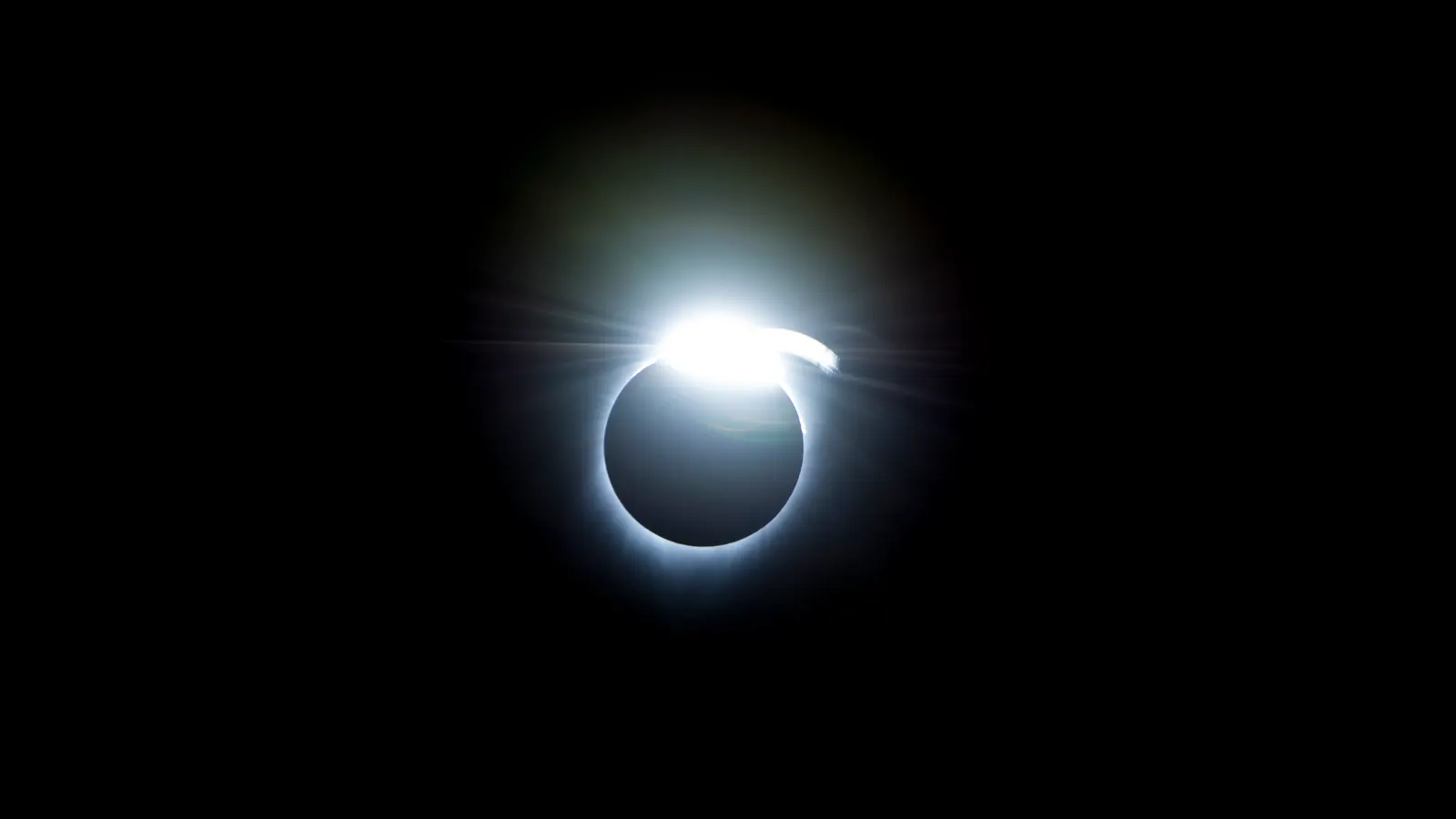
When is the next total solar eclipse? August 2, 2027
The next total solar eclipse is on August 2, 2027. Totality crosses Spain, North Africa and Arabia, lasting up to 6 min 23 s in Egypt's desert near Luxor.
-
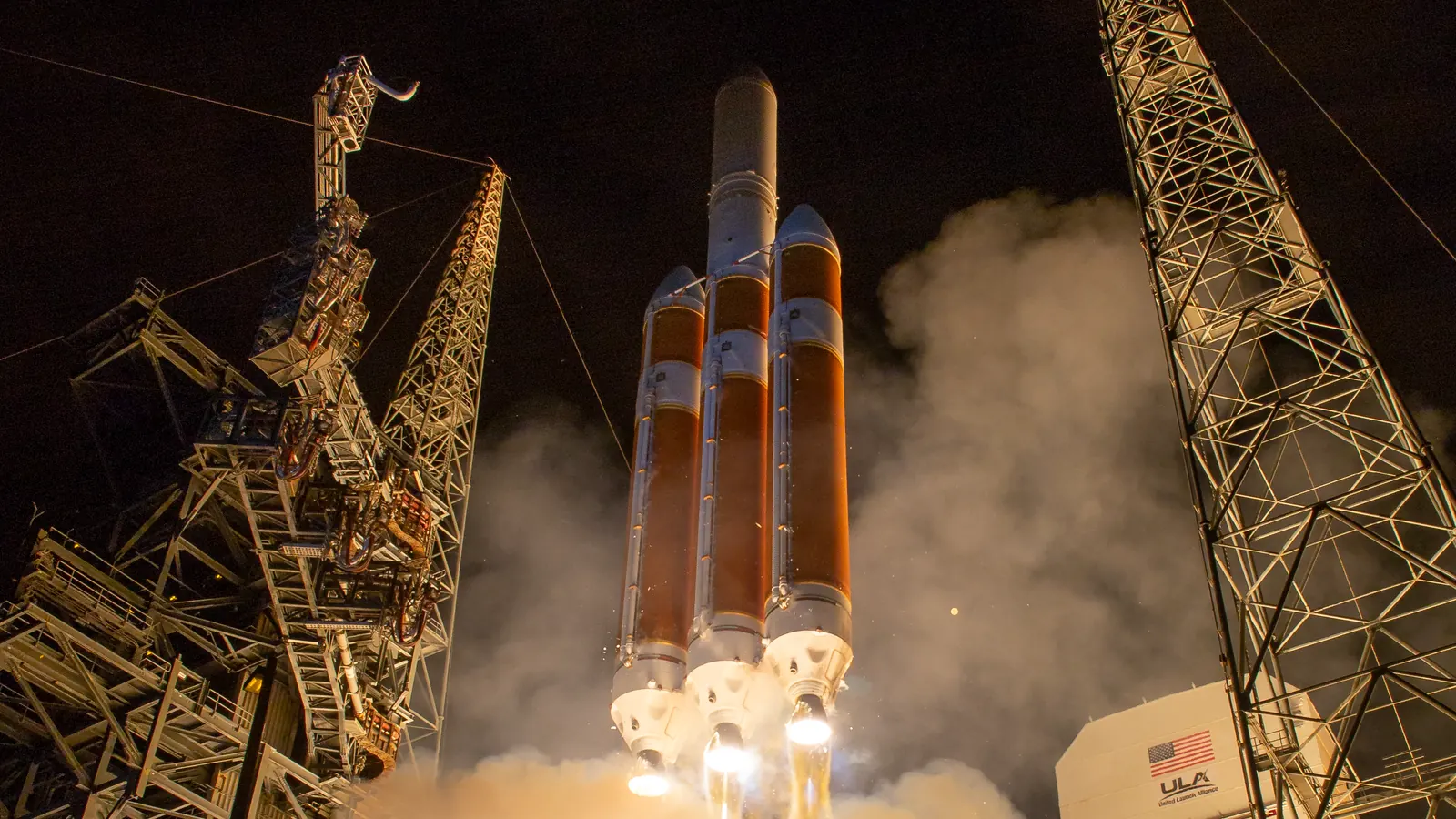
How fast is the Parker Solar Probe? Top speed and orbit
At closest approach the Parker Solar Probe reaches about 430,000 mph (692,000 km/h) relative to the Sun. On Oct. 11, 2026, it was doing just 13.9 km/s.
Home · Live satellite map · Satellite directory · Starlink · OneWeb · Navigation satellites · Space stations · Other active satellites · Track the ISS · ISS visible passes · Starlink train · Rocket launches · Aurora forecast · Humans in space · Solar System · Deep Space · Embed widgets · Blog · Guide: spot the ISS · Guide: what is a TLE? · Guide: how many satellites? · Guide: satellite trackers compared · Discovery: Elias 2-24 b · About · FAQ · Data & methodology · Credits · Editorial policy · Accessibility · Contact · Privacy · Terms
© 2026 WatchSat · Not affiliated with any space agency or satellite operator.