WatchSat › Blog › Starship Flight 14 reached orbit: tracking its 26 Starlinks
Starship Flight 14 reached orbit: tracking its 26 Starlinks
Starship reached orbit for the first time on September 28, 2026 and left 26 Starlink V3 satellites behind. Their NORAD IDs, and how high they've climbed.
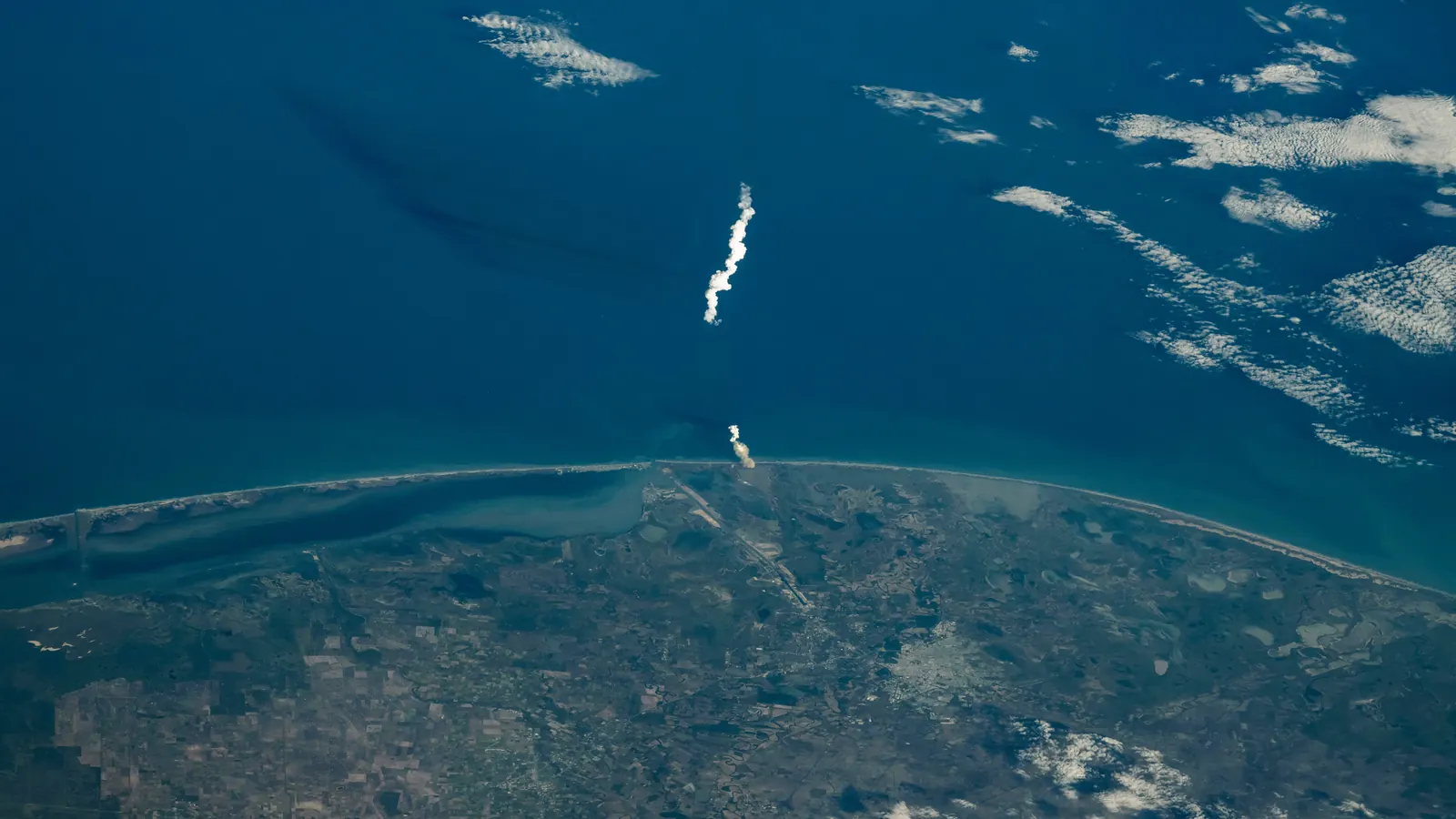
SpaceX's Starship went into orbit for the first time on Monday, September 28. The 14th flight lifted off from Pad 2 at Starbase, Texas, at 7:48 a.m. CDT (12:48 UTC), fired one engine for 19 seconds to finish the climb to orbit, and released 26 Starlink V3 satellites. The ship was supposed to stay up for close to 10 hours. SpaceX brought it down after about three, because of an engine problem on the way up.
All 13 earlier Starship flights were flown on suborbital paths on purpose. These are the first satellites Starship has put in orbit, and they're in our catalog under the international designator 2026-225.
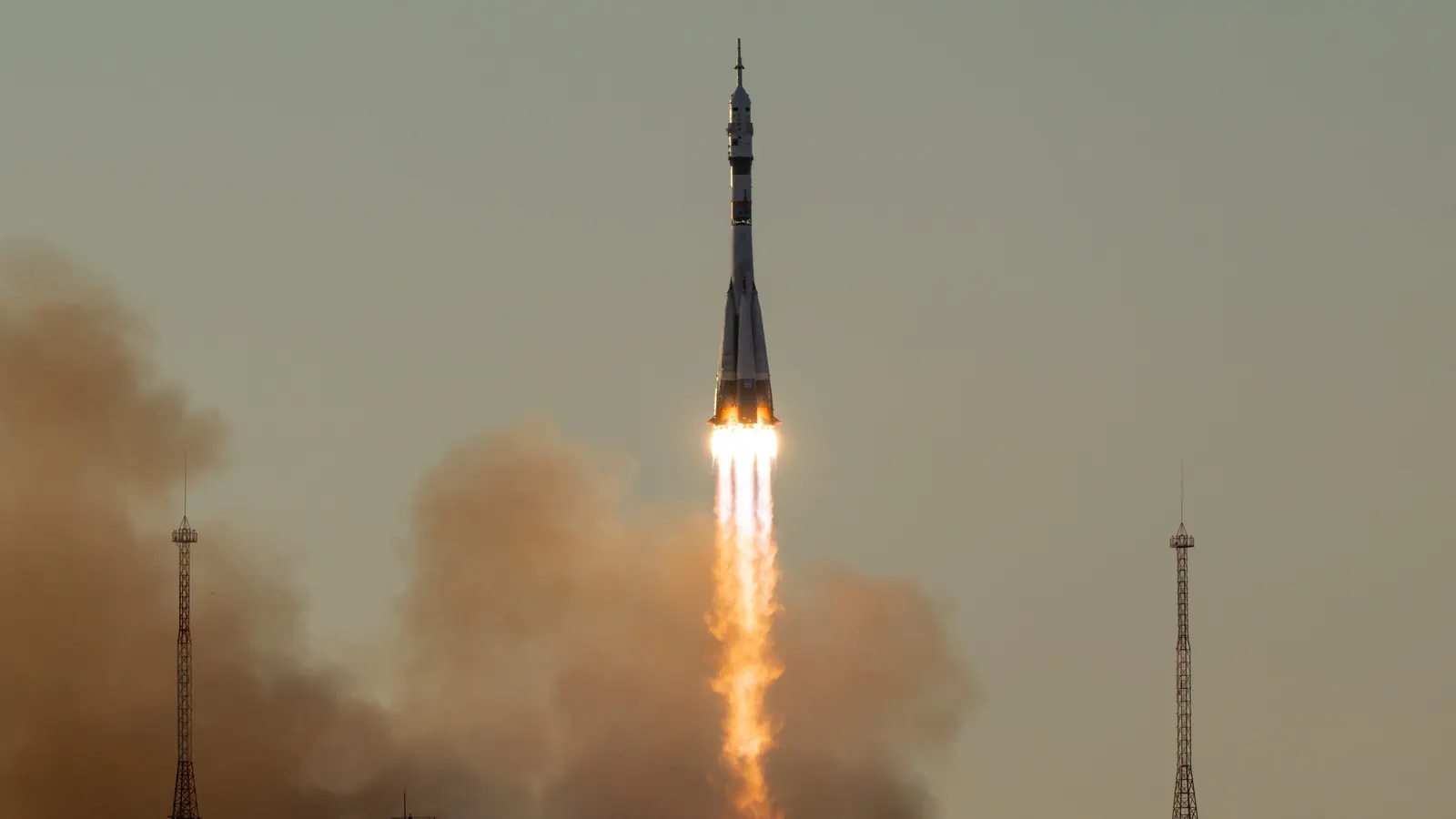
We couldn't use any photo of Flight 14 itself. The one above is from Starship's sixth flight, on November 19, 2024, taken by NASA astronaut Don Pettit from the International Space Station as it passed overhead.
What happened on Starship Flight 14?
During the ship's ascent burn, one of its Raptor vacuum engines shut down early, and the other five engines burned longer to make up for it. SpaceX's commentator first said the burn to reach orbit would be called off. The flight team then checked the three sea-level Raptors, which the ship needs for every later burn, found them healthy and gave the go. One of them relit for 19 seconds and the ship was in orbit. Eight and a half minutes later, a dispenser in its nose started pushing out the 26 satellites. SpaceX says it made contact with every one, and three of them carried cameras to film the ship's heat shield tiles.
The original plan was about six orbits and a splashdown off the west coast of South America. "Out of an abundance of caution given the engine issue experienced during ascent," SpaceX said, the team cut the flight short. The ship fired its deorbit burn about 2 hours and 12 minutes after liftoff and came down north of Hawaii at 10:57 a.m. CDT (15:57 UTC), in one of two landing zones cleared of ships and aircraft before launch. It tipped over and exploded on the water, which Ars Technica reports was expected. The Super Heavy booster splashed down in the Gulf of Mexico about seven minutes after liftoff. SpaceX hadn't planned to recover either stage.
An FAA spokesperson told Ars Technica that no mishap investigation is required, because every event on the flight stayed within what the agency had authorized.
Where are the Starlink V3 satellites now?
CelesTrak's catalog lists the 26 satellites as 2026-225A through 2026-225AB, with NORAD IDs from 100855 to 100880. The ship itself is 2026-225AC, number 100881, and its record shows it decayed on September 28. Like every object cataloged since July 11, they carry six-digit NORAD IDs.
Astronomer Jonathan McDowell posted the first orbits later on launch day: 262 by 275 km, tilted 30.5 degrees to the equator. In our October 8 snapshot the median height of all 11,132 Starlinks was 466 km, about 200 km higher. SpaceX said the new satellites would check themselves out and raise their orbits before serving customers, and our snapshots show them climbing.
Chart data: Flight 14 Starlink altitudes
| Element set (UTC) | Average | Lowest | Highest |
|---|---|---|---|
| September 30, 16:00 | 270 km | 267 km | 274 km |
| October 5, 06:00 | 295 km | 286 km | 296 km |
| October 7, 22:00 | 312 km | 296 km | 316 km |
| October 10, 14:00 | 316 km | 307 km | 317 km |
Between September 30 and October 10 their average altitude rose from 270 to 316 km. By October 10, 24 of the 26 sat between 315 and 317 km, and the other two were still on their way up. None has come down.
Their 30.5-degree orbit limits where they can rise above the horizon at all. Ars Technica reports that range-safety rules for launches from Starbase put them there. With our tracker's geometry, a satellite at 316 km in that orbit can pass straight overhead anywhere between 30.5 degrees north and south, which takes in Houston, Cairo and Miami. From New York it never climbs more than 10 degrees above the southern horizon. Anywhere north of about 48 degrees, Paris, Vancouver and London included, it never rises.
What Starlink V3 adds
According to SpaceX, as reported by Ars Technica, each V3 satellite adds 1 Tbps of capacity to the network, about ten times as much as a V2 satellite launched on Falcon 9, and future ships could carry up to 60 at a time. Starship's previous flight, in July, also carried V3s, but it was suborbital and they burned up.
What to watch next
- SpaceX hasn't announced a date for Flight 15. Ars Technica says an FAA air traffic schedule pointed to October, and Fox Weather reported planning for no earlier than October 19. Spaceflight Now reports SpaceX may try to catch the ship with the launch tower's arms on that flight.
- SpaceX said the V3s could start serving customers as soon as a few weeks after launch. It hasn't said what height they'll work from, and our tracker will show whether they hold near 316 km or keep climbing.
- The geomagnetic storm on October 10 heated the upper atmosphere while they were this low, and the next element sets will show whether it cost them any height.
- NASA's Moon landing plans need Starship to refuel in orbit. Spaceflight Now reports a lander may need as many as 15 tanker flights, and SpaceX hasn't announced a date for its first refueling test.
You can follow the 26 satellites on the live globe. Upcoming launches, including Flight 15 once it's set, are on our launch page.
Sources
- SpaceX, Starship Flight 14, September 28, 2026
- Ars Technica, Stephen Clark, Starship's first orbital launch gives lift to SpaceX's next-gen Starlinks, September 28, 2026
- Spaceflight Now, William Harwood, Starship returns to Earth: rocket splashes down north of Hawaii after three-hour flight, September 28, 2026; Will Robinson-Smith, Live coverage: SpaceX to launch first Starlink V3 satellites to orbit on Starship, September 28, 2026
- BBC News, Starship Flight 14 live coverage, September 28, 2026
- Jonathan McDowell, post on the first Group 31-1 orbits, September 28, 2026
- CelesTrak, SATCAT records for 2026-225 and current orbital elements for 2026-225, retrieved October 10, 2026
- Fox Weather, After fiery splashdown, SpaceX sets sights on next Starship launch, September 2026
- Digital Trends, Don Pettit on photographing Starship's sixth launch from the ISS, November 2024
- NASA, Starship launch seen from the International Space Station, November 2024
Follow by RSS. Share this post: Bluesky · X · Reddit · Email
More from the blog
-
ISS crew swap: Crew-13 sets U.S. record, Crew-12 lands
Crew-13 reached the ISS 7 hours 55 minutes after launch on October 1, a U.S. record. Crew-12 splashed down October 8, and CRS-35 is due October 13.
-
Orionid meteor shower 2026: peak, Moon and satellites
The Orionids peak on the night of October 21-22, 2026 under a bright gibbous Moon. When the Moon sets, and why satellites crowd the hour before dawn.
-
MMX, Japan's Phobos sample-return mission, launches Oct. 20
JAXA's MMX is set to launch at 4:41:03 a.m. Japan time on October 20, 2026 (19:41:03 UTC on October 19) for Phobos, with a sample due back in 2031.
-
The satellite catalog ran out of five-digit NORAD IDs
On July 11, 2026 the satellite catalog issued its first six-digit NORAD ID, 100000. Why it stopped at 69,999, how Alpha-5 TLEs work and what broke.
-
Two-thirds of active satellites are now Starlinks
Of 16,621 active satellites in the public catalog, 11,132 are Starlinks. How many satellites are in orbit in 2026, who runs them and where they fly.
Home · Live satellite map · Satellite directory · Starlink · OneWeb · Navigation satellites · Space stations · Other active satellites · Track the ISS · ISS visible passes · Starlink train · Rocket launches · Aurora forecast · Humans in space · Solar System · Deep Space · Embed widgets · Blog · Guide: spot the ISS · Guide: what is a TLE? · Guide: how many satellites? · Guide: satellite trackers compared · Discovery: Elias 2-24 b · About · FAQ · Data & methodology · Credits · Editorial policy · Accessibility · Contact · Privacy · Terms
© 2026 WatchSat · Not affiliated with any space agency or satellite operator.