WatchSat › Blog › ISS crew swap: Crew-13 sets U.S. record, Crew-12 lands
ISS crew swap: Crew-13 sets U.S. record, Crew-12 lands
Crew-13 reached the ISS 7 hours 55 minutes after launch on October 1, a U.S. record. Crew-12 splashed down October 8, and CRS-35 is due October 13.
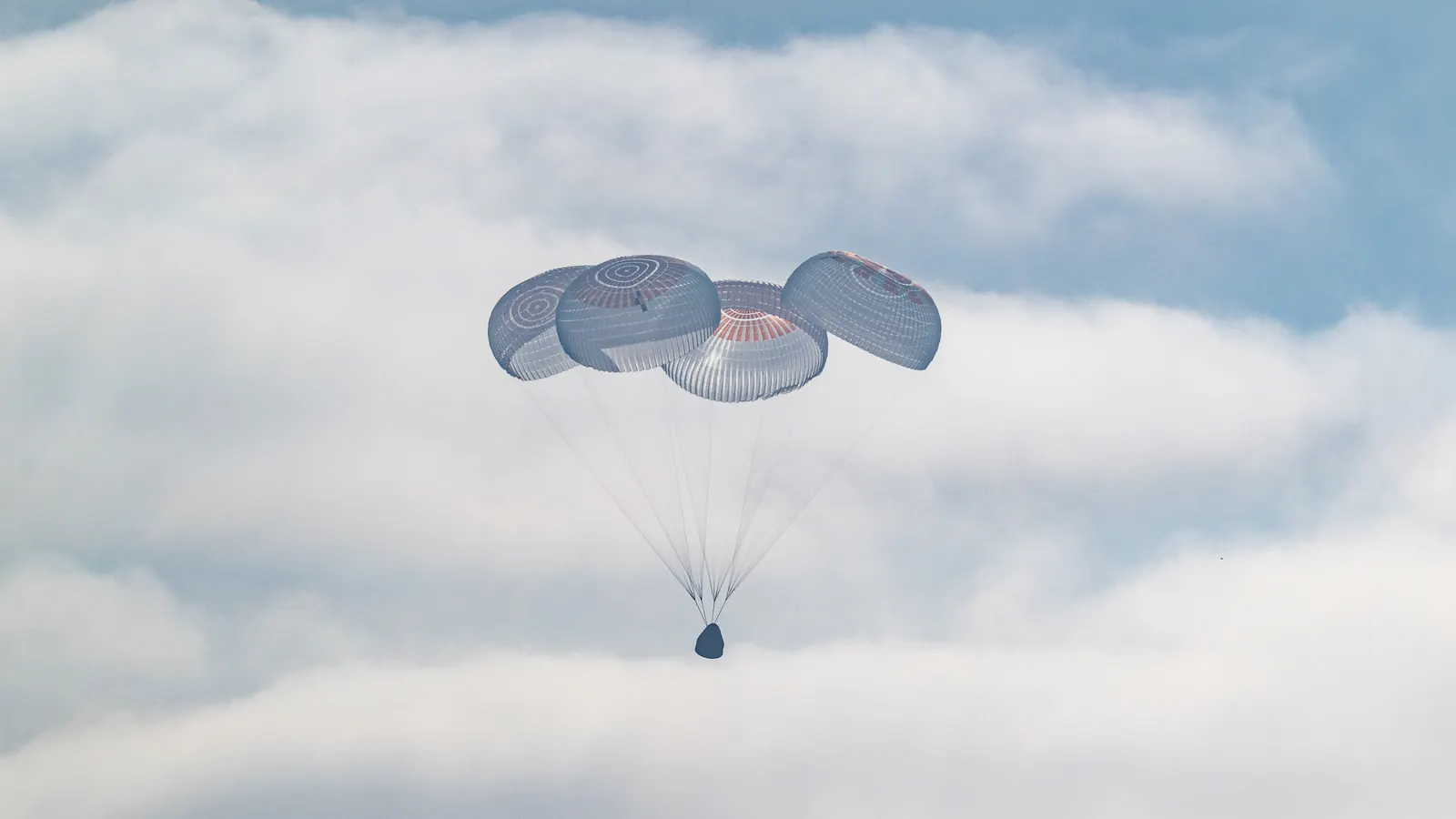
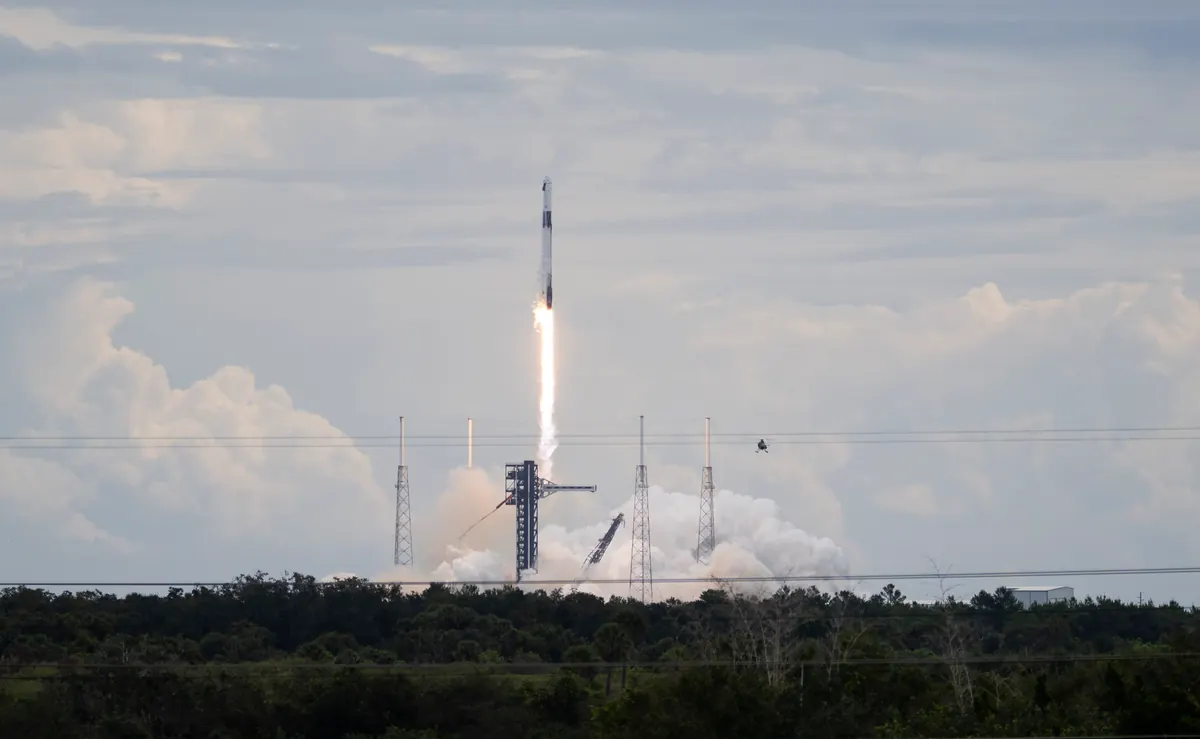
The International Space Station swapped four of its seven crew members in a week. NASA's SpaceX Crew-13 launched from Cape Canaveral at 11:10 a.m. EDT on October 1 and docked at 7:05 p.m. the same evening, 7 hours and 55 minutes later. NASA says no U.S. spacecraft has ever gone from launch to docking at the station faster. On October 8, Crew-12 splashed down in the Pacific off Los Angeles after 237 days in orbit.
Northrop Grumman's Cygnus XL cargo ship (mission NG-24) left the station on October 9, and the next SpaceX cargo Dragon, CRS-35, is set to launch on October 13.
How did Crew-13 get to the ISS so fast?
A Falcon 9 lifted the Dragon, which Space.com reports is named Grace, from Space Launch Complex 40. On board were NASA astronauts Jessica Watkins, the commander, and Luke Delaney, the pilot, with Joshua Kutryk of the Canadian Space Agency, on his first spaceflight, and Roscosmos cosmonaut Sergey Teteryatnikov. The capsule docked to the forward port of the Harmony module. NASA had estimated about 7 hours and 50 minutes.
The length of a trip like this depends a lot on where the station is when the rocket leaves. A crew launch can't go until the station's orbit passes over the pad, and the chase after that is shorter when the station is only a little way ahead. In our latest elements the ISS takes 92.98 minutes to go around Earth once, so Crew-13's trip lasted about five of the station's orbits. Crew-12, for comparison, launched in February and didn't dock until a day later.
Crew-12 heads home, and who's aboard now
Crew-12's Dragon, Freedom, undocked on October 7 and splashed down at 8:34 a.m. PDT on October 8, which was 11:34 a.m. EDT. It carried NASA's Jessica Meir and Jack Hathaway, Sophie Adenot of the European Space Agency and Roscosmos cosmonaut Andrey Fedyaev. They'd launched on February 13. NASA's tally for the mission is 237 days, more than 100 million miles (about 161 million km) and more than 3,792 orbits. Adenot, the first French woman to walk in space, made three spacewalks. Command of the station passed from Meir to cosmonaut Pyotr Dubrov on October 4.
Seven people are aboard now. Dubrov, fellow cosmonaut Anna Kikina and NASA's Anil Menon arrived on Soyuz MS-29 on July 14 and are staying until spring 2027. Watkins, Delaney, Kutryk and Teteryatnikov came up on Crew-13, booked for about six months, and NASA lists their landing as 2027. Our space station tracker also follows China's Tiangong, where three more people are living now.
What the handover looked like in our catalog
When a spacecraft is docked, CelesTrak's data gives it the station's own orbit, so WatchSat draws it at the same point as the ISS. Our October 5 snapshot shows how crowded the station was during the handover. Six visiting vehicles shared one set of orbital elements with it that day: both Crew Dragons, Cygnus XL, Soyuz MS-29 and two Russian Progress cargo ships, MS-34 and MS-35.
Three of them carry the six-digit NORAD IDs. Crew Dragon 13 is 100882, Progress MS-35 is 100712 and Soyuz MS-29 is 100057. Crew Dragon 12, number 67796, undocked on October 7 and is missing from our October 8 snapshot.
That snapshot, with elements from October 7, puts the ISS between 416 and 425 km up, in an orbit tilted 51.63 degrees to the equator.
What's next at the station
Ground controllers first detached Cygnus XL from the Earth-facing port of the Unity module. The station's robotic arm, Canadarm2, let it go at 12:44 p.m. EDT on October 9. It's packed with trash and set to burn up over the Pacific. NASA revised the timing of that reentry, and reports have put it on October 11 or 12. Before it left, the crew switched on 12 small capsules designed by students at the University of Kentucky. They're meant to pop free as Cygnus breaks apart and send back data on heat-shield materials, including a 3D-printed one from NASA's Johnson Space Center.
NASA and SpaceX are targeting 6:33 a.m. EDT on Tuesday, October 13, for the CRS-35 launch from Space Launch Complex 40. The Dragon is due to dock on its own to Harmony's space-facing port at about 11 a.m. EDT on October 15. It carries more than 6,300 pounds (about 2,900 kg) of cargo, including the last set of the station's roll-out solar arrays and hardware to make artificial retinas in microgravity, and it stays until mid-November.
NASA has a Crew-12 news conference scheduled at the Johnson Space Center for 3:30 p.m. EDT on October 15. Further out, Boeing's uncrewed Starliner-1 flight is targeted for December 2026 or January 2027, according to a September 28 Boeing and NASA update.
Our ISS pass predictions show when the station crosses your sky, and the launch schedule counts down to CRS-35.
Sources
- NASA: NASA's SpaceX Crew-13 launches to International Space Station, October 1, 2026; Dragon docks, bringing SpaceX Crew-13 to station, October 1, 2026; NASA's SpaceX Crew-13 mission page; NASA's SpaceX Crew-12 splashes down, sets briefing to discuss mission, October 8, 2026; Crew-12 returns to Earth, October 8, 2026; Expedition 75 welcomes Crew-13 and preps for Crew-12 departure, October 5, 2026; NASA to cover Northrop Grumman CRS-24 spacecraft departure, October 2026; Cygnus XL cargo spacecraft released from station by Canadarm2, October 9, 2026; NASA demonstrates next-generation heat shield technologies, October 9, 2026; NASA sets coverage for SpaceX 35th station resupply launch, arrival, October 7, 2026
- Aviation Week, Northrop Grumman's 24th resupply mission departs ISS, October 2026
- Space.com, SpaceX Crew-13 astronauts dock at ISS in fastest trip ever for a US spacecraft, October 1, 2026
- SpaceQ, Josh Kutryk reaches space for the first time aboard SpaceX Crew-13, October 1, 2026
- Boeing, NASA, Boeing update Starliner contract and set launch window for next mission, September 28, 2026
- CelesTrak, active satellites element sets, snapshots of October 5 and 8, 2026
Follow by RSS. Share this post: Bluesky · X · Reddit · Email
More from the blog
-
Where is the James Webb Space Telescope? Distance and orbit
The James Webb Space Telescope was 1.36 million km from Earth on October 8, 2026, looping around L2. Its distance swings from 1.2 to 1.75 million km.
-
October 10 geomagnetic storm reached G3: aurora outlook
A coronal mass ejection drove a G3 (strong) geomagnetic storm on October 10, 2026. What NOAA measured, who saw aurora and what comes next.

-
Orionid meteor shower 2026: peak, Moon and satellites
The Orionids peak on the night of October 21-22, 2026 under a bright gibbous Moon. When the Moon sets, and why satellites crowd the hour before dawn.
-
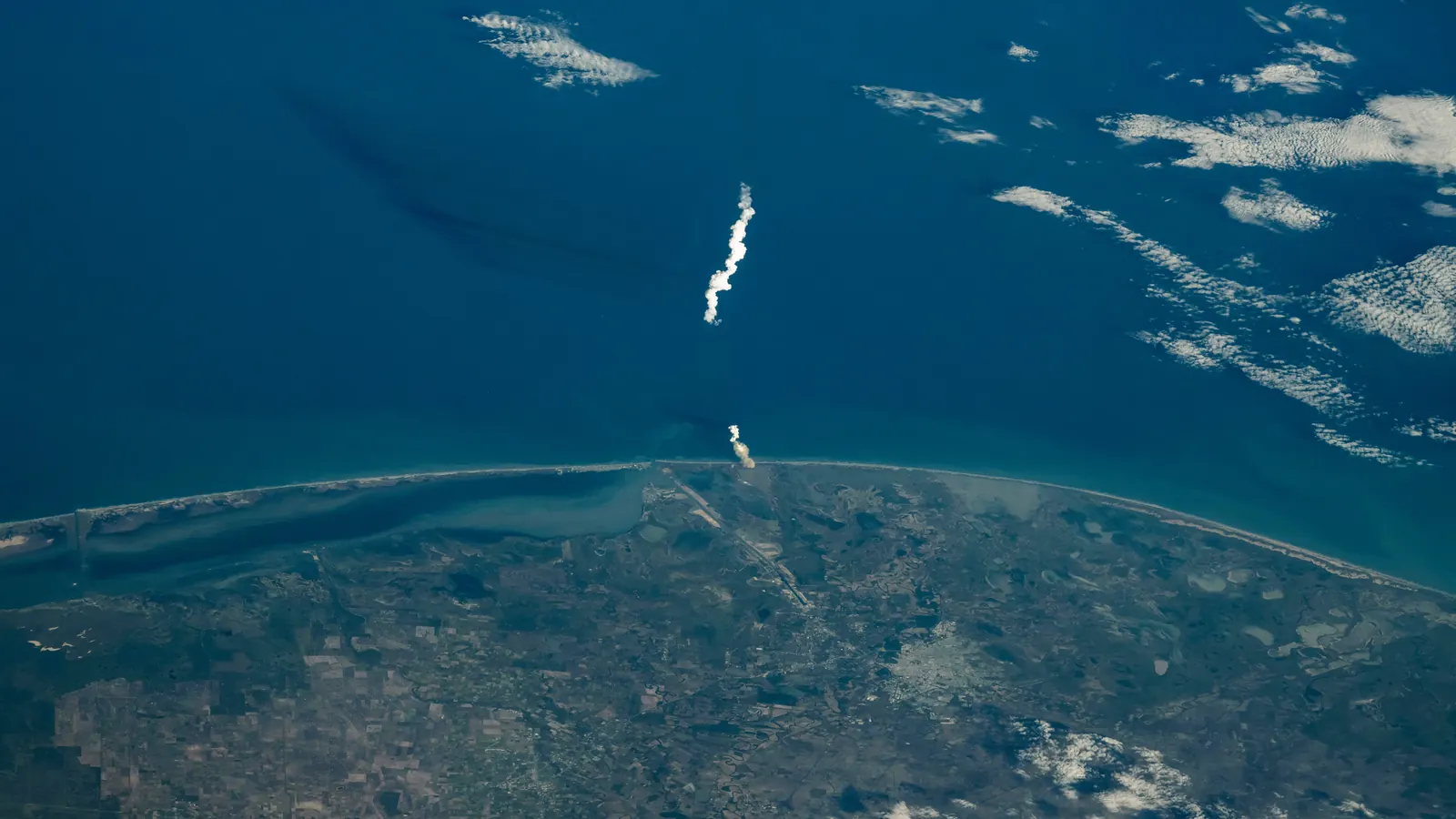
Starship Flight 14 reached orbit: tracking its 26 Starlinks
Starship reached orbit for the first time on September 28, 2026 and left 26 Starlink V3 satellites behind. Their NORAD IDs, and how high they've climbed.
-
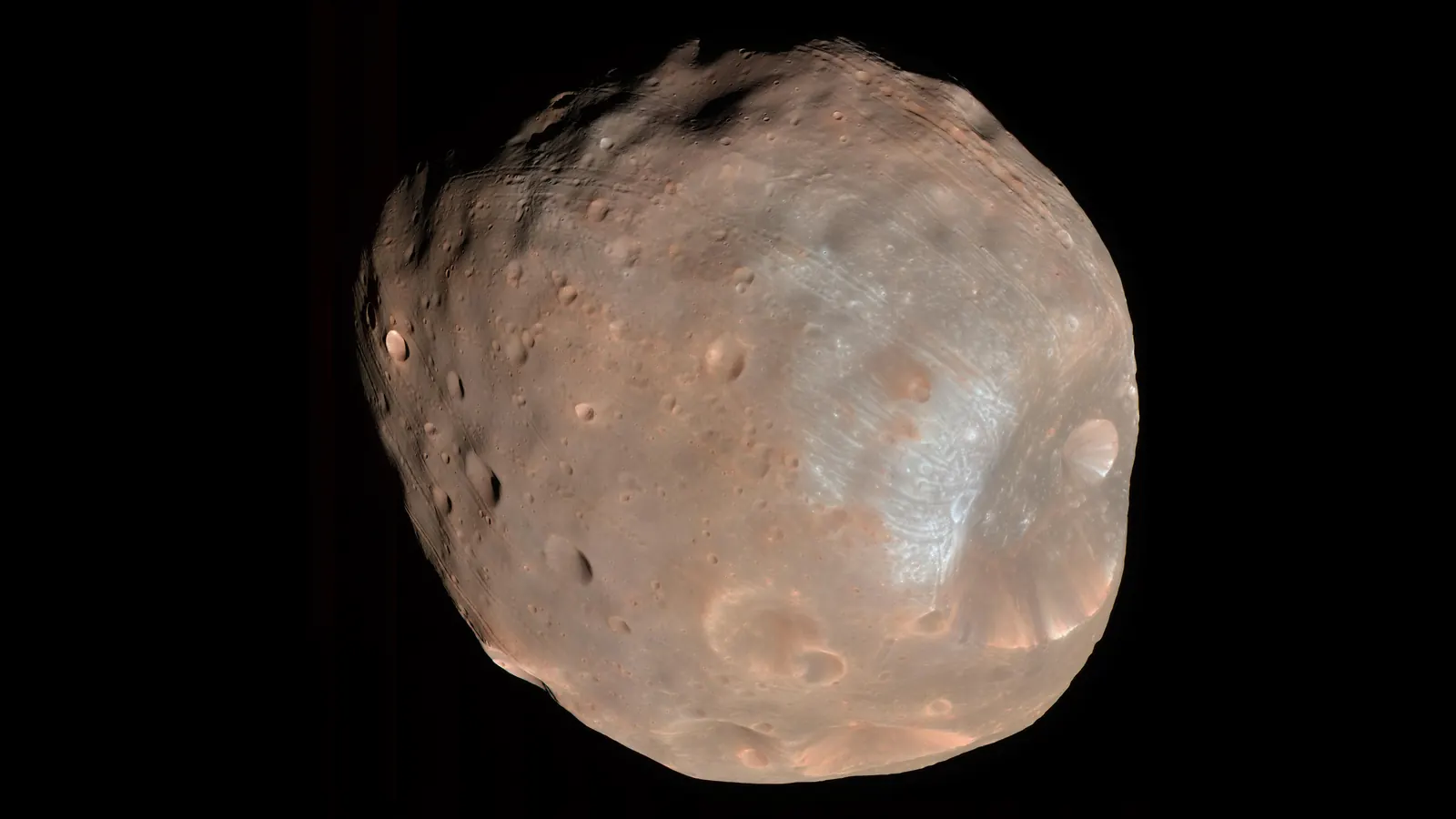
MMX, Japan's Phobos sample-return mission, launches Oct. 20
JAXA's MMX is set to launch at 4:41:03 a.m. Japan time on October 20, 2026 (19:41:03 UTC on October 19) for Phobos, with a sample due back in 2031.
Home · Live satellite map · Satellite directory · Starlink · OneWeb · Navigation satellites · Space stations · Other active satellites · Track the ISS · ISS visible passes · Starlink train · Rocket launches · Aurora forecast · Humans in space · Solar System · Deep Space · Embed widgets · Blog · Guide: spot the ISS · Guide: what is a TLE? · Guide: how many satellites? · Guide: satellite trackers compared · Discovery: Elias 2-24 b · About · FAQ · Data & methodology · Credits · Editorial policy · Accessibility · Contact · Privacy · Terms
© 2026 WatchSat · Not affiliated with any space agency or satellite operator.