WatchSat › Blog › Orionid meteor shower 2026: peak, Moon and satellites
Orionid meteor shower 2026: peak, Moon and satellites
The Orionids peak on the night of October 21-22, 2026 under a bright gibbous Moon. When the Moon sets, and why satellites crowd the hour before dawn.
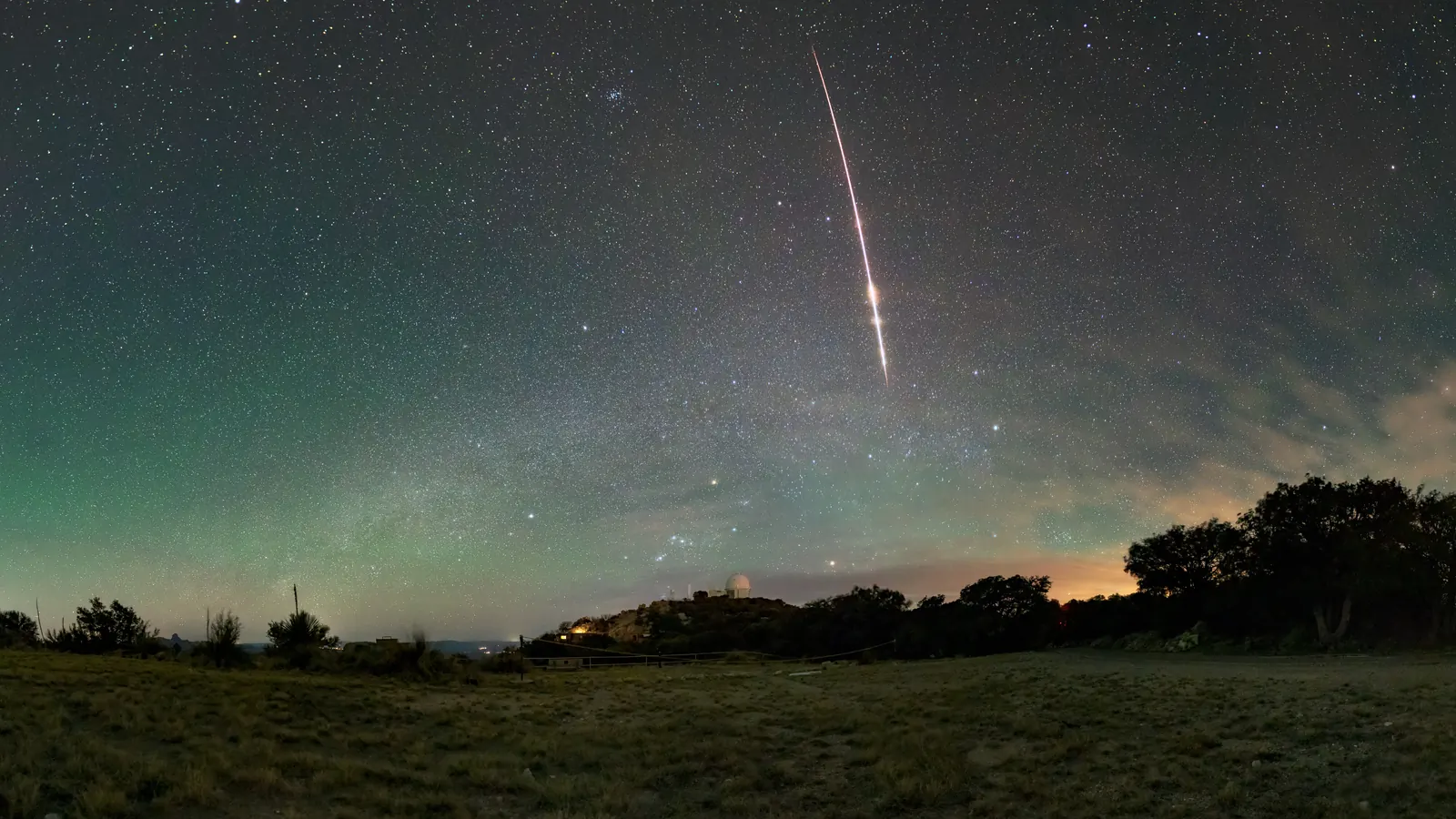
The Orionid meteor shower peaks on the night of October 21 into the morning of October 22, 2026. NASA and the American Meteor Society (AMS) both put the rate at about 10 to 20 meteors an hour under a dark sky. This year a waxing gibbous Moon, about 80% lit by our calculation, is up for the first part of the night, and the darkest stretch comes after it sets in the small hours.
That last stretch before dawn is also when satellites come back into sunlight, so if you're out for the Orionids you'll be sorting meteors from satellites for part of the morning. We ran our own catalog through the peak night to see when.
NOIRLab doesn't say the fireball in the photo above was an Orionid, but Orion is in the frame, low over the telescope dome.
When is the Orionid peak in 2026?
EarthSky, quoting the Royal Astronomical Society of Canada's Observer's Handbook, puts the calculated maximum at 18 UTC on October 21. That's daytime in the Americas and early evening in Europe, before the radiant has risen. The Orionid peak is broad, though, and EarthSky describes it as plateau-like over several nights, so the mornings of October 21, 22 and 23 are all worth a try.
NASA, the AMS and the International Meteor Organization all list the shower as active from October 2 to November 7. Its meteors are debris from Halley's Comet. Earth crosses that debris twice a year, in October for the Orionids and in May for the Eta Aquariids, and the comet itself won't be back in the inner solar system until 2061.
Orionids hit the atmosphere at 66 km/s, and NASA says meteors this fast can leave glowing trains that hang in the sky for seconds to minutes. Their radiant, the point they seem to come from, sits just north of Betelgeuse in Orion. By our calculation it rises around 10 p.m. and keeps climbing until about 5 a.m., when it stands 65 degrees up from New York.
Moonset on the Orionid mornings
We worked out moonset with the same astronomy library our sky pages use. On the morning of October 22, the main peak morning, the Moon sets at:
- 3:12 a.m. EDT in New York, with astronomical twilight starting at 5:43 a.m., about two and a half hours of dark sky.
- 3:22 a.m. PDT in Los Angeles, with twilight from 5:40 a.m., a little over two hours.
- 2:49 a.m. BST in London, with twilight from 5:44 a.m., almost three hours.
- 3:38 a.m. AEDT in Sydney, where twilight starts at 4:37 a.m., under an hour.
A day earlier, on the morning of October 21, the Moon sets about an hour sooner, at 2:07 a.m. in New York, and the dark window is longer. By the morning of October 23 it sets at 4:19 a.m. and the window shrinks to under an hour and a half. The Moon keeps brightening until it's full on October 26 at 04:12 UTC.
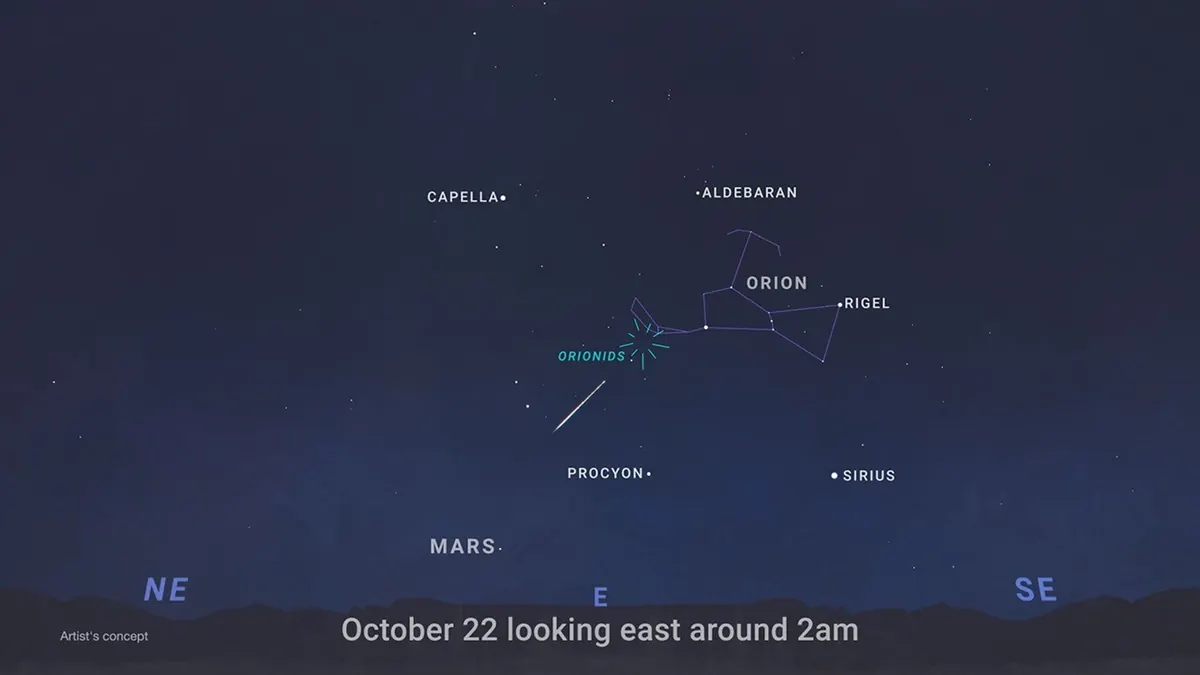
NASA suggests looking 45 to 90 degrees away from the radiant rather than straight at it, since meteors near the radiant look short. Give your eyes about 30 minutes in the dark before you start counting.
Will satellites be visible during the Orionids?
Mostly in the early evening and again before dawn. A satellite only shines when sunlight hits it, and in late October the low ones fall into Earth's shadow a few hours after sunset and stay there until the early morning. To see how that plays out on peak night, we took our October 8 catalog snapshot, moved every satellite forward to the night of October 21 with the SGP4 model WatchSat runs on, and counted the sunlit ones in low orbit more than 20 degrees above the horizon from New York.
Chart data: sunlit low-orbit satellites by half hour
| Time (EDT) | Sunlit low-orbit satellites |
|---|---|
| 7:00 p.m. | 159 |
| 7:30 p.m. | 141 |
| 8:00 p.m. | 83 |
| 8:30 p.m. | 38 |
| 9:00 p.m. | 18 |
| 9:30 p.m. | 6 |
| 10:00 p.m. | 3 |
| 10:30 p.m. | 0 |
| 11:00 p.m. | 0 |
| 11:30 p.m. | 0 |
| 12:00 a.m. | 0 |
| 12:30 a.m. | 0 |
| 1:00 a.m. | 0 |
| 1:30 a.m. | 0 |
| 2:00 a.m. | 0 |
| 2:30 a.m. | 0 |
| 3:00 a.m. | 4 |
| 3:30 a.m. | 6 |
| 4:00 a.m. | 10 |
| 4:30 a.m. | 16 |
| 5:00 a.m. | 50 |
| 5:30 a.m. | 104 |
| 6:00 a.m. | 134 |
| 6:30 a.m. | 171 |
| 7:00 a.m. | 141 |
The count stays at zero from 10:30 p.m. until 2:30 a.m., then climbs: 4 at 3 a.m., 16 at 4:30, 50 at 5 a.m. and 104 by 5:30, just before twilight. Starlinks are a big part of the jump. None of the sunlit ones was a Starlink between 9 p.m. and 4:30 a.m., and then 20 were up at 5 a.m. and 56 at 5:30. London follows the same pattern, with 20 sunlit low-orbit satellites at 4 a.m. BST and 54 at 5 a.m.
The hour after moonset has the fewest satellites, while meteor rates keep rising until the radiant is highest, near 5 a.m. Our numbers come from a two-week-old snapshot and leave out anything launched since, so exact counts will differ, though the overnight gap should hold.
Telling the two apart is mostly about speed. An Orionid crosses its patch of sky in a second or so and may leave a glowing train behind it. A satellite drifts steadily for minutes, and a fresh batch of Starlinks can move across in a line, one after another. Flares can fool you, but Sky & Telescope notes that most satellite flares "brighten, climax, and fade, similar to a meteor but lasting for several seconds or more." Trace a real Orionid backward and it points to the radiant near Orion. If a bright one does go over, the American Meteor Society collects fireball reports from the public.
What to watch on peak night
- The Orionids normally peak at 10 to 20 meteors an hour, but from 2006 to 2009 the AMS recorded peak rates of 50 to 75 an hour. Neither the IMO nor EarthSky forecasts an outburst for 2026.
- NOAA's 27-day outlook, issued October 5, has Kp 5 on October 21 and 22. If that holds, people at high latitudes could see aurora on the same mornings. Long-range outlooks like this one are often revised, and our aurora forecast shows the current Kp.
- Our Starlink train tracker shows whether a fresh batch is crossing your sky, and the ISS pass predictions tell you if the station flies over during your watch. The live globe shows every tracked satellite in real time.
Our post on the October 10 geomagnetic storm covers how the aurora forecast reads Kp.
Sources
- NASA: What's Up: October 2026 skywatching tips from NASA, October 1, 2026; Orionids, updated August 13, 2026
- American Meteor Society, meteor shower calendar, retrieved October 10, 2026; fireball reports
- EarthSky, Deborah Byrd, Orionid meteor shower: all you need to know, updated September 25, 2026
- International Meteor Organization, 2026 meteor shower calendar, 2025
- Sky & Telescope, Bob King, Satellite or meteor? Dissecting light trails in your sky photos
- NOAA Space Weather Prediction Center, 27-day outlook, October 5, 2026
- NOIRLab, Fireball over Kitt Peak, May 2025
- CelesTrak, active satellites element sets, snapshot of October 8, 2026
Follow by RSS. Share this post: Bluesky · X · Reddit · Email
More from the blog
-
October 10 geomagnetic storm reached G3: aurora outlook
A coronal mass ejection drove a G3 (strong) geomagnetic storm on October 10, 2026. What NOAA measured, who saw aurora and what comes next.
-
ISS crew swap: Crew-13 sets U.S. record, Crew-12 lands
Crew-13 reached the ISS 7 hours 55 minutes after launch on October 1, a U.S. record. Crew-12 splashed down October 8, and CRS-35 is due October 13.
-
Starship Flight 14 reached orbit: tracking its 26 Starlinks
Starship reached orbit for the first time on September 28, 2026 and left 26 Starlink V3 satellites behind. Their NORAD IDs, and how high they've climbed.

-
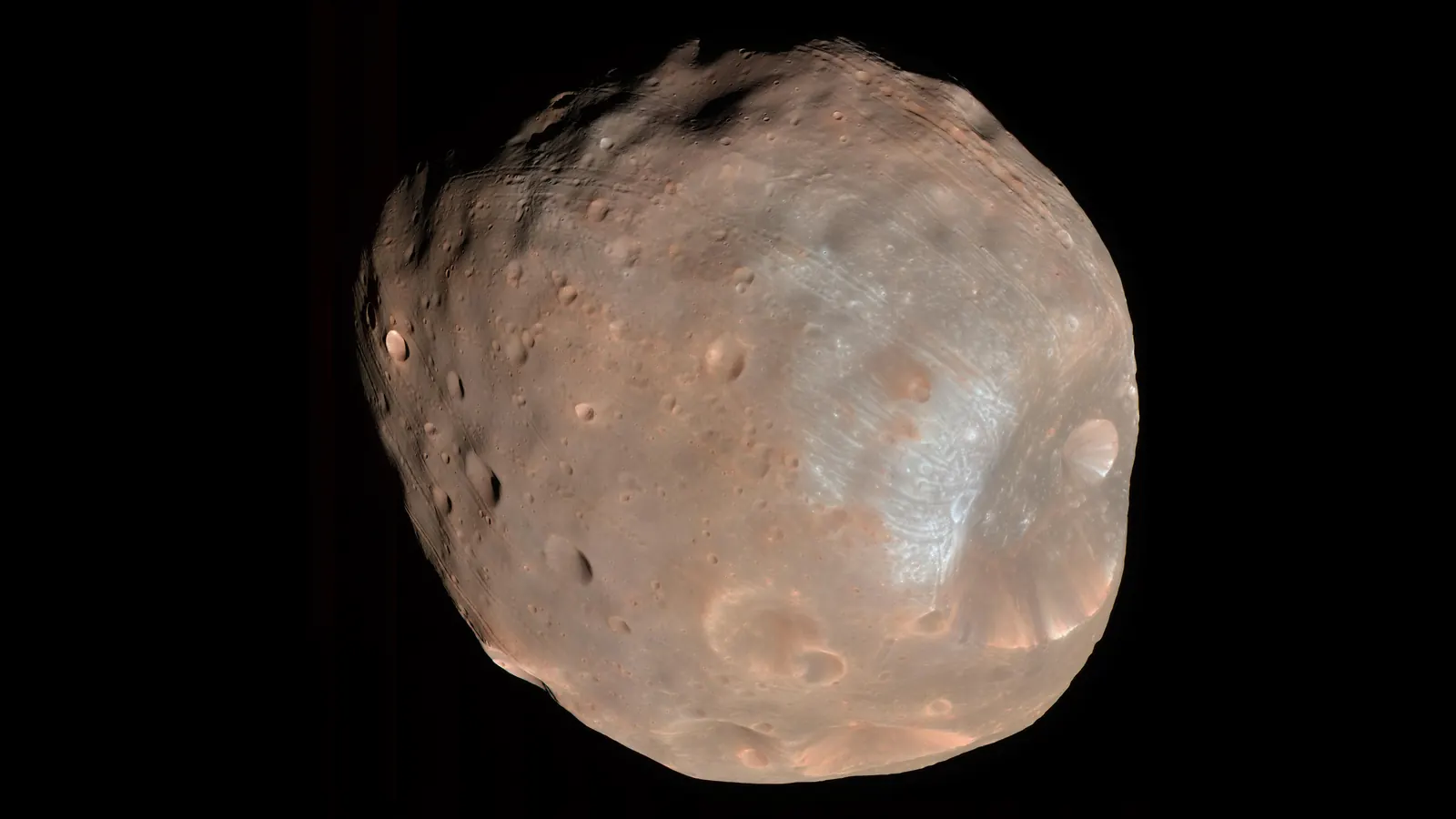
MMX, Japan's Phobos sample-return mission, launches Oct. 20
JAXA's MMX is set to launch at 4:41:03 a.m. Japan time on October 20, 2026 (19:41:03 UTC on October 19) for Phobos, with a sample due back in 2031.
-
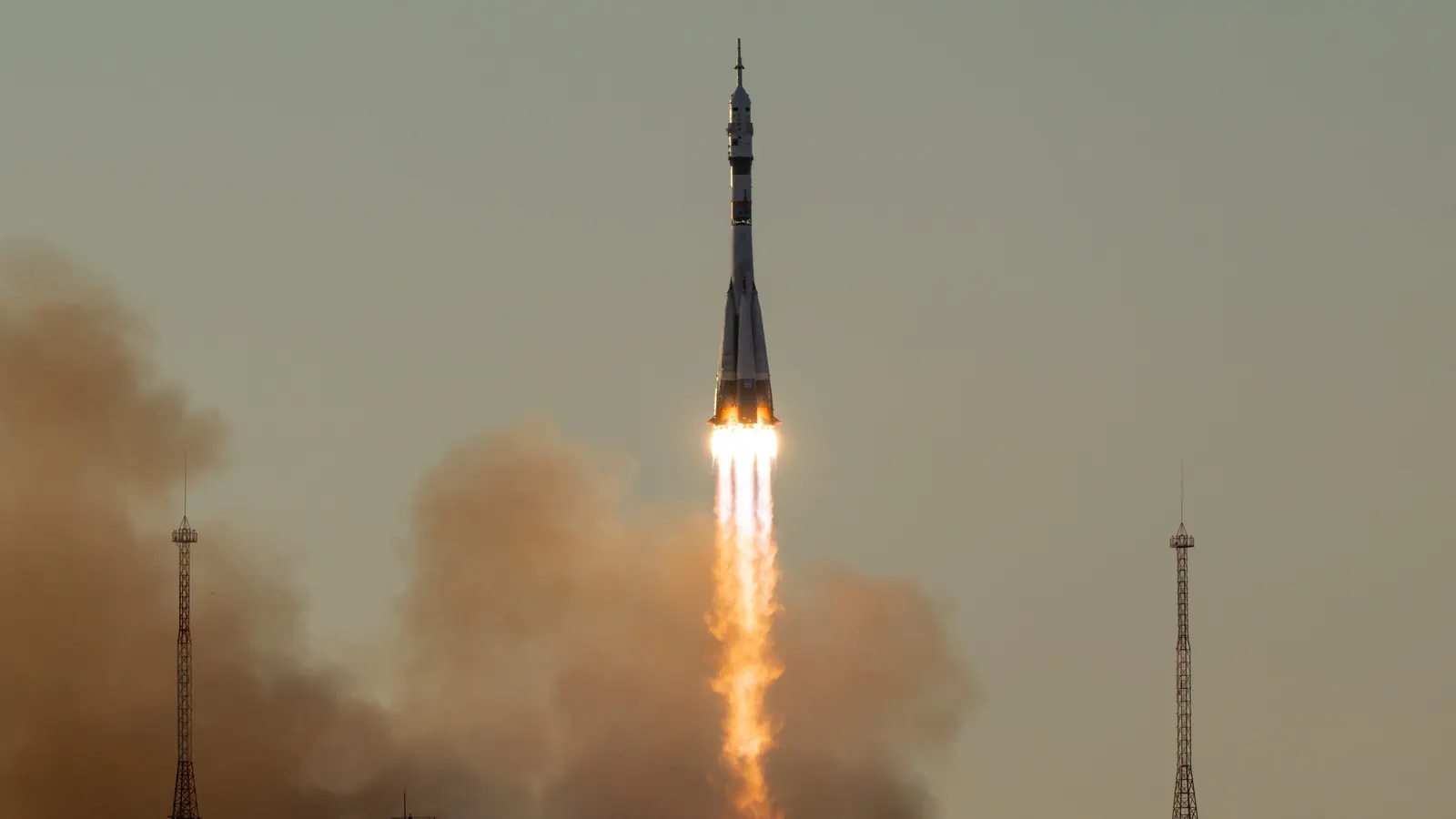
The satellite catalog ran out of five-digit NORAD IDs
On July 11, 2026 the satellite catalog issued its first six-digit NORAD ID, 100000. Why it stopped at 69,999, how Alpha-5 TLEs work and what broke.
Home · Live satellite map · Satellite directory · Starlink · OneWeb · Navigation satellites · Space stations · Other active satellites · Track the ISS · ISS visible passes · Starlink train · Rocket launches · Aurora forecast · Humans in space · Solar System · Deep Space · Embed widgets · Blog · Guide: spot the ISS · Guide: what is a TLE? · Guide: how many satellites? · Guide: satellite trackers compared · Discovery: Elias 2-24 b · About · FAQ · Data & methodology · Credits · Editorial policy · Accessibility · Contact · Privacy · Terms
© 2026 WatchSat · Not affiliated with any space agency or satellite operator.