WatchSat › Blog › MMX, Japan's Phobos sample-return mission, launches Oct. 20
MMX, Japan's Phobos sample-return mission, launches Oct. 20
JAXA's MMX is set to launch at 4:41:03 a.m. Japan time on October 20, 2026 (19:41:03 UTC on October 19) for Phobos, with a sample due back in 2031.
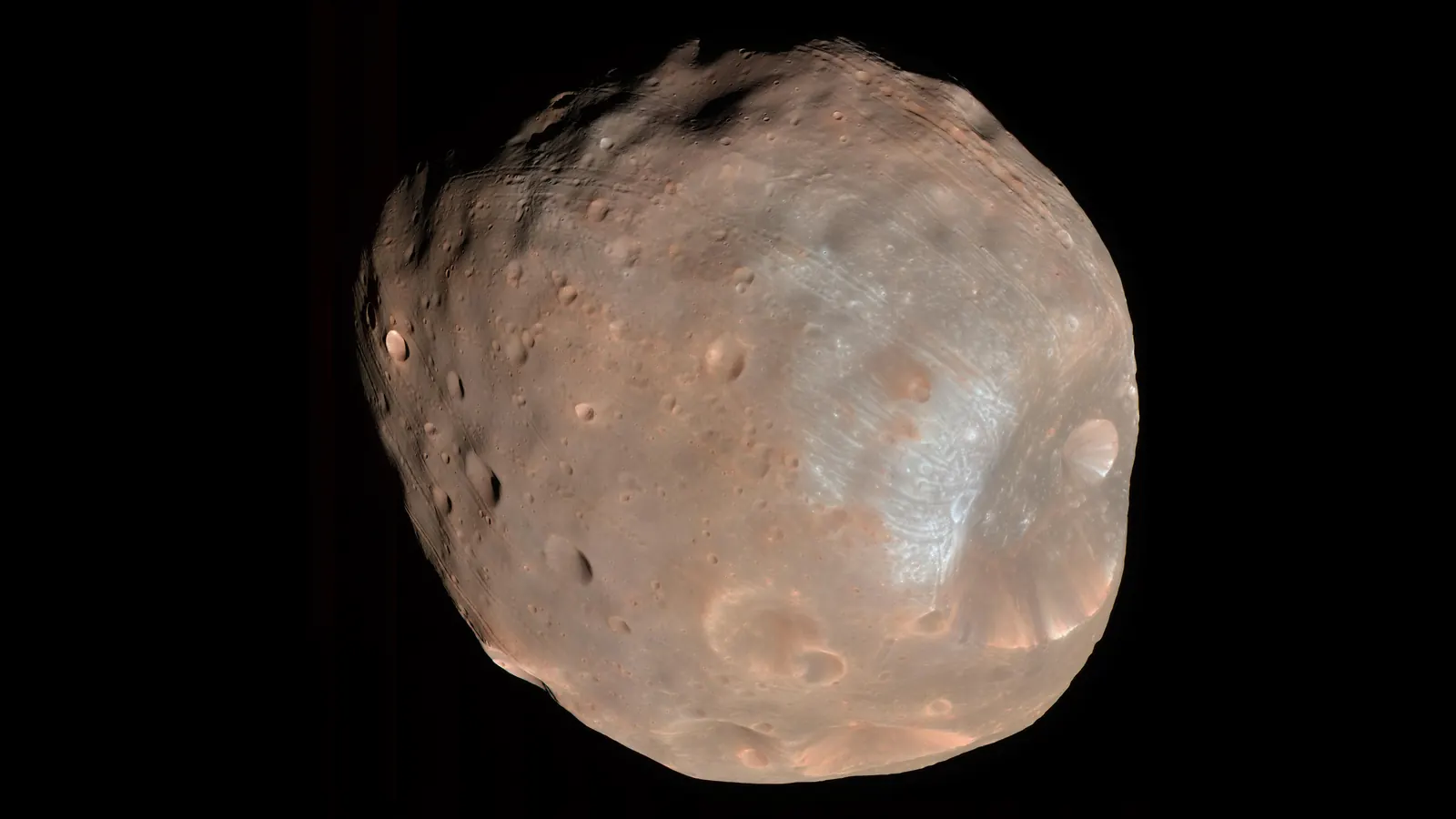
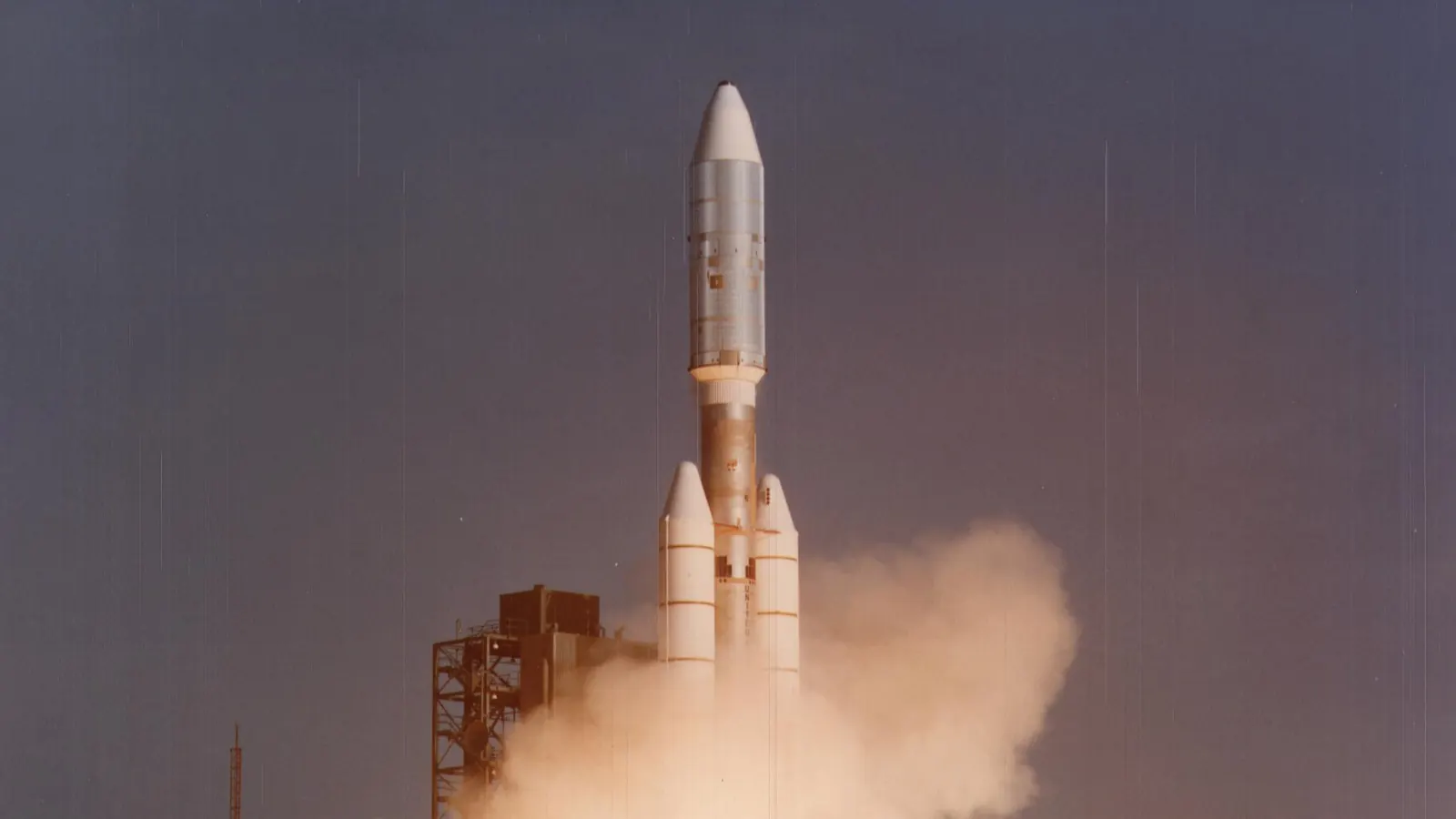
Japan's Martian Moons eXploration spacecraft, MMX, is set to lift off from the Tanegashima Space Center at 4:41:03 a.m. Japan time on Tuesday, October 20, 2026. In UTC that's 19:41:03 on Monday, October 19, or 3:41 p.m. Eastern. The Japan Aerospace Exploration Agency (JAXA) plans to land it on Phobos, the larger of Mars's two moons, collect a sample of 10 grams or more and bring it home in 2031.
The European Space Agency (ESA) says MMX will be the first mission to land on Phobos and the first to return a sample from the Mars system.
When is the MMX launch?
JAXA announced on August 20 that MMX will launch at 4:41:03 a.m. Japan time on October 20, 2026. It holds October 21 through November 7 as a backup period, with a new launch time each day.
Sources give two dates because of time zones. JAXA, NASA and CNES say October 20, the date in Japan. DLR and Space.com say October 19, the date in UTC, Europe and the United States. We checked JAXA's time against Launch Library 2, the feed behind our launches page, which lists 2026-10-19T19:41:03Z. Japan runs nine hours ahead of UTC, so the two agree to the second.
The rocket is H3 flight No. 10, an H3-24L in JAXA's naming: two main engines, four solid rocket boosters and the long payload fairing. JAXA calls it the most powerful H3 version and says the 24 configuration has flown once before, while this is the first launch with the long fairing. Launch Library shortens the name to H3-24.
H3 flight No. 8 failed on December 22, 2025, leaving the Michibiki 5 navigation satellite short of its planned orbit. JAXA's July 23 report traced the failure to a payload adapter whose bonded joints had delaminated in manufacturing and gave way at fairing separation. It calls for bolted joints on standard missions and for inspecting every flight fairing. Flights No. 6 and No. 9 have launched successfully since, on June 12 and August 11.
What will MMX do at Phobos?
MMX has three modules: a propulsion module, a lander and a return module carrying the sample capsule. Once at Mars it moves into what JAXA calls a quasi-satellite orbit, which follows Phobos around the planet and, seen from the moon, looks like an orbit around it.
Phobos measures 27 by 22 by 18 kilometres, NASA says, and circles Mars three times a day. It's closing in on the planet by 1.8 metres every hundred years, and NASA expects it to hit Mars or break up into a ring in about 50 million years.
A 25-kilogram rover called Idefix, built by the French and German space agencies, CNES and DLR, will land first, JAXA says, to measure the surface and help the main spacecraft touch down safely. ESA says it will weigh the equivalent of about 15 grams on Phobos, and DLR expects the landing in early 2029. The main spacecraft will then land, twice by JAXA's plan, and collect material with a corer and a pneumatic sampler.
NASA supplied MEGANE, a gamma-ray and neutron spectrometer that will measure the elemental makeup of Phobos's surface. NASA says scientists suspect the moons are either remnants of an ancient collision between Mars and a large impactor or captured asteroids, and that MEGANE's readings should help show which.
Deimos, the smaller moon, gets late-mission flybys rather than a landing, JAXA says.
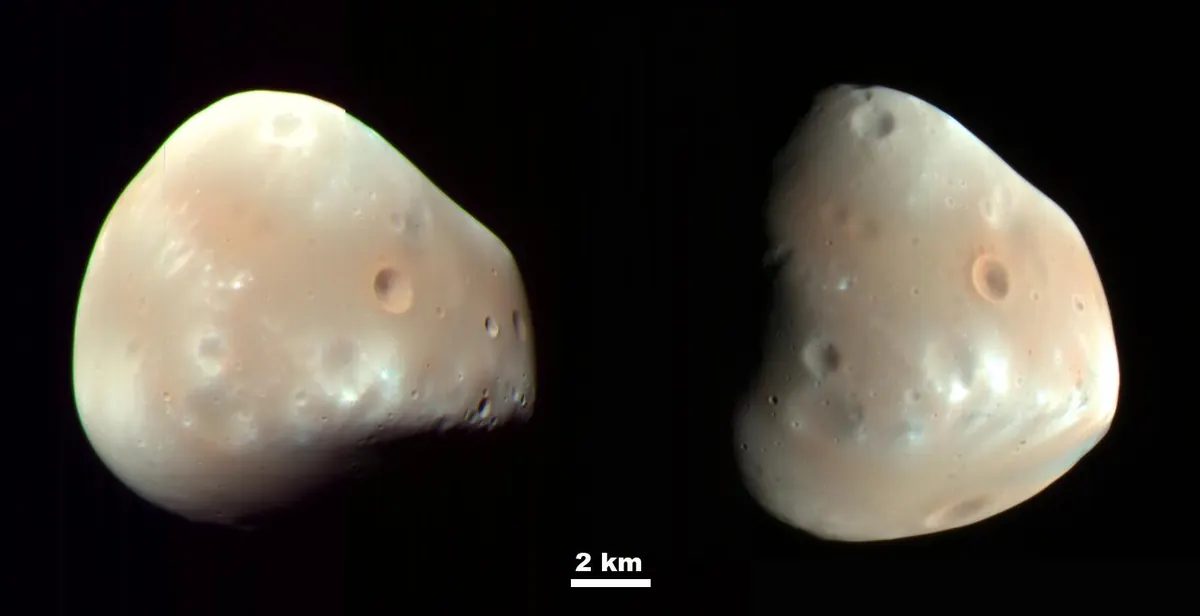
Sources differ on a few other numbers too.
- Sample size: JAXA says more than 10 grams, ESA says at least 10, CNES lists 10 as the minimum and DLR says several grams. For scale, Hayabusa2 aimed for 0.1 grams from asteroid Ryugu and returned 5.4.
- Return: JAXA and ESA say Japanese fiscal year 2031, which runs from April 2031 to March 2032. CNES and DLR say 2031. A five-year mission launched in October 2026 ends around October 2031, which fits both.
- Idefix landing: DLR's mission page says early 2029, while a DLR science page says 2027 to 2028.
What to watch, and where to follow it on WatchSat
These are JAXA's plans, and launch dates slip.
- JAXA's launch plan has the go or no-go decision by 3 p.m. Japan time two days before launch day, which is October 18 for the first attempt.
- JAXA plans to stream the launch live on YouTube from about 55 minutes before liftoff to about 75 minutes after. That covers the moment MMX leaves the rocket, which on an October 20 launch comes 1 hour 11 minutes 12 seconds after liftoff, at 5:52:15 a.m. Japan time (20:52:15 UTC on October 19), 592 kilometres up and bound for Mars.
- JAXA's night-sky guide says an October 20 launch may be visible across a wide area of Japan, with sunlight reaching the rocket about 5 minutes 30 seconds after liftoff. It advises looking low, 10 to 20 degrees above the horizon, and says rockets have sometimes looked as bright as the brightest star.
- JAXA's schedule has each leg of the cruise taking just under a year, with MMX reaching Mars in 2027, leaving in 2030 and releasing the capsule at Earth in fiscal 2031.
Our launches page lists the launch as "H3-24 | Martian Moon eXplorer (MMX)", with a live countdown and the time in your time zone.
The Phobos card on our solar system page opens with the same HiRISE colour image as the top of this post. It lists Phobos at 9,378 kilometres from Mars. NASA's Mars fact sheet gives the same figure, measured to the planet's centre. Take away Mars's 3,396-kilometre equatorial radius and Phobos sits about 5,980 kilometres above the surface.
Our deep space page shows live distances and signal times for craft such as Voyager 1. MMX isn't one of them, but JAXA says its farthest point from Earth will be 2.5 astronomical units, a round trip of about 40 minutes for a radio signal.
Sources
- JAXA: Launch schedule of the Martian Moons eXploration (MMX) spacecraft aboard H3 Launch Vehicle flight No.10, August 20, 2026; FY2026 rocket launch plan, MMX and H3 (Japanese PDF), August 2026; H3 No. 10 overview (Japanese); night-sky viewing guide (Japanese); live broadcast page (Japanese); H3 flight No. 8 failure report (Japanese PDF), July 23, 2026; Michibiki 7 launch result (Japanese), August 11, 2026; MMX Mission Press Kit, revised September 16, 2026; MMX site
- ESA, MMX factsheet
- NASA: MMX, August 20, 2026; Phobos and Deimos, November 3, 2024; Mars Fact Sheet, May 19, 2025
- DLR: Martian Moons eXploration, September 14, 2026; Institute of Space Research, Mission Martian Moons eXploration (MMX)
- CNES, MMX, September 29, 2026
- Space.com, Japan unveils Mars moon sample-return spacecraft ahead of Oct. 19 launch, August 21, 2026
- The Space Devs (Launch Library 2), H3-24 | Martian Moon eXplorer (MMX), retrieved October 1, 2026
- Statistics Bureau of Japan, Statistical Handbook of Japan 2026
Follow by RSS. Share this post: Bluesky · X · Reddit · Email
More from the blog
-
Orionid meteor shower 2026: peak, Moon and satellites
The Orionids peak on the night of October 21-22, 2026 under a bright gibbous Moon. When the Moon sets, and why satellites crowd the hour before dawn.
-
Starship Flight 14 reached orbit: tracking its 26 Starlinks
Starship reached orbit for the first time on September 28, 2026 and left 26 Starlink V3 satellites behind. Their NORAD IDs, and how high they've climbed.

-
The satellite catalog ran out of five-digit NORAD IDs
On July 11, 2026 the satellite catalog issued its first six-digit NORAD ID, 100000. Why it stopped at 69,999, how Alpha-5 TLEs work and what broke.

-
Two-thirds of active satellites are now Starlinks
Of 16,621 active satellites in the public catalog, 11,132 are Starlinks. How many satellites are in orbit in 2026, who runs them and where they fly.
-
Voyager 1 will reach one light-day from Earth on Nov. 18
At 10:16 UTC on November 18, 2026, Voyager 1 will be one light-day from Earth. How far that is, how long its signals take, and why it stays past the line.
Home · Live satellite map · Satellite directory · Starlink · OneWeb · Navigation satellites · Space stations · Other active satellites · Track the ISS · ISS visible passes · Starlink train · Rocket launches · Aurora forecast · Humans in space · Solar System · Deep Space · Embed widgets · Blog · Guide: spot the ISS · Guide: what is a TLE? · Guide: how many satellites? · Guide: satellite trackers compared · Discovery: Elias 2-24 b · About · FAQ · Data & methodology · Credits · Editorial policy · Accessibility · Contact · Privacy · Terms
© 2026 WatchSat · Not affiliated with any space agency or satellite operator.