WatchSat › Blog › Where is China's Tiangong space station? Orbit and crew
Where is China's Tiangong space station? Orbit and crew
China's Tiangong space station orbits about 386 km up on a 41.5° tilt, so it stays between 41.5° N and S. Who's aboard, its size, and where you can see it.
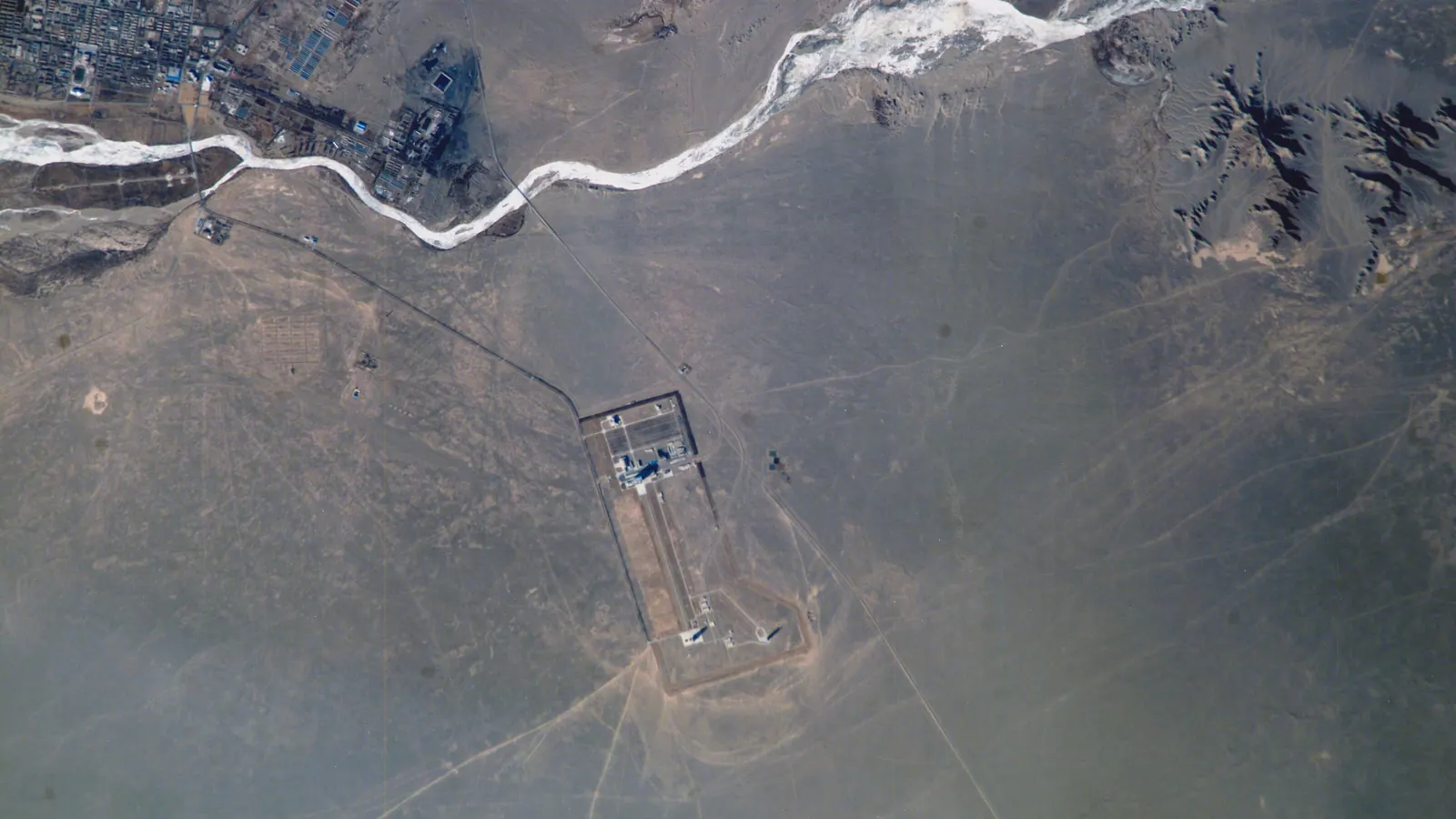
China's Tiangong space station orbits about 386 km (240 miles) above Earth, on a path tilted 41.5 degrees to the equator. That tilt, called the inclination, keeps it between 41.5 degrees north and 41.5 degrees south, a band that takes in New York, Madrid and Beijing but stops short of London. The station covers 7.68 km a second and laps the planet every 92 minutes, so where it is changes from minute to minute. Tiangong's live position shows the exact spot, and the Tiangong pass predictions list when it next crosses your sky.
Three Chinese astronauts are aboard as of October 2026, compared with seven on the International Space Station, according to the Launch Library data behind our list of people in space. The station has three modules: the Tianhe core and the Wentian and Mengtian laboratories.
Who is aboard Tiangong now?
The current crew flew up on Shenzhou-23, which lifted off from Jiuquan on a Long March 2F rocket on May 24, 2026, at 15:08 UTC. Zhu Yangzhu is the commander, with Zhang Zhiyuan as pilot and Lai Ka-ying as payload specialist. Lai is Hong Kong's first astronaut, Space.com reported. By October 11 the three had been in orbit for 140 days.
They took over from Zhang Lu, Wu Fei and Zhang Hongzhang of Shenzhou-21, who welcomed them aboard and then landed at the Dongfeng site in Inner Mongolia on May 29. Xinhua counted 210 days in space for that crew, the longest stay yet on the station, Macau Business reported. No crew has yet stayed much more than seven months. At launch, though, Khaosod English and KeepTrack's Space Brief reported that one of the three Shenzhou-23 astronauts is expected to stay about a year, which KeepTrack called a first for China. Neither named the astronaut.
The Shenzhou-21 crew came home in Shenzhou-22, a spacecraft that had flown up empty, because their own ship had already carried the previous crew home. On November 5, 2025, hours before that Shenzhou-20 crew was due to undock, they found a small crack in the outer pane of a window on their return capsule. The landing was called off. China's space agency said a tiny piece of space debris had most likely hit the glass. On November 14 the Shenzhou-20 crew came home in the Shenzhou-21 capsule instead, nine days late, UPI reported.
China launched Shenzhou-22 uncrewed on November 25, Beijing time, as a new return ship for the Shenzhou-21 crew, carrying supplies and a quickly developed treatment for the cracked window, according to SpacePolicyOnline. The Shenzhou-21 astronauts fitted the treatment inside the damaged capsule, and Shenzhou-20 landed empty at Dongfeng on January 19, 2026, 75 days after the crack was found.
Tiangong's size and the plan to expand it
Tiangong is much smaller than the ISS. In November 2022, AFP reported that the finished station would weigh about 90 tonnes. NASA's space station facts and figures give the ISS's mass as 419,725 kg (925,335 lb), more than four times as much.
China plans to make it bigger. Xinhua reported on June 23, 2026, that the station will be expanded and its T shape turned into a cross. The first phase adds a multi-purpose module of the 20-tonne class, with more docking ports, an extra hatch for spacewalks, and room for storage and experiments. We found no launch date for the module. Space.com's headline said China wants to double Tiangong's size "while the ISS nears its end", and our explainer on the ISS's retirement covers the plan to bring the ISS down.
Space.com reported in January 2026 that the station's first new addition is expected to be Xuntian, the Chinese Space Station Telescope, which could launch as soon as early 2027. It carries a 2-metre main mirror, a little smaller than Hubble's, and the same report gave it a field of view roughly 300 times Hubble's. It'll fly on its own in an orbit close to the station's, near 400 km and 41 degrees, and it's designed to dock with Tiangong from time to time for maintenance.
Tiangong's orbit in our data
Our orbit figures come from our October 11 snapshot of CelesTrak's list of active satellites, which feeds our live satellite map, with orbit data dated October 10 at 19:53 UTC. The station appears in that list five times. Tianhe, Wentian, Mengtian, the Tianzhou-10 cargo ship and Shenzhou-23 (catalog numbers 48274, 53239, 54216, 69049 and 69180) carry an identical element set, the block of orbit numbers CelesTrak publishes for each object. They've matched in all nine snapshots we've saved since mid-September, so the map draws five dots in one spot. Tianzhou-10 launched from Wenchang, in Hainan, on May 11, 2026, and docked the same day, Space.com reported. Our space station tracker shows the group beside the ISS.
Like CelesTrak, we measure heights above Earth's equatorial radius of 6,378 km. In that snapshot Tiangong's mean altitude, its average height over one orbit, is 386.07 km. Its lowest point, the perigee, is 385.6 km and its highest, the apogee, 386.6 km, so the orbit is close to a circle. The ISS's mean altitude in the same snapshot is 420.19 km, 34 km higher. Lower orbits are faster, as our post on the ISS's speed and height explains, so Tiangong does 7.68 km/s, or 17,172 mph, to the ISS's 7.66 km/s.
Air drag falls off quickly with height, which is one reason the lower station sinks faster than the ISS. Size and mass matter too, so the gap isn't height alone. Between the orbit data of September 14 and October 10, Tiangong's mean altitude fell from 387.91 to 386.07 km. Leaving out a brief rise in late September, it lost about 96 m a day, or 2.9 km a month. The ISS lost 38 m a day between its own boosts, so Tiangong is sinking about 2.5 times as fast.
That rise came between the element sets of September 26 and September 30. Mean altitude went up 0.33 km when about 0.35 km of decay was due, a net raise of about 0.7 km. To us it looks like a small reboost, a short engine burn to lift the orbit. We found no announcement of one, though, and a change in how the orbit was fitted could make a similar jump.
Because the orbit tops out at 41.47 degrees, the band beneath it covers 66% of Earth's surface, compared with 78% for the ISS. The whole orbit also swings slowly westward, a plane drift caused by the bulge of Earth's equator. For Tiangong the drift is 6.08 degrees a day, and for the ISS 4.95. Add Earth's own motion around the Sun, and Tiangong's orbit comes back to the same angle with the Sun every 51 days, against about 61 for the ISS.
Can you see Tiangong from where you live?
You can if you live within about 53.5 degrees of the equator. Up to that latitude, Tiangong can rise at least 10 degrees above the horizon when its track swings closest. For the ISS, the same limit is 64.4 degrees. Like the ISS, Tiangong shows up around dusk or dawn, when your sky is dark but the station is still sunlit.
To see how often that happens, we ran the October 10 orbit data 28 days ahead from October 11. We counted passes that peak at least 10 degrees up while the Sun is 6 degrees or more below the horizon and the station is lit. New York gets 26 of those, Beijing 25 and Cairo 29, compared with 23, 29 and 13 from the ISS. London lies outside the band under Tiangong's orbit, but at 51.5 degrees north it's inside the 53.5-degree limit. It gets 8 passes, none higher than 14 degrees and none in the first week, while the ISS gives it 25.
Treat these counts as a rough guide. They come from a single element set, so any reboost will shift them, and they don't screen out faint passes. For real times, check Tiangong's pass page and the ISS pass predictions.
Visible passes also come in seasons. In a 56-day run, New York's weekly counts go 6, 4, 9, 7, 0, 5, 9 and 6, and Madrid and Beijing also get a blank week in mid-November. Sydney's season comes later, with 7 to 11 visible passes a week for five weeks from October 25. The seasons come from the plane drift described above. Each city's run of dark-sky passes repeats on the 51-day cycle, and Tiangong's gaps run deeper than the ISS's. The tips in our guide to spotting the ISS work for Tiangong too.
Sources
- Space.com, China reveals 3-person Shenzhou 23 crew, including Hong Kong's 1st astronaut, May 2026; Watch China launch Shenzhou 23 astronauts to its Tiangong space station on May 24, May 2026
- collectSPACE, Shenzhou 23 taikonauts launch to Tiangong station, May 24, 2026
- Khaosod English, China Launches Shenzhou-23 Mission, Sending One Astronaut for Year-Long Stay, May 25, 2026
- KeepTrack, Space Brief, May 25, 2026
- Macau Business, Shenzhou-21 astronauts return to Earth after record 210-day mission, May 2026; RTHK, report on the Shenzhou-21 crew's landing, May 29, 2026
- UPI, China's 3 Shenzhou-20 astronauts return home after ship damage, November 14, 2025
- SpacePolicyOnline, Repaired Shenzhou-20 Returns to Earth Empty, January 2026
- AFP via Gulf News, China astronauts reach Tiangong space station, November 2022
- NASA, Space Station Facts and Figures
- Xinhua, China's space station to be expanded to unlock broader future, June 23, 2026
- Space.com, China plans to double the size of its Tiangong space station while the ISS nears its end, June 2026
- Space.com, China previews how powerful its new Xuntian space telescope will be ahead of 2027 launch, January 2026
- Space.com, China's Tianzhou 10 freighter delivers 7 tons of cargo to Tiangong space station, May 2026; Henan Provincial Government (Xinhua), China launches robotic cargo mission to space station, May 11, 2026
- CelesTrak, active satellites element sets, snapshots of September 15 to October 11, 2026
- The Space Devs, Launch Library 2, people in space as loaded on October 9, 2026
Follow by RSS. Share this post: Bluesky · X · Reddit · Email
More from the blog
-
When will the ISS be retired? Deorbit plan and what's next
NASA plans to retire the ISS after September 30, 2030, when operations end. A SpaceX-built vehicle then steers it into the South Pacific in about 2031.
-
How many rocket launches in 2026? The count so far
Rocket launches in 2026 reached about 240 orbital attempts by mid-October, one every 28.5 hours. How it compares with 2025's record and what the catalog shows.
-
What are the types of orbits? LEO, MEO, GEO and HEO
The main types of orbits are LEO, MEO, GEO and HEO. Of 16,701 objects on CelesTrak's active list on October 11, 2026, 95 percent were in low Earth orbit.
-
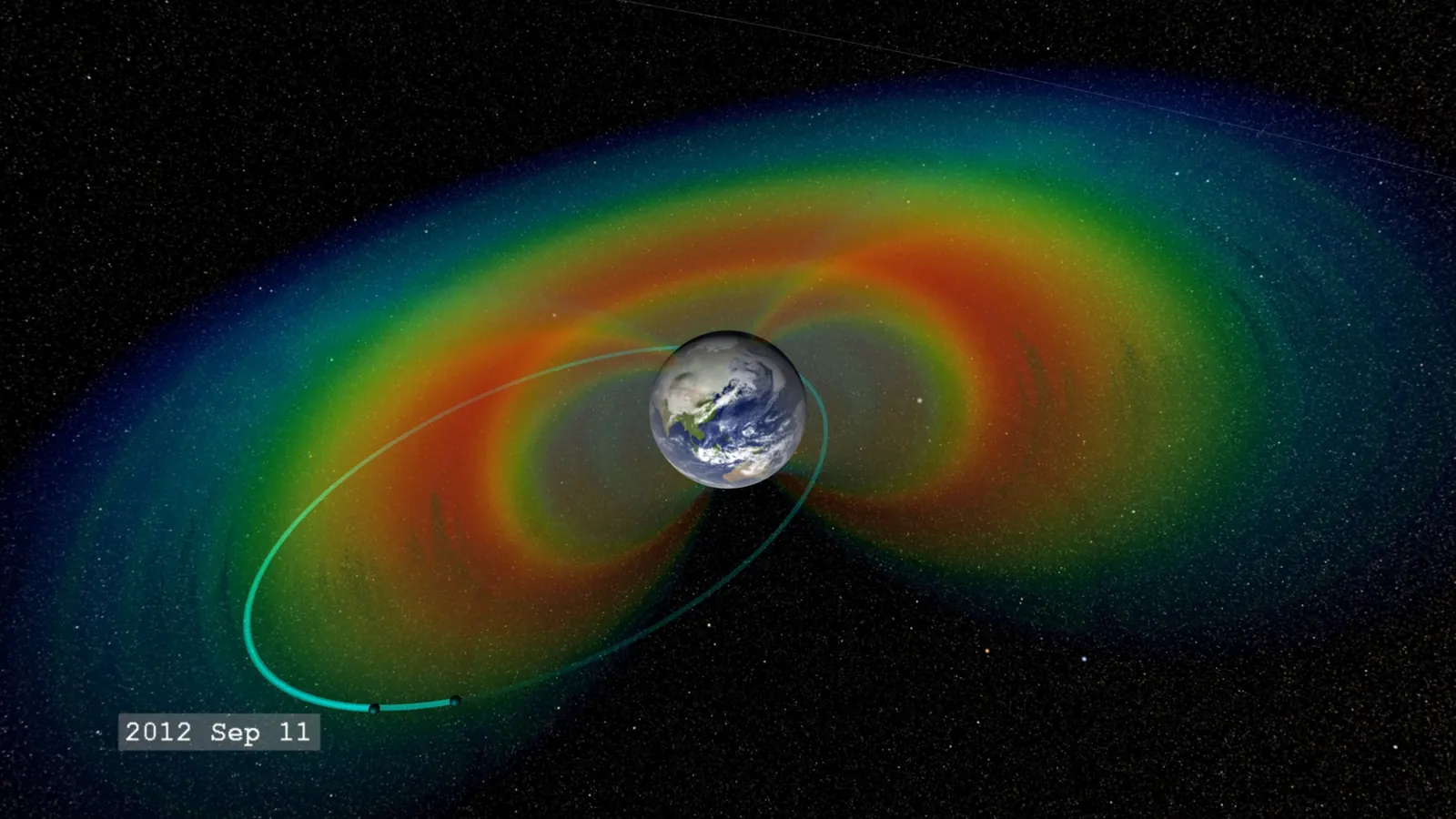
What are the Van Allen belts? Altitude, risks and satellites
The Van Allen belts are two zones of trapped particles, about 1,600 to 40,200 km up by NASA figures. Of 16,701 active satellites, 95% stay below 2,000 km.
-
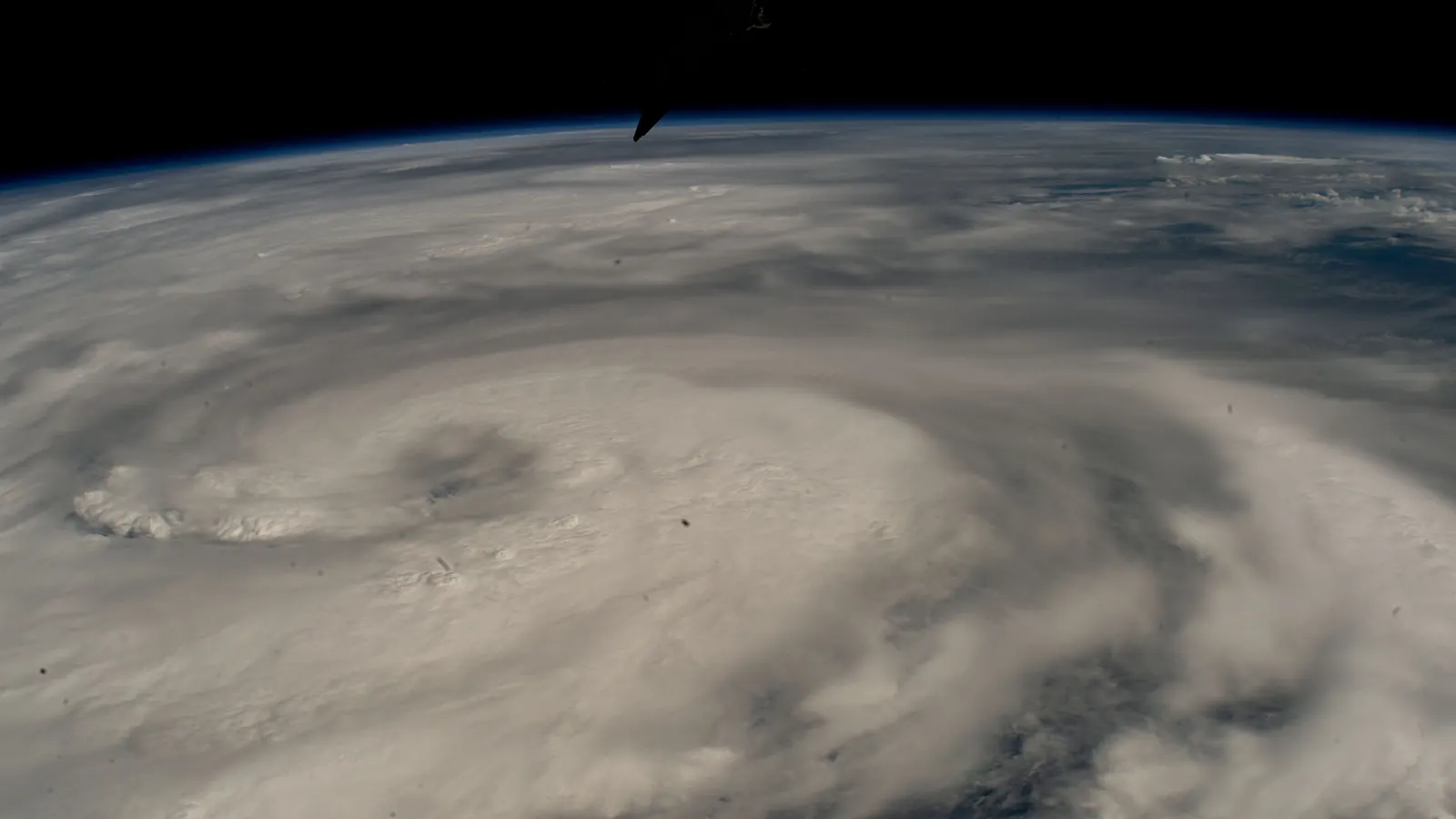
How do weather satellites work? Orbits, sensors and data
How weather satellites work: geostationary imagers 35,786 km up scan a full disc every 10 minutes, and low orbiters supply over 80% of forecast model data.
Home · Live satellite map · Satellite directory · Starlink · OneWeb · Navigation satellites · Space stations · Other active satellites · Track the ISS · ISS visible passes · Starlink train · Rocket launches · Aurora forecast · Humans in space · Solar System · Deep Space · Embed widgets · Blog · Guide: spot the ISS · Guide: what is a TLE? · Guide: how many satellites? · Guide: satellite trackers compared · Discovery: Elias 2-24 b · About · FAQ · Data & methodology · Credits · Editorial policy · Accessibility · Contact · Privacy · Terms
© 2026 WatchSat · Not affiliated with any space agency or satellite operator.