WatchSat › Blog › Can satellites connect directly to your phone? How it works
Can satellites connect directly to your phone? How it works
Satellites can connect directly to your phone for texts. Starlink says it has launched 650 direct-to-cell satellites. How it works and who offers it.
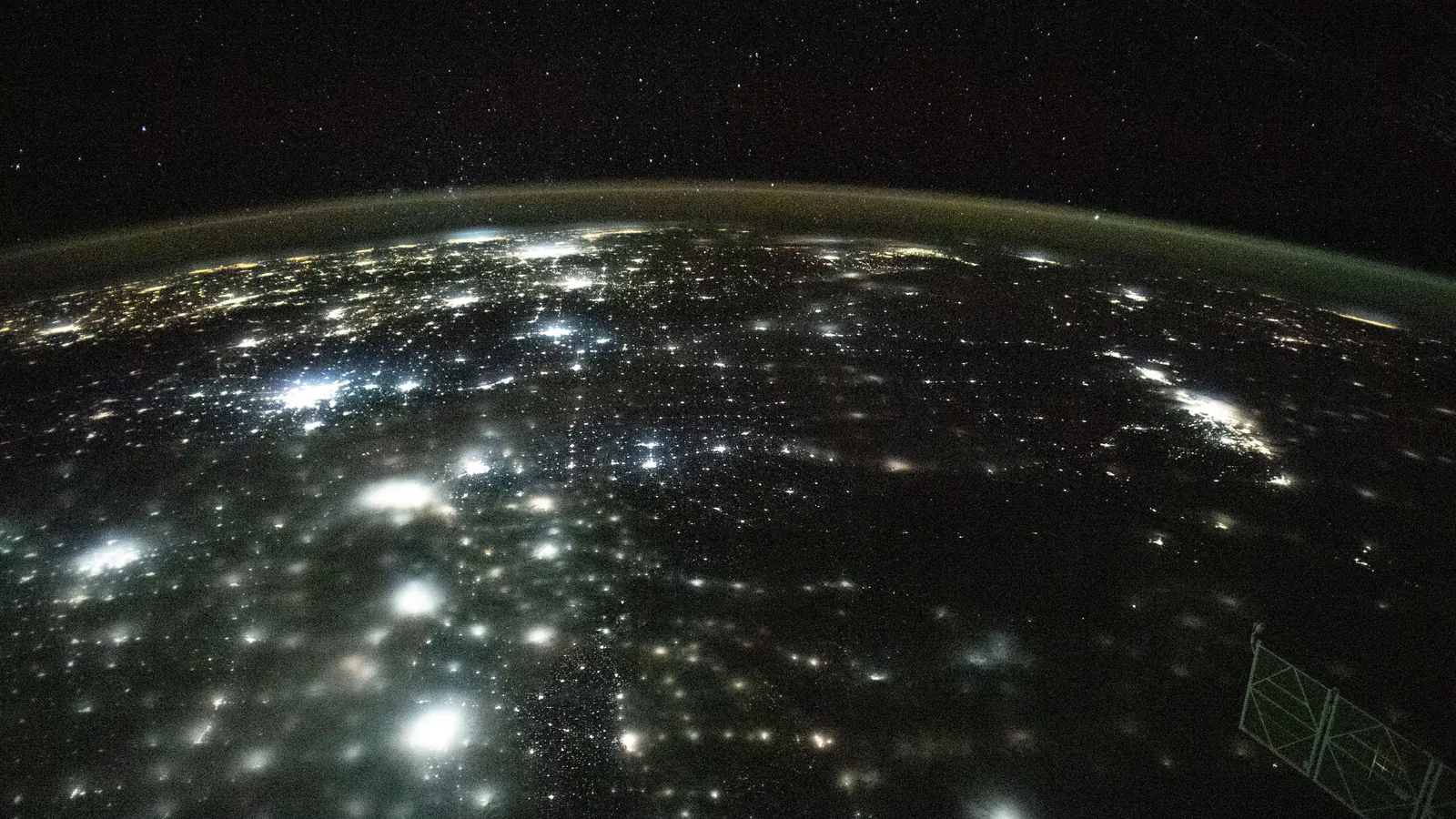
Satellites can now connect directly to your phone, with no dish or special handset, mainly for text messages. In October 2026 Starlink's website counted 650 satellites launched for the job, each carrying the radio of a cell tower. T-Mobile has sold texting over them as T-Satellite since July 23, 2025, and Starlink says more than 12 million people have connected to its direct-to-cell satellites at least once.
AST SpaceMobile is preparing a rival service on its own BlueBird satellites. Apple's Emergency SOS via satellite and Google's Satellite SOS for Pixel phones take another route. They send emergency messages over partner satellite networks, and only from newer models.
How does direct-to-cell work?
A phone already knows how to talk to a cell tower, so direct-to-cell puts the tower in orbit. Starlink says each of its Direct to Cell satellites carries an eNodeB, the base-station modem at the heart of an LTE (4G) tower, and existing LTE phones connect without new hardware, firmware or apps. Our explainer on how Starlink works covers the broadband side.
The phone is the hard end of the link. In a January 2024 update, Starlink said phones have weak antennas and little transmit power. The satellites also race across the sky, which forces frequent handoffs from one satellite to the next. Their speed shifts the signal's frequency too, through the Doppler effect that changes the pitch of a passing siren. Starlink's answer was custom chips, software and phased-array antennas, which steer a beam electronically with many small elements instead of moving a dish.
Low altitude does much of the work. A direct-to-cell Starlink orbits about 357 km up. By our calculation, its signal reaches a phone 1.19 milliseconds after leaving when the satellite is overhead, and 2.54 ms when it's 25 degrees above the horizon and 761 km away. A geostationary satellite, which hangs over one spot 35,786 km up, is about 100 times farther away. Since signal strength falls with the square of the distance, the same transmitter and antennas would deliver a signal roughly 10,000 times weaker, after 119 ms.
At 357 km a satellite moves at 7.69 km/s and laps Earth every 91.7 minutes. By our arithmetic, that speed shifts a phone signal at 1,990 MHz by up to about 44 kHz. It also keeps passes short. On a pass straight overhead, a satellite stays more than 30 degrees above the horizon for only about 2.5 minutes, or 3 minutes above 25 degrees. A phone is therefore handed from satellite to satellite every few minutes.
With a phone's small antenna at one end, there's little signal to spare. T-Mobile warns that satellite connections have lower data speeds and limited capacity.
Which phones and carriers work with satellite texting?
When T-Satellite launched, texting worked on Android phones and iPhones, with picture messages on Android first. Data for a short list of satellite-ready apps was due from October 1, 2025, Drive Tesla Canada reported.
You don't need a T-Mobile plan. ConsumerAffairs reported at launch that T-Satellite came with T-Mobile's Experience Beyond plan and cost $10 a month for other customers, including AT&T and Verizon users. T-Mobile's coverage page lists the continental US, Puerto Rico, Hawaii and parts of southern Alaska. Abroad, Starlink's partners include Rogers in Canada, One NZ in New Zealand, Optus in Australia and KDDI in Japan, though the page doesn't say which are live.
Apple's Emergency SOS via satellite works on the iPhone 14 and later in 21 countries and regions, according to Apple's support page. Its satellite partner is Globalstar, in which Apple holds a 20% stake. Google's Satellite SOS is provided by Skylo and works on every Pixel from the Pixel 9 on except the 9a, in the 34 countries and territories listed on Google's help page.
AST SpaceMobile said in May 2026 that the FCC had authorised its commercial US service. When BlueBirds 11, 12 and 13 launched on a Falcon 9 on August 5, AST said it was preparing for beta services later in the year. Its August results still described a beta. AST had activated an initial 3,000 digital cells across the continental US, served from seven gateways on the ground. We found no later update. Lynk is set to start service in 2027, Space Intel Report wrote in April.
Direct-to-cell satellites in our catalog
Starlink's 650 counts satellites launched. To see how many are still up, we turned to CelesTrak, which supplies the orbit data for our live satellite map and adds [DTC] to these satellites' names, as with STARLINK-11072. Our October 11 snapshot of CelesTrak's active list, which holds satellites not known to be dead, has 637 of them. They make up 5.7% of the snapshot's 11,129 Starlinks, and the rest are the broadband satellites counted in our Starlink census.
Going by their international designators, the catalog codes that begin with the launch year, all 637 launched in 2024 and 2025. They flew on 52 launches, the first of which carried six on January 2, 2024. None launched this year, so any new Starlink train, the line a fresh batch forms as it climbs, is a broadband batch. Our Starlink train page picks those out.
Of the 637, 327 orbit at an inclination of 43 degrees, the tilt of the orbit against the equator, and 310 at 53 degrees. Measured above Earth's equatorial radius of 6,378 km, as CelesTrak does, their median altitude is 357 km (222 miles), and 633 sit between 355 and 360 km. The ordinary Starlink satellites at the same inclinations fly about 100 to 125 km higher, with medians of 483 km at 43 degrees and 463 km at 53 degrees. Even the International Space Station, at 420 km, is some 64 km above them.
To see how many a phone could reach, we computed where all 637 were every minute for 24 hours from midnight UTC on October 11. We used SGP4, the standard model for predicting a satellite's position from its published orbit data. At 40 degrees north, an average of 2.6 were more than 30 degrees above the horizon, and at least one was that high 99.4% of the time. At the equator that share fell to 74.6%. No satellite's track goes past 53.3 degrees latitude, so in our run that 30-degree coverage ends near 60 degrees north. That fits T-Mobile listing only parts of southern Alaska. The run assumes every satellite works and ignores beams, terrain and the phone, so it shows geometry rather than a service map.
AST's satellites appear in the catalog as SPACEMOBILE-001 to -013, alongside its 2022 test satellite, BlueWalker 3. BlueBird 7 isn't among them. It was lost after Blue Origin's New Glenn rocket left it in the wrong orbit on April 19, 2026. The 12 BlueBirds and BlueWalker 3 make 13, matching the count of spacecraft in orbit that AST reported in August. The BlueBirds, such as BlueBird 6, orbit at 504 to 528 km, tilted 53 degrees, about 150 to 170 km above the direct-to-cell Starlinks.
Globalstar, Apple's partner, flies much higher. Of its 36 objects in our snapshot, 24 share one ring 1,414 km up. From there, a satellite 25 degrees above the horizon is 2,530 km from the phone, against 761 km for a direct-to-cell Starlink at the same angle. The eight newest launched on August 15, 2026, and six of them still hold about 682 km. Globalstar M104 has been climbing about 6.7 km a day, from 769.5 km in mid-September to 909.1 km on October 8, and M101 has risen to 712 km.
Spectrum, speeds and what comes next
In March 2024 the FCC adopted rules for what it calls supplemental coverage from space. Under them, a satellite operator leases spectrum, the radio frequencies a carrier is licensed to use, in a given area. It transmits as a secondary user, which must not interfere with the carrier's ground network. On November 26, 2024, the FCC granted SpaceX that authority in the PCS G block, a slice of T-Mobile's spectrum.
SpaceX is also buying spectrum of its own. On September 8, 2025, EchoStar agreed to sell it licences for two blocks of mobile spectrum, AWS-4 and H-block, for about $17 billion. On May 12, 2026, the FCC approved the transfer to SpaceX of bands about 65 MHz wide in total, including AWS-3 spectrum added to the deal later. The FCC said the spectrum could help the service move from texts toward voice and data, Converge Digest reported. We found no report of the sale closing.
We couldn't find a per-user speed for today's service from Starlink or T-Mobile. Starlink says its next-generation satellites will use thousands of spatial beams, each a separate spot of coverage, for about 20 times the throughput, or total data rate, of a first-generation satellite.
AST said in May that it still aimed to have about 45 BlueBirds in orbit during 2026. Twelve were up on October 11, and the next three, BlueBirds 14 to 16, had no launch date when we checked.
Amazon agreed in April 2026 to buy Globalstar for about $11.6 billion, with the deal expected to close in 2027 if regulators approve, MacRumors reported. Meanwhile, if Globalstar M104 is headed for the 1,414 km ring, which the company hasn't said, it would get there around late December at its current rate.
Sources
- Starlink, Direct to Cell, Mobile and Progress, read October 11, 2026; Direct to Cell first text update, January 2024
- T-Mobile, T-Satellite coverage, read October 11, 2026
- Via Satellite, T-Mobile to launch T-Satellite commercial service next month, June 24, 2025; FCC approves Starlink direct-to-cell service with T-Mobile, November 27, 2024; EchoStar's spectrum sale could give SpaceX more D2D leverage, September 8, 2025
- Drive Tesla Canada, T-Mobile and Starlink to launch T-Satellite texting service on July 23, data coming in October, 2025
- ConsumerAffairs, New messaging service from T-Mobile connects from almost any location, July 28, 2025
- Apple Support, Use Emergency SOS via satellite on your iPhone, and Google Pixel Help, Get emergency help through satellite, both read October 11, 2026; Skylo, Google and Skylo expand satellite connectivity to Pixel 10 series and unveil Pixel Watch 4, 2025
- AST SpaceMobile, second-quarter 2026 results (SEC Form 8-K, exhibit 99.1), August 2026; first-quarter 2026 results, May 11, 2026; Successful orbital launch of BlueBirds 11, 12 and 13, August 5, 2026
- Advanced Television, AST SpaceMobile readies next 3 BlueBird satellites, July 29, 2026; FCC approves EchoStar's spectrum sale to SpaceX, AT&T, May 13, 2026
- BCSatellite, AST SpaceMobile stays on course despite Blue Origin failure, 2026
- Telecompetitor, Satellite-to-cellphone progress: FCC adopts supplemental coverage from space rules, March 2024
- Converge Digest, FCC clears EchoStar spectrum sales to AT&T and SpaceX, May 2026
- MacRumors, Amazon to acquire Apple's Globalstar stake, May 27, 2026
- Space Intel Report, Lynk Global coverage, April 2026
- Spaceflight Now, Globalstar coverage, August 2026
- CelesTrak, active satellites element sets, snapshot of October 11, 2026
Follow by RSS. Share this post: Bluesky · X · Reddit · Email
More from the blog
-
Where is Europa Clipper now? Distance and the Earth flyby
Europa Clipper was 59.0 million km from Earth on October 11, 2026, and closer to the Sun than Earth is. It swings past Earth on December 3, bound for Jupiter.
-
Where is New Horizons now? Distance, speed and what's next
New Horizons was 65.77 AU from the Sun on October 8, 2026, and its signals took 9 hours 6 minutes to reach Earth. It's still inside the heliosphere.
-
How do satellites stay in orbit? Speed, drag and fuel
How do satellites stay in orbit? They fall all the time but move sideways fast enough to keep missing Earth: about 7.7 km/s at the ISS's 420 km height.
-
How does Starlink work? Orbits, dishes and laser links
Starlink links a phased-array dish to more than 11,000 satellites, most in shells about 460 to 485 km up, which relay traffic by laser and through gateways.
-
How long do satellites last? Lifespan by orbit and type
How long do satellites last? Most active ones are Starlinks, built for five years. New GPS satellites get 15, and Landsat 5, built for three, lasted 28 years.
Home · Live satellite map · Satellite directory · Starlink · OneWeb · Navigation satellites · Space stations · Other active satellites · Track the ISS · ISS visible passes · Starlink train · Rocket launches · Aurora forecast · Humans in space · Solar System · Deep Space · Embed widgets · Blog · Guide: spot the ISS · Guide: what is a TLE? · Guide: how many satellites? · Guide: satellite trackers compared · Discovery: Elias 2-24 b · About · FAQ · Data & methodology · Credits · Editorial policy · Accessibility · Contact · Privacy · Terms
© 2026 WatchSat · Not affiliated with any space agency or satellite operator.